Key takeaways
- Match PSI to the substrate: Vinyl and painted wood are content with 1,300–2,000 PSI at the surface. Brick, stucco, and concrete tolerate 2,500–3,300 PSI. Higher numbers are headroom, not a target — you control intensity with nozzle choice and standoff distance.
- Watch GPM, not just pressure: Gallons per minute determines how fast you carry loosened soil off the wall. A 2.0–2.5 GPM machine finishes a two-story elevation in a fraction of the time a 1.2 GPM unit needs, with fewer overlap lines to catch the evening light.
- Electric for control, gas for scale: Electrics start instantly, run quietly enough for early-morning work, and never fume near open windows. Gas units are the answer for detached properties, long runs, and anything above 3,000 PSI.
- Insist on real detergent delivery: Mold and mildew are biological, not mechanical. A downstream injector or onboard soap tank paired with a dedicated house wash concentrate does the lifting so you can drop your working pressure and protect the finish.
- Check hose reach and frame stability: A 25–35 foot hose, ten-inch wheels, and a low center of gravity mean fewer repositioning trips and no tipped unit mid-pass. Anti-tip design earns its keep on sloped lawns and paver edges.
What's inside
Exterior lighting is unforgiving. A single grazing beam from a well-placed uplight will read every water streak, every mildew bloom under the soffit, every chalky film on lap siding — because raking light exists to reveal texture, and grime is texture. Homeowners spend a weekend aiming fixtures and dialing in warm 2700K lamps, then wonder why the facade still looks tired after dark. The surface, not the fixture, is the problem. Dirt scatters light instead of reflecting it, which flattens depth, dulls color temperature, and turns a crisp architectural wash into a muddy gray haze.
This guide approaches pressure washing the way a lighting designer approaches a room: as surface preparation for how light will behave. Below are six machines and cleaning solutions worth considering in 2026, spanning compact electrics for tidy siding refreshes to professional gas units for multi-story stucco and long driveways. We cover the pressure and flow numbers that actually matter, how detergent chemistry does work that raw PSI cannot, and which pick suits your siding material and square footage.
As an Amazon Associate we earn from qualifying purchases.


🛒 Best Price Today on Amazon
Prime members get fast, free shipping on everything above, plus member-only deals. New members get a 30-day free trial — cancel anytime.
How to Choose a Pressure Washer House Cleaner (2026)
- Match PSI to the substrate: Vinyl and painted wood are content with 1,300–2,000 PSI at the surface. Brick, stucco, and concrete tolerate 2,500–3,300 PSI. Higher numbers are headroom, not a target — you control intensity with nozzle choice and standoff distance.
- Watch GPM, not just pressure: Gallons per minute determines how fast you carry loosened soil off the wall. A 2.0–2.5 GPM machine finishes a two-story elevation in a fraction of the time a 1.2 GPM unit needs, with fewer overlap lines to catch the evening light.
- Electric for control, gas for scale: Electrics start instantly, run quietly enough for early-morning work, and never fume near open windows. Gas units are the answer for detached properties, long runs, and anything above 3,000 PSI.
- Insist on real detergent delivery: Mold and mildew are biological, not mechanical. A downstream injector or onboard soap tank paired with a dedicated house wash concentrate does the lifting so you can drop your working pressure and protect the finish.
- Check hose reach and frame stability: A 25–35 foot hose, ten-inch wheels, and a low center of gravity mean fewer repositioning trips and no tipped unit mid-pass. Anti-tip design earns its keep on sloped lawns and paver edges.
The Best Pressure Washer House Cleaners (2026) Reviewed
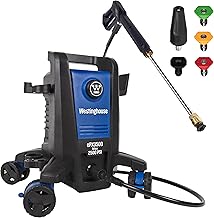
Westinghouse ePX3500
At 2,500 max PSI and 1.76 GPM, this electric hits the sweet spot for siding, fences, and patios without risking gouged paint or driven-in water. The onboard soap tank, pro-style steel wand, and anti-tipping base make it the most approachable pick here for a full-house refresh over a single weekend.
Oxy Solve House and Siding Cleaner
This one-gallon concentrate is the chemistry half of the equation, formulated to break down mold and mildew staining on vinyl, aluminum, wood, brick, and stucco. Let it dwell, then rinse at low pressure — you will remove more discoloration than any nozzle upgrade delivers, and your uplights will show the difference immediately.
Greenworks 3000 PSI Brushless Electric
A brushless motor pushing 3,000 PSI and 2.0 GPM closes most of the gap between electric convenience and gas throughput. It is the strongest choice for homeowners who want masonry-capable pressure without engine maintenance, fuel storage, or the noise.
DeWalt DXPW3300-S
3,300 PSI and 2.4 GPM from an AAA axial cam pump, packaged with a 25-foot hose, five nozzles, and a genuinely comfortable spray gun. This is the residential gas unit to buy when you have a long driveway, a detached garage, and stucco that needs more than a rinse.
Simpson Aluminum ALH3425
The Honda GX200 engine and AAA triplex pump put this in professional territory: 3,600 PSI, 2.5 GPM, a 35-foot hose, and an aluminum frame that shrugs off job-site abuse. Overkill for a small bungalow, ideal if you maintain multiple properties or large hardscapes.
Frequently Asked Questions
What PSI is safe for vinyl siding?
Stay between 1,300 and 2,000 PSI at the surface, use a 25- or 40-degree nozzle, and keep the wand 12 to 18 inches out. Spray at a slight downward angle so water never drives up behind the laps.
Do I really need a separate house wash concentrate?
Yes, if you have organic staining. Water alone displaces loose dust; a surfactant-based cleaner dissolves the mildew and algae that cause the gray cast, letting you work at lower, safer pressure.
Electric or gas for a two-story house?
A 2.0 GPM electric handles a standard two-story elevation from the ground with a decent extension wand. Choose gas if you are also tackling large concrete or working far from an outlet.
When should I wash before adjusting exterior lighting?
Wash first, let the facade dry fully for 24 to 48 hours, then aim your fixtures at dusk. Wet surfaces read glossy and will fool you into underlighting a wall that goes flat once dry.
Final Thoughts
For most homeowners, the Westinghouse ePX3500 paired with Oxy Solve House and Siding Cleaner is the right combination — controlled pressure, real detergent delivery, and a facade that finally holds light the way your fixtures intended. Step up to the DeWalt DXPW3300-S when driveways and masonry are part of the job, and the Simpson ALH3425 if you are cleaning at a professional cadence.