Key takeaways
- Pressure and flow together: Cars want roughly 1200 to 1900 PSI at the nozzle, not the maximum a machine can spike to. Flow rate (GPM) does the rinsing work, so a unit near 1.7 GPM will sheet water off a hood far better than a higher-PSI, low-flow model.
- Foam cannon compatibility: Thick, clinging foam is what gives chemistry time to break the bond between grime and clear coat. Check that the machine accepts a standard foam cannon rather than relying only on an onboard soap tank, which tends to produce thin suds.
- Nozzle range: A 40-degree white tip and a soap tip are the two you will use on paint. Anything narrower than 25 degrees is for concrete, and a zero-degree tip has no business near a car.
- Stability and hose length: A tall, narrow unit that tips when you tug the hose will scuff itself and interrupt your rhythm. Look for anti-tipping designs, a hose of at least 20 feet, and a reel if you value tidy storage.
- Power source realities: Corded electric models give consistent output for a full wash. Battery units trade sustained pressure for freedom from outlets, which suits apartment parking and touch-up cleaning more than full details.
What's inside
I spend my working life aiming light at surfaces, and nothing exposes a badly washed car faster than a well-placed beam. Under diffuse overcast light, almost any paint looks acceptable. Move that same panel into raking low sun, or park it beneath a strip of 5000K garage LEDs, and every swirl, water spot, and dried-on film of road grime turns into a visible texture map. Most of that damage is not caused by dirt sitting on paint. It is caused by us dragging dirt across paint with a sponge because we skipped the step that should have removed it first.
That is where a pressure washer earns its shelf space. Used correctly, it lifts and floats contaminants off the clear coat before anything touches the panel, which is the single biggest factor in whether a finish reads deep and mirror-like or dull and hazy under scrutiny. This guide covers the machines worth considering in 2026 for car care specifically, what the spec sheets actually mean at the nozzle, and how to match a unit to your driveway, water supply, and storage space.
As an Amazon Associate we earn from qualifying purchases.




🛒 Best Price Today on Amazon
Prime members get fast, free shipping on everything above, plus member-only deals. New members get a 30-day free trial — cancel anytime.
How to Choose a Pressure Washer For Cleaning Cars (2026)
- Pressure and flow together: Cars want roughly 1200 to 1900 PSI at the nozzle, not the maximum a machine can spike to. Flow rate (GPM) does the rinsing work, so a unit near 1.7 GPM will sheet water off a hood far better than a higher-PSI, low-flow model.
- Foam cannon compatibility: Thick, clinging foam is what gives chemistry time to break the bond between grime and clear coat. Check that the machine accepts a standard foam cannon rather than relying only on an onboard soap tank, which tends to produce thin suds.
- Nozzle range: A 40-degree white tip and a soap tip are the two you will use on paint. Anything narrower than 25 degrees is for concrete, and a zero-degree tip has no business near a car.
- Stability and hose length: A tall, narrow unit that tips when you tug the hose will scuff itself and interrupt your rhythm. Look for anti-tipping designs, a hose of at least 20 feet, and a reel if you value tidy storage.
- Power source realities: Corded electric models give consistent output for a full wash. Battery units trade sustained pressure for freedom from outlets, which suits apartment parking and touch-up cleaning more than full details.
The Best Pressure Washer For Cleaning Cars (2026)s Reviewed
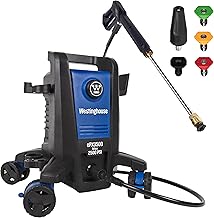
Westinghouse ePX3500 Electric Pressure Washer
The 2500 max PSI and 1.76 max GPM pairing is close to ideal for automotive work, with enough flow to rinse a full-size SUV without walking the panel twice. The anti-tipping build and pro-style steel wand also mean it survives being dragged around a gravel driveway, and the five-nozzle set covers everything from paint to patio.
Sun Joe SPX3000 Electric Power Washer
A long-running favorite for good reason: dual detergent tanks let you keep wheel cleaner and body shampoo loaded simultaneously, which cuts down on mid-wash fumbling. At 2500 max PSI (2030 PWMA rated) it is honest about its numbers, and that rated figure is the one worth trusting.
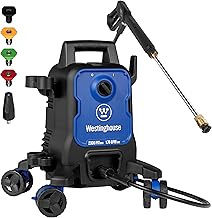
Westinghouse ePX3100 Electric Pressure Washer
Essentially the ePX3500 with 2300 max PSI, and for cars that difference is academic since you will be throttling down anyway. Same 1.76 max GPM, same anti-tipping chassis and steel wand, usually for less money, which makes it the value pick of the Westinghouse pair.
Cordless Portable Power Washer, 1450 PSI
The 6-in-1 nozzle and battery power make this a genuinely useful tool for street parking, bike racks, and interim rinses between proper washes. Expect shorter sessions and gentler output than any corded unit, and think of it as a supplement rather than a replacement.
Power Washer with 4 Quick Connect Nozzles and Foam Cannon
The bundled foam cannon and quick-connect tips mean you can start a two-bucket-free wash straight out of the box, which is where a lot of budget kits fall short. Build quality is basic, so treat the fittings gently and keep the inlet screen clean.
Frequently Asked Questions
Is 5000 PSI too much for a car?
Yes, and headline figures like the 5000 PSI, 2.8 GPM listing should be read as peak marketing numbers rather than working output. Even if a machine could deliver that, you would keep it well below half throttle on paint, so buy for flow and build quality instead.
How far should I hold the wand from the paint?
Keep a wide tip roughly 12 to 18 inches away and moving. Hold it closer to badges, trim edges, or existing chips and you risk lifting material.
Do I still need to touch the car?
Usually yes, but far less. Pre-rinse, foam, dwell, rinse again, then use a clean mitt only where a film remains.
Can I run a pressure washer from a water butt?
Not reliably. Most electric units need pressurized mains feed, and starving the pump damages it quickly.
Final Thoughts
If you want one machine that flatters your paint under any lighting, the Westinghouse ePX3500 is the strongest all-rounder, with the ePX3100 close behind at a friendlier price. The Sun Joe SPX3000 remains the smart choice if dual detergent tanks and honest PWMA-rated numbers matter more to you than a steel wand.