Key takeaways
- Flow before pressure: GPM carries dirt off the panel; PSI just hits it harder. For paint, something in the 1.7–2.2 GPM range with moderate pressure beats a high-PSI machine with thin flow every time.
- Foam cannon compatibility: Check the inlet fitting and whether the unit supports a dedicated cannon rather than only an onboard soap tank. Thick, clinging foam buys dwell time, and dwell time is what lifts grit instead of dragging it.
- Nozzle range with a 40-degree included: Skip anything that ships only aggressive tips. You want a wide fan and ideally an adjustable head so you can back off around emblems, trim seams, and vinyl.
- Hose length and memory: Twenty-five feet is the practical minimum for walking a full vehicle; a hose that coils tight and kinks will scuff a rocker panel faster than any brush.
- Noise and setup footprint: Brushless induction motors run quieter and cooler, which matters if you’re detailing in an attached garage or anywhere you’ve bothered to hang decent task lighting.
What's inside
Anyone who works with light for a living learns to distrust a clean car. Park a freshly rinsed hood under a low-angle 3000K wash and the surface reads like glass. Roll that same panel under a 5000K bar at a raking angle and the story changes: tiger stripes from a dirty mitt, a haze of bonded film across the shoulders, dried mineral spots ghosting the clearcoat. The paint didn’t change between those two setups. Only the light did. Which means most detailing frustration isn’t a technique problem, it’s a visibility problem, and the wash stage is where it either gets solved or gets sealed in.
That’s the lens this guide uses. A pressure washer for automotive work is essentially a contrast tool: it removes the loose material that scatters light and lets you see what’s actually bonded to the finish before a pad ever touches it. Below are the machines worth considering in 2026, judged on foam quality, pressure control at the trigger, hose behavior around tight bodywork, and whether they hold steady output long enough to finish a full vehicle without the flow sagging halfway through the rear quarter.
As an Amazon Associate we earn from qualifying purchases.


🛒 Best Price Today on Amazon
Prime members get fast, free shipping on everything above, plus member-only deals. New members get a 30-day free trial — cancel anytime.
How to Choose a/an Pressure Washer For Automotive Detailing (2026)
- Flow before pressure: GPM carries dirt off the panel; PSI just hits it harder. For paint, something in the 1.7–2.2 GPM range with moderate pressure beats a high-PSI machine with thin flow every time.
- Foam cannon compatibility: Check the inlet fitting and whether the unit supports a dedicated cannon rather than only an onboard soap tank. Thick, clinging foam buys dwell time, and dwell time is what lifts grit instead of dragging it.
- Nozzle range with a 40-degree included: Skip anything that ships only aggressive tips. You want a wide fan and ideally an adjustable head so you can back off around emblems, trim seams, and vinyl.
- Hose length and memory: Twenty-five feet is the practical minimum for walking a full vehicle; a hose that coils tight and kinks will scuff a rocker panel faster than any brush.
- Noise and setup footprint: Brushless induction motors run quieter and cooler, which matters if you’re detailing in an attached garage or anywhere you’ve bothered to hang decent task lighting.
The Best Pressure Washer For Automotive Detailing (2026)s Reviewed
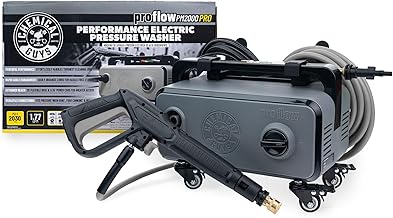
Chemical Guys PM2000 PRO
Built by people who think in terms of paint correction rather than driveway stains, and it shows in the pressure-to-flow balance at 2030 PSI and 1.77 GPM. The 25-foot hose gives you enough reach to work a sedan from one position, and it plays well with dedicated foam cannons out of the box.
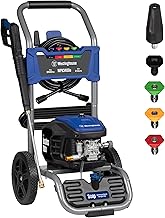
Westinghouse WPX3400e
The brushless motor is the headline here: quieter operation, less heat soak, and steady 2.0 GPM delivery through a long session. At 3400 max PSI you’ll want to stay on the wide tips for paint, but the headroom is welcome for wheel wells and undercarriage flushing.
Westinghouse ePX3500
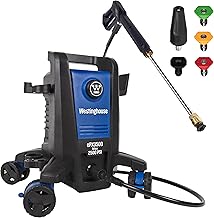
The friendlier sibling for tight spaces, with anti-tipping geometry that keeps it upright when you tug the hose around a bumper. Output of 2500 PSI and 1.76 GPM sits right in the sweet spot for maintenance washes, and the steel wand feels considerably more composed than the plastic units in this bracket.
Bright Green Power Washer with Foam Cannon
A sensible entry point that includes the foam cannon rather than treating it as an upsell, plus four quick-connect tips for switching between wheels and clearcoat. Lightweight enough to carry out to a shared driveway and stow on a shelf afterward.
5000 PSI Power Washer with Hose Reel
The 33-foot reeled hose is the genuine advantage, letting you circle a truck or van without dragging line across paint. Treat the top-end pressure rating as marketing and work off the wide nozzles; used sensibly, the 2.8 GPM flow rinses foam remarkably fast.
Frequently Asked Questions
How much PSI is safe on automotive paint?
Between roughly 1200 and 2000 PSI at the nozzle, held twelve inches back with a 40-degree tip. Damage almost always comes from distance and angle, not the machine’s rating.
Do I need a foam cannon or is a soap tank enough?
Onboard tanks produce a thin, quick-draining solution. A cannon builds foam that clings for several minutes, which is what actually loosens bonded film before contact.
Where does the Ryobi Automotive Pressure Washer fit in?
It’s a reasonable pick if you’re already invested in that battery ecosystem and want cordless freedom for quick rinses, though corded units hold flow more consistently for full details.
What lighting should I use to check my work?
A handheld 5000–6000K LED held at a low, raking angle across the panel. Overhead lighting flatters everything and hides exactly the defects you’re trying to find.
Final Thoughts
For serious paint work, the Chemical Guys PM2000 PRO is the most thoughtfully specified option, with the Westinghouse WPX3400e close behind if quiet, sustained output matters in your space. Tight garages and smaller vehicles are well served by the Westinghouse ePX3500 — pair any of them with a proper cannon and a hard raking light, and you’ll finally see what you’ve been washing.