Key takeaways
- Match capacity to the volume you actually occupy: A 12,000 BTU machine rated for 550 sq. ft. is overkill in a van and underpowered in a two-bay garage. Measure the enclosed space, then account for glass, insulation, and how many bodies share the air.
- Interrogate the light, not just the lumens: Colorful LED modes look playful in listing photos and behave very differently at night. Look for units where the display dims or shuts off independently of operation, and treat multi-color rings as decorative accent lighting rather than incidental spill.
- Listen for the frequency, not the decibel number: Two units at the same rating can feel entirely unalike. Lower-frequency, steady fan noise recedes into sleep; a high whine or a compressor that cycles hard will keep pulling attention back.
- Plan your water and heat exit before you buy: Evaporative units with 1,500–1,600 ml tanks need refilling and add humidity; auto-evaporation compressor units manage condensate themselves but require venting. Dual-hose designs pull combustion-free intake air from outside and hold cabin pressure better.
- Check the real power draw against your source: A 400W camping unit runs comfortably off a mid-size power station; a 550W heat-and-cool model narrows your battery runtime considerably. Full-size 12,000–14,000 BTU units need a proper household circuit.
What's inside
Anyone who has slept in a van in August knows the problem is rarely just heat. It’s the whole sensory package: the hum that won’t settle into background noise, the glow of an indicator LED burning a hole through your eyelids at 2 a.m., the way a cheap unit throws harsh, uneven air at one shoulder while the rest of the cabin stays stagnant. As someone who spends most working hours shaping how rooms feel rather than how they measure, I’ve come to treat portable cooling as an ambience decision as much as a thermal one. A unit that drops the temperature four degrees but wrecks the mood of a space has only solved half the brief.
This guide looks at six portable air conditioners suited to cars, tents, vans, garages, and the awkward rooms in a house that central air forgot. I’ve weighed them on the things that actually govern comfort once you’re living with them: noise character, light control, airflow quality, water management, and how gracefully each one disappears into a room. Compact 12V-friendly evaporative units and full-size self-evaporating machines are both here, because “portable auto” means something different to a weekend camper than to someone cooling a workshop bay.
As an Amazon Associate we earn from qualifying purchases.


How to Choose a Portable Auto Air Conditioner (2026)
- Match capacity to the volume you actually occupy: A 12,000 BTU machine rated for 550 sq. ft. is overkill in a van and underpowered in a two-bay garage. Measure the enclosed space, then account for glass, insulation, and how many bodies share the air.
- Interrogate the light, not just the lumens: Colorful LED modes look playful in listing photos and behave very differently at night. Look for units where the display dims or shuts off independently of operation, and treat multi-color rings as decorative accent lighting rather than incidental spill.
- Listen for the frequency, not the decibel number: Two units at the same rating can feel entirely unalike. Lower-frequency, steady fan noise recedes into sleep; a high whine or a compressor that cycles hard will keep pulling attention back.
- Plan your water and heat exit before you buy: Evaporative units with 1,500–1,600 ml tanks need refilling and add humidity; auto-evaporation compressor units manage condensate themselves but require venting. Dual-hose designs pull combustion-free intake air from outside and hold cabin pressure better.
- Check the real power draw against your source: A 400W camping unit runs comfortably off a mid-size power station; a 550W heat-and-cool model narrows your battery runtime considerably. Full-size 12,000–14,000 BTU units need a proper household circuit.
The Best Portable Auto Air Conditioner (2026)s Reviewed
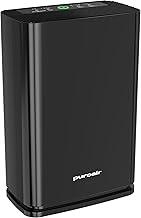
14,000 BTU Portable AC with WiFi
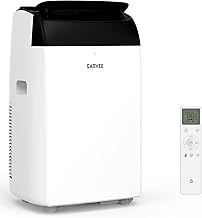
The strongest choice for a large room, office, or garage where you want cooling to be a background system rather than an appliance you tend. WiFi and remote control mean you can pre-cool a space and never touch the panel, and the auto-evaporation design removes the drain-bucket ritual that makes most large portables feel intrusive.
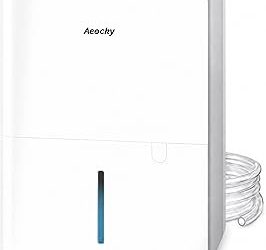
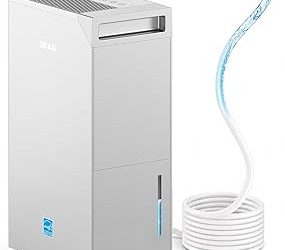
12,000 BTU Auto-Evaporation Portable AC
A cleaner fit for spaces around 550 sq. ft., with the same self-managing condensate approach and a low-noise profile that holds steady rather than surging. The plain white cabinet is genuinely useful in a furnished room, where a black-and-chrome unit reads as equipment no matter where you tuck it.
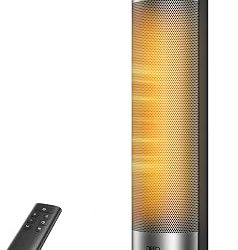
Dual Hose 6800 BTU Camping AC & Heating
The dual-hose layout is the technical highlight here, keeping cabin pressure stable instead of drawing hot outside air through every seam. Adding heat makes it a genuine three-season unit for tents, vans, and trucks, though the 550W draw deserves a hard look at your battery budget.
5200 BTU Camping AC, 4-in-1
At 400W it’s the most power-frugal windowless option worth taking seriously, and the quiet operation holds up in a small tent or truck cab where there’s nowhere for noise to hide. The silver finish stays visually neutral, which matters more than it sounds when the unit sits at eye level.
2026 4-in-1 Portable AC with 7-Color LED
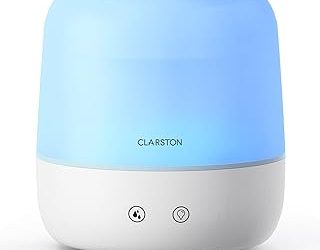
A small evaporative cooler that leans into ambience, with a 1,500 ml tank, three modes, and a seven-color LED you can set as a soft accent or switch off entirely. Treat it as personal cooling with a lighting bonus rather than a replacement for a compressor unit.
Frequently Asked Questions
Do evaporative units like the 1600ML model actually cool a car?
They cool the air moving across you, not the cabin as a whole. In dry conditions with a window cracked, that localized relief is real and pleasant; in high humidity, expect airflow and a faint drop rather than air conditioning.
Can I sleep with the colorful LED lighting on?
You can, but choose warm tones and the lowest setting. Cool blues and whites suppress melatonin more aggressively, so if a unit only offers full-brightness color cycling, run it dark overnight.
Why does a dual-hose unit perform better in a tent?
Single-hose designs exhaust air they pulled from inside, creating negative pressure that drags hot air back in through zippers and seams. Dual-hose units draw exhaust air from outside, so the cooled volume stays cooled.
Will a portable AC run off a portable power station?
The 400W and 550W camping units will, with runtime depending on your capacity. The 12,000 and 14,000 BTU compressor units generally need mains power and a proper vented window or wall opening.
Final Thoughts
For a room or garage you want quietly and permanently comfortable, the 14,000 BTU WiFi unit is the most complete answer, with the 12,000 BTU auto-evaporation model as the better-scaled sibling for smaller footprints. If your cooling happens in a tent, van, or truck bed, the Dual Hose 6800 BTU unit earns its power draw through pressure control and year-round usefulness, and the 5200 BTU 4-in-1 is the one I’d pack when battery capacity is the real constraint.