Key takeaways
- Power source before BTU: A 12–24V vehicle input or 48V DC option means you can run off your house batteries or a solar setup. Wall-only units are fine at a hookup site but become furniture the moment you go off-grid, so match the input to how you actually camp.
- Real draw, not peak rating: Look for wattage figures in the 400W range and any published runtime claim, such as eight hours on a single kWh. That number tells you whether your battery bank can support cooling and your evening lighting at the same time.
- Acoustic character, not just decibels: A low, broadband hum disappears into a cabin’s soundscape. A high-pitched compressor whine or a rattling housing does not. If you sleep light, prioritize units described as quiet with variable fan speeds you can drop for overnight use.
- Heat exhaust routing: Every unit has to send hot air somewhere. Check hose length, window-kit compatibility, and whether the exhaust path forces you to block the one window you wanted open for cross-breeze and daylight.
- Footprint, handles, and screen glare: Weigh it, measure it, and consider where it lives when stowed. A carry bag matters more than it sounds. So do dimmable displays, since a bright panel in a dark cabin will out-shout any lighting scheme you have built.
What's inside
Anyone who designs interiors for a living learns quickly that comfort is not one thing. It is a stack: the color of the light, the noise floor underneath it, the temperature of the air moving across your skin. An RV or van cabin is the hardest room I know to get right, because all three collapse into a space smaller than most bathrooms. You can hang the warmest 2700K strip lighting above the dinette, diffuse it beautifully, kill every hard shadow, and none of it registers when the interior is sitting at 94°F and the air feels like a held breath. Heat flattens ambience the way a bad overhead fixture flattens a room.
That is the lens I am bringing to this guide. Below are six portable air conditioners built for tents, trucks, vans, and RVs, judged not only on cooling output but on how they behave as objects inside a small, carefully lit space: how loud they hum at 2 a.m., whether their status LEDs throw cold blue light across the ceiling, how much power they pull from a battery bank you are also asking to run your lights, and where they physically sit without breaking sightlines. I have flagged which units suit boondocking off DC power, which are happiest tethered to a pedestal, and which double as heaters when shoulder-season nights turn sharp.
As an Amazon Associate we earn from qualifying purchases.


How to Choose a/an Portable Air Conditioner Rv (2026)
- Power source before BTU: A 12–24V vehicle input or 48V DC option means you can run off your house batteries or a solar setup. Wall-only units are fine at a hookup site but become furniture the moment you go off-grid, so match the input to how you actually camp.
- Real draw, not peak rating: Look for wattage figures in the 400W range and any published runtime claim, such as eight hours on a single kWh. That number tells you whether your battery bank can support cooling and your evening lighting at the same time.
- Acoustic character, not just decibels: A low, broadband hum disappears into a cabin’s soundscape. A high-pitched compressor whine or a rattling housing does not. If you sleep light, prioritize units described as quiet with variable fan speeds you can drop for overnight use.
- Heat exhaust routing: Every unit has to send hot air somewhere. Check hose length, window-kit compatibility, and whether the exhaust path forces you to block the one window you wanted open for cross-breeze and daylight.
- Footprint, handles, and screen glare: Weigh it, measure it, and consider where it lives when stowed. A carry bag matters more than it sounds. So do dimmable displays, since a bright panel in a dark cabin will out-shout any lighting scheme you have built.
The Best Portable Air Conditioner Rv (2026)s Reviewed
Cybertake S2 Pro Portable Camping Air Conditioner
The most versatile unit here, with 5100 BTU of cooling, 6100 BTU of heating, and three-way power covering 48V DC, 12–24V vehicle, and standard 100–240V wall input. Its roughly eight hours on 1kWh figure is what makes it genuinely viable for off-grid rigs where every amp is already spoken for.
BAYKUL Portable Tent Air Conditioner
At 6800/7500 BTU with a 5-in-1 feature set, this is the pick for larger van builds or Class C interiors where a smaller unit would run flat out and never catch up. The compact housing tucks under a dinette bench better than its output suggests.
6000 BTU Portable AC for Tents and RVs with Carry Bag
A sensible middle ground on capacity, and the included carry bag solves the storage problem that sinks most portable units in a rig with no spare cubic feet. Equally at home in cabins and small offices during the off-season.
5100 BTU Low Power Camping AC (410W)
The 410W draw is the headline: this is the unit to pair with a modest lithium bank and a solar array without watching your state of charge collapse. Cooling is modest but steady, which suits sleeping more than it suits rescuing a baked cabin at 4 p.m.
5200 BTU Quiet Portable Tent AC (400W)
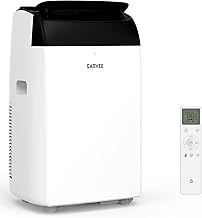
Fast cooling at 400W with a genuinely restrained noise signature, and the black-grey finish reads as intentional rather than appliance-beige inside a considered interior. My pick when overnight quiet is the deciding factor.
Frequently Asked Questions
Can these run on solar or a portable power station?
The DC-capable and low-wattage models can, provided your station outputs enough continuous power. A 400–500W unit generally needs a station rated well above that to handle compressor startup surges comfortably.
Do I need to vent them outside?
Yes. Any compressor-based air conditioner produces waste heat that must exit the space, so plan a window, vent, or door port. Without venting you are only relocating heat inside your own cabin.
How much cooling do I actually need for an RV?
For a van or small trailer, 5000–5200 BTU is usually sufficient if the space is insulated and shaded. Larger or poorly insulated rigs benefit from stepping up to the 6000–7500 BTU range.
Are these quiet enough to sleep beside?
The 400–410W models are the ones to consider for bedside use, especially on lower fan settings. Placing the unit low and off to one side rather than at head height noticeably reduces perceived noise.
Final Thoughts
If you camp off-grid, the Cybertake S2 Pro is the one I would build a system around, thanks to its three-way power flexibility and heating capability for cold shoulder-season nights. For larger interiors that need real cooling capacity, the BAYKUL 6800/7500 BTU unit does the heavy work, while the 5200 BTU quiet 400W model remains my recommendation for anyone who values a calm, low-noise cabin after dark.