Key takeaways
- Weight Capacity and Frame Material: A swing rated under 500 lbs will limit who can sit together. Powder-coated steel or aluminum frames resist rust far better than bare metal, and solid hardwood slats outlast engineered alternatives when properly sealed. Always verify the stand’s rating matches the swing seat — mismatched pairings are the number-one cause of wobble.
- Canopy Type and UV Protection: Fabric canopies offer breathability and easy replacement but can fade or sag within two summers. Hardtop or polycarbonate canopies provide true shade and rain deflection at the cost of airflow. For southern-facing porches, UV-rated fabric or a rigid canopy isn’t optional — it’s the difference between daily use and a sun-bleached ornament.
- Comfort Architecture: Look beyond cushion thickness. Seat depth, backrest angle, and whether the backrest converts into a flat bed all determine whether you’ll actually linger. Pillows and cushions made with Sunbrella-grade or solution-dyed fabric resist mildew far better than generic polyester fills.
- Footprint and Portability: A freestanding swing needs clearance — roughly three feet in front and behind for safe motion. If your space is tight, a swing with a narrower stand profile or wheels built into the base lets you reposition it seasonally without a second set of hands.
- Ambient Integration: The best porch swing earns its keep after dark. Designs with integrated cup holders and side tables give you a natural anchor point for a small lantern or clip-on reading light. Warm-toned fabrics (think sand, walnut, wine) bounce candlelight and string-light glow more invitingly than stark white or cool gray upholstery.
What's inside
Shopping for a porch swing with stand usually starts with a vague dream — golden-hour reading nooks, string-light evenings, the gentle rhythm of a swing that turns a deck into a destination. Then reality hits: dozens of listings that look nearly identical, canopies that sag after one season, frames that creak under actual adult weight. The gap between the lifestyle photo and the delivered product is where most buyers get burned.
As someone who designs outdoor living spaces for a living, I evaluate porch swings the same way I evaluate a room: structural integrity, material honesty, and how the piece shapes the atmosphere around it. This 2026 roundup covers six swings worth your attention, tested against weight capacity, canopy performance, cushion durability, and — crucially — whether the swing actually elevates the feel of your outdoor space or just occupies it.
As an Amazon Associate we earn from qualifying purchases.


How to Choose a Porch Swing With Stand (2026)
- Weight Capacity and Frame Material: A swing rated under 500 lbs will limit who can sit together. Powder-coated steel or aluminum frames resist rust far better than bare metal, and solid hardwood slats outlast engineered alternatives when properly sealed. Always verify the stand’s rating matches the swing seat — mismatched pairings are the number-one cause of wobble.
- Canopy Type and UV Protection: Fabric canopies offer breathability and easy replacement but can fade or sag within two summers. Hardtop or polycarbonate canopies provide true shade and rain deflection at the cost of airflow. For southern-facing porches, UV-rated fabric or a rigid canopy isn’t optional — it’s the difference between daily use and a sun-bleached ornament.
- Comfort Architecture: Look beyond cushion thickness. Seat depth, backrest angle, and whether the backrest converts into a flat bed all determine whether you’ll actually linger. Pillows and cushions made with Sunbrella-grade or solution-dyed fabric resist mildew far better than generic polyester fills.
- Footprint and Portability: A freestanding swing needs clearance — roughly three feet in front and behind for safe motion. If your space is tight, a swing with a narrower stand profile or wheels built into the base lets you reposition it seasonally without a second set of hands.
- Ambient Integration: The best porch swing earns its keep after dark. Designs with integrated cup holders and side tables give you a natural anchor point for a small lantern or clip-on reading light. Warm-toned fabrics (think sand, walnut, wine) bounce candlelight and string-light glow more invitingly than stark white or cool gray upholstery.
The Best Porch Swing With Stand (2026) Reviews
VINGLI Porch Swing with Stand and Canopy
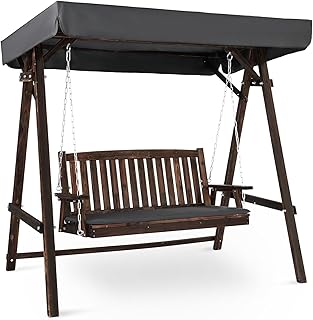
The VINGLI Brown is the workhorse of the group. Its waterproof canopy holds shape through heavy rain, and the built-in cup holders are positioned where your hand naturally falls — a small detail that signals someone actually used the prototype. The brown tones read warm under both daylight and Edison-bulb strings, making it a reliable anchor for evening patio setups.
VINGLI Heavy Duty Wooden Porch Swing
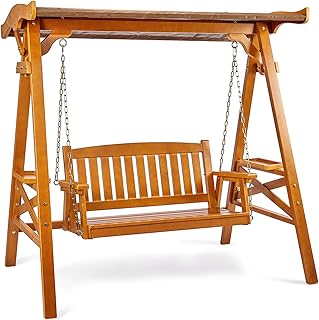
At a 660-lb capacity, this rustic wood swing is built for genuine use, not Instagram poses. The natural grain of the timber adds organic texture that metal-framed competitors can’t replicate. Under canopy shade, the wood casts subtle tonal warmth that complements terracotta planters and stone pavers beautifully — it feels like furniture that belongs outdoors rather than pretending to belong there.
NOBLEMOOD 3-Seat Patio Swing with Adjustable Canopy
The convertible backrest is this swing’s signature move — flat for lounging, upright for conversation. The included pillows are surprisingly substantial, and the waterproof fabric cushion dries faster than most competitors after a drizzle. From an ambience standpoint, the neutral palette disappears into your décor, letting surrounding lanterns and greenery do the visual heavy lifting.
NOBLEMOOD Hardtop Patio Swing
This is the premium pick. The hardtop canopy delivers genuine UV block without the sagging risk of fabric, and the two side cup holders keep drinks off your lap. The thickened cushion and four included pillows make it immediately comfortable without aftermarket purchases. It commands attention as a statement piece — ideal for a well-designed patio that needs a visual anchor.
Aoxun Outdoor Porch Swing with Stand and Canopy
The Aoxun’s 2-in-1 swing-bed conversion and wine-toned colorway make it the most versatile option at its price point. The thicken cushions hold up well across a season, and the convertible design means you’re not choosing between a swing and a daybed. The warm wine hue catches late-afternoon light in a way that photographs beautifully and looks even better in person.
Frequently Asked Questions
Can I leave a porch swing with stand outside year-round?
It depends on the materials. Powder-coated steel and hardwood swings handle rain and humidity reasonably well with periodic maintenance. Fabric canopies and cushions should be stored during harsh winters or covered with a weatherproof tarp to prevent mold and UV degradation.
How much space do I need around a freestanding porch swing?
Plan for at least three feet of clearance in front of and behind the swing at its maximum arc. Side clearance of about two feet prevents contact with railings or walls. Total footprint, including the stand, typically ranges from 70 to 85 inches in depth.
Are hardtop canopies worth the extra weight?
For sunny climates or year-round outdoor use, yes. Hardtop canopies eliminate sagging, provide superior UV protection, and don’t need replacement after a season or two of sun exposure. The tradeoff is reduced airflow, which may matter in humid regions.
What cushion material resists outdoor moisture best?
Solution-dyed acrylic fabrics like Sunbrella resist mildew, fading, and water absorption more effectively than standard polyester or olefin. Quick-dry foam fills also outperform traditional padding in humid environments by allowing airflow through the cushion core.
Final Thoughts
For most buyers, the NOBLEMOOD Hardtop offers the strongest combination of durability, comfort, and atmospheric presence. The VINGLI Heavy Duty Wooden Swing is the pick if you want natural material character and serious weight capacity. And for budget-conscious shoppers who still want a versatile 2-in-1 design, the Aoxun delivers surprising quality at its price tier. Whichever you choose, think of the swing as the centerpiece of your outdoor lighting plan — position it where evening light feels intentional, and the entire space elevates.