Key takeaways
- Deck height and your lamp plane: A 14-inch frame plus a 10 to 12-inch mattress puts the mattress top near 25 inches, which pairs cleanly with nightstands in the 24 to 26-inch range and keeps a lampshade’s lower edge above eye level when you’re propped up reading. Lower 12-inch platforms want shorter lamps or wall-mounted sconces instead.
- Headboard geometry: Tall solid or slatted headboards act as a bounce surface, softening light from bedside fixtures and lifting the whole upper wall. Frames without a headboard leave that light to hit bare paint, which reads flatter and cooler.
- Under-bed clearance for hidden light: Twelve inches or more of open space is the sweet spot for tucking an LED strip along the inner rail. You get a wash of indirect floor light for late-night navigation with no visible source, but only if the frame’s perimeter has an inward-facing lip to hide the diodes.
- Finish and reflectance: Matte black steel absorbs light and disappears at night, which makes the mattress appear to hover. Warm woods like pine and bamboo bounce lamplight back into the room, raising perceived warmth by a noticeable margin at the same bulb temperature.
- Silence under load: Ambience collapses the moment a frame creaks. Look for rubber or felt-capped joints, welded steel slats, or interlocking wood construction rather than metal-on-metal contact points.
What's inside
Most bed frame comparisons read like structural engineering reports: pounds of load capacity, slat spacing, box spring or no box spring. All useful. But the frame under your mattress is also the single largest light-shaping object in the room, and almost nobody shops for it that way. It sets the height of your reading plane, decides whether a bedside lamp glows or glares, and either lifts the mattress into a floating silhouette or plants it in a pool of shadow. Get it wrong and you spend the next five years fighting your own lamps.
This guide looks at 2026’s strongest platform beds through a lighting-and-ambience lens alongside the usual durability questions. We cover deck height and how it maps to lamp placement, headboard geometry and its effect on reflected light, under-bed clearance for concealed strip lighting, and how finish and material change the way a room reads after sundown. Each pick below is a genuinely sturdy, box-spring-free frame — we’re just adding the layer of thinking that most roundups skip.
As an Amazon Associate we earn from qualifying purchases.


How to Choose a Platform Bed Frame (2026)
- Deck height and your lamp plane: A 14-inch frame plus a 10 to 12-inch mattress puts the mattress top near 25 inches, which pairs cleanly with nightstands in the 24 to 26-inch range and keeps a lampshade’s lower edge above eye level when you’re propped up reading. Lower 12-inch platforms want shorter lamps or wall-mounted sconces instead.
- Headboard geometry: Tall solid or slatted headboards act as a bounce surface, softening light from bedside fixtures and lifting the whole upper wall. Frames without a headboard leave that light to hit bare paint, which reads flatter and cooler.
- Under-bed clearance for hidden light: Twelve inches or more of open space is the sweet spot for tucking an LED strip along the inner rail. You get a wash of indirect floor light for late-night navigation with no visible source, but only if the frame’s perimeter has an inward-facing lip to hide the diodes.
- Finish and reflectance: Matte black steel absorbs light and disappears at night, which makes the mattress appear to hover. Warm woods like pine and bamboo bounce lamplight back into the room, raising perceived warmth by a noticeable margin at the same bulb temperature.
- Silence under load: Ambience collapses the moment a frame creaks. Look for rubber or felt-capped joints, welded steel slats, or interlocking wood construction rather than metal-on-metal contact points.
The Best Platform Bed Frames (2026) Reviewed
NEW JETO Metal Bed Frame, Queen, 14 Inch
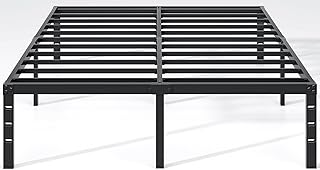
The 14-inch clearance and matte black powder coat make this the most cooperative frame here for concealed strip lighting — the steel vanishes into the dark while the mattress edge catches the upward spill. Heavy-duty construction and generous storage volume round out an unusually practical package for the money.
Mellow Naturalista Classic 12-Inch Solid Wood
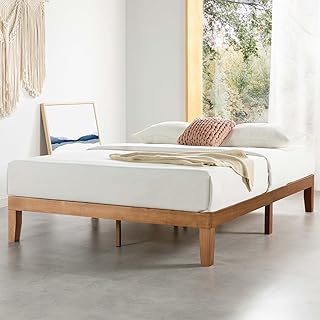
Solid pine with exposed wooden slats gives you real material warmth, and the 12-inch height keeps the silhouette low and grounded for rooms where you want calm rather than drama. Pair it with a low-slung nightstand lamp or a wall sconce so the shade sits above the mattress line.
ZINUS Vivek Deluxe Wood Platform with Headboard
The slatted headboard is the standout feature from a lighting angle: it breaks up reflected lamplight into a soft gradient instead of a hard bright patch, which flatters warm 2700K bulbs beautifully. Assembly is straightforward and the wood slat support needs no foundation underneath.
Merax Queen Bamboo Platform with Tall Headboard
Bamboo has a tighter grain and slightly higher reflectance than pine, so this mid-century frame throws noticeably more warmth back into a room at the same bulb output. The tall headboard doubles as a bounce panel, and the noise-free build keeps the mood intact when you shift at 3 a.m.
MAF 14-Inch Queen Metal Platform
Round corner legs and a mattress baffle make this the tidiest-looking metal option, and the 12.4 inches of storage clearance is ample for hidden lighting or under-bed bins. The 3000-pound steel slat rating is overkill in the best possible way.
Frequently Asked Questions
Do I need a box spring with a platform bed?
No. Every frame here uses closely spaced slats or steel supports designed to carry a mattress directly. Adding a box spring only raises the deck and throws off your nightstand and lamp proportions.
Can I run LED strips on a metal frame safely?
Yes, low-voltage adhesive strips are fine on steel rails, and metal actually helps dissipate the small amount of heat they produce. Route the cable along an inner rail and use a plug-in dimmer so the glow stays under the level that wakes you.
Is a headboard worth it if I read in bed?
Usually, yes. A headboard gives you back support and a reflective surface that softens directional lamplight, reducing the harsh contrast between a bright page and a dark wall behind it.
How much under-bed clearance do I actually need?
Around 12 inches handles both standard storage containers and concealed lighting comfortably. Below about 8 inches, hidden strips tend to cast visible hot spots on the floor rather than an even wash.
Final Thoughts
For a room you want to feel dramatic and modern after dark, the NEW JETO metal frame delivers the floating-mattress effect and the clearance to light it properly. If warmth matters more, the Merax bamboo platform with its tall headboard bounces lamplight better than anything else here, while the ZINUS Vivek Deluxe splits the difference with a slatted headboard that turns a single bedside lamp into genuinely flattering ambient light.