Key takeaways
- Light budget: Measure before you buy. A north-facing wall or a spot more than eight feet from glass sits in genuinely low light, which rules out most patterned foliage and points you toward snake and ZZ plants.
- Leaf finish: Glossy leaves act like small curved mirrors and throw specular highlights, which looks brilliant near a lamp and harsh under direct downlights. Matte, velvety foliage absorbs and diffuses, holding its color in bright rooms.
- Silhouette and shadow: Upright, blade-like plants cast crisp graphic shadows when uplit from below. Broad, layered leaves scatter softer shapes, better suited to gentle side light.
- Color rendering: Warm 2700K bulbs mute cool greens and flatten pink or cream variegation. If your fixtures run warm, choose high-contrast foliage or add a 4000K accent so patterns stay legible after dark.
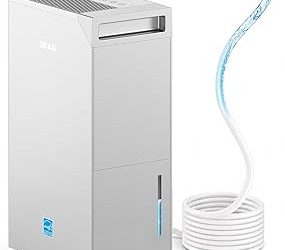
- Verified filtration: If air quality is the real goal, look for an H13 True HEPA rating and an AHAM-verified coverage figure. Plants contribute humidity and calm, not measurable particulate removal.
What's inside
Most people shop for a plant air purifier the same way they shop for a lamp they never turn on: they choose the shape, bring it home, and set it in the one corner where no usable light ever lands. Six weeks later the foliage has stretched toward the window, the pattern has washed out, and the “living air filter” reads as a tired green blur under a 3000K downlight. The problem is rarely the plant. It is a mismatch between the light a room actually delivers and the light the leaf needs to hold its color and structure.
This guide approaches the category the way I approach a room’s lighting layers, judging each plant as a light-interacting object first and a wellness accessory second. You will find picks that tolerate low-lux corners, foliage that behaves well under warm household bulbs, silhouettes worth backlighting, and one mechanical HEPA unit for anyone who needs measurable filtration rather than atmosphere. Selections below are chosen for how they perform in real interior light, not lab conditions.
As an Amazon Associate we earn from qualifying purchases.


🛒 Best Price Today on Amazon
Prime members get fast, free shipping on everything above, plus member-only deals. New members get a 30-day free trial — cancel anytime.
How to Choose a Plant Air Purifier (2026)
- Light budget: Measure before you buy. A north-facing wall or a spot more than eight feet from glass sits in genuinely low light, which rules out most patterned foliage and points you toward snake and ZZ plants.
- Leaf finish: Glossy leaves act like small curved mirrors and throw specular highlights, which looks brilliant near a lamp and harsh under direct downlights. Matte, velvety foliage absorbs and diffuses, holding its color in bright rooms.
- Silhouette and shadow: Upright, blade-like plants cast crisp graphic shadows when uplit from below. Broad, layered leaves scatter softer shapes, better suited to gentle side light.
- Color rendering: Warm 2700K bulbs mute cool greens and flatten pink or cream variegation. If your fixtures run warm, choose high-contrast foliage or add a 4000K accent so patterns stay legible after dark.
- Verified filtration: If air quality is the real goal, look for an H13 True HEPA rating and an AHAM-verified coverage figure. Plants contribute humidity and calm, not measurable particulate removal.
The Best Plant Air Purifier (2026)s Reviewed
Costa Farms Snake Plant
The most forgiving choice for dim interiors, and the best sculptural subject in the category: its vertical blades take a floor-level uplight beautifully, throwing long striped shadows up a wall. It shrugs off low light, irregular watering, and drafty entryways.
Costa Farms ZZ Plant
Waxy, high-gloss leaflets that pick up every nearby light source, which makes this an excellent companion to a table lamp or a warm wall sconce. Practically indestructible, and the arching stems soften hard architectural corners without demanding a bright window.
Live Green Spider Plant Starter Plugs
The white-and-green variegation is the strongest performer under warm household bulbs, holding crisp contrast where solid greens go muddy. Arching foliage reads best elevated on a shelf with light skimming across it from the side.
Rattlesnake Calathea
The most rewarding plant here for backlighting: the wavy leaves are semi-translucent, and low afternoon sun or a concealed strip behind the pot reveals the dark brushstroke markings and burgundy undersides. It needs bright indirect light and steady humidity, so treat it as a considered feature rather than a set-and-forget piece.
LEVOIT Core 300 Air Purifier
The unit to buy when you need actual filtration, with H13 True HEPA media, AHAM-verified coverage to 1073 sq ft, and a 24dB sleep mode that stays below the noise floor of a quiet bedroom. Its cylindrical form disappears behind a chair, though I recommend keeping it off the same surface as any accent light so the housing does not catch a hotspot.
Frequently Asked Questions
Do houseplants really purify indoor air?
Not at any meaningful rate. The often-cited NASA research used sealed chambers; in a ventilated room you would need dozens of plants per person to match a single HEPA unit. Buy plants for humidity, texture, and mood, and buy a filter for particulates.
Can I use a grow light without ruining the room’s ambience?
Yes. Choose a 3500K to 4000K fixture with a CRI above 90 and aim it down through the canopy rather than out into the room. You get usable photosynthetic light and honest leaf color without the purple cast of cheap diodes.
Which of these are safest around pets?
Spider plants, calatheas, and the Lemon Lime Maranta are all non-toxic to cats and dogs. Snake and ZZ plants contain irritants and are better placed on elevated shelves out of reach.
How far from a window should these sit?
Light falls off fast. Calatheas and marantas want to be within three to four feet of diffused glass, while snake and ZZ plants stay healthy well into the interior of a room.
Final Thoughts
For a dim corner that needs presence, the Costa Farms Snake Plant remains the most dependable pick and the best candidate for dramatic uplighting. Pair it with the LEVOIT Core 300 if clean air is the actual objective, then add a Rattlesnake Calathea near a bright, filtered window when you want foliage that genuinely rewards the light you give it.