Key takeaways
- Roof Type & Light Control: Louvered roofs let you dial shade from full sun to dappled diffusion; solid hardtops (polycarbonate or metal) deliver consistent, diffused light but zero adjustability. Decide whether you want on-demand light modulation or a set-it-and-forget-it canopy.
- Drainage Engineering: A roof without proper water management just relocates the problem. Look for integrated gutter channels and downspout systems built into the frame — not aftermarket add-ons bolted on after purchase.
- Frame Material & Finish: Powder-coated aluminum resists rust without the weight of steel. Pay attention to post thickness; 3.5–3.8″ posts handle wind loads far better than slender 2″ alternatives, especially on freestanding units.
- Mounting Style: Freestanding pergolas work on open decks and lawns, while lean-to wall-mounted models anchor against the house and save footprint. Wall-mounted units also simplify electrical runs for integrated lighting — a detail that matters if you plan evening ambiance.
- Size & Proportions: Match the footprint to your seating arrangement, not your whole yard. A 10×12 covers a dining set comfortably; stepping up to 10×16 or 10×14 makes room for a lounge zone alongside. Oversized covers on small patios feel enclosing rather than expansive.
What's inside
A covered pergola doesn’t just shield you from rain — it reshapes the entire light-and-shadow character of an outdoor room. Too many buyers shop by square footage alone and end up with a roofed structure that feels cavernous at noon and flat after sundown. The angle of the canopy, the slat spacing, even the post color all determine whether your patio reads as a bright café terrace or a moody evening lounge.
This guide zeroes in on six pergola-with-roof models that stood out for how they handle daylight filtration, drainage under real storms, and the kind of build quality that won’t look tired by next summer. We pulled from current 2026 listings, cross-referenced owner feedback on durability, and evaluated each option the way we evaluate any overhead element: how well it sculpts light, handles weather, and supports the vibe you actually want.
As an Amazon Associate we earn from qualifying purchases.


🛒 Best Price Today on Amazon
Prime members get fast, free shipping on everything above, plus member-only deals. New members get a 30-day free trial — cancel anytime.
How to Choose a Pergola With Roof (2026)
- Roof Type & Light Control: Louvered roofs let you dial shade from full sun to dappled diffusion; solid hardtops (polycarbonate or metal) deliver consistent, diffused light but zero adjustability. Decide whether you want on-demand light modulation or a set-it-and-forget-it canopy.
- Drainage Engineering: A roof without proper water management just relocates the problem. Look for integrated gutter channels and downspout systems built into the frame — not aftermarket add-ons bolted on after purchase.
- Frame Material & Finish: Powder-coated aluminum resists rust without the weight of steel. Pay attention to post thickness; 3.5–3.8″ posts handle wind loads far better than slender 2″ alternatives, especially on freestanding units.
- Mounting Style: Freestanding pergolas work on open decks and lawns, while lean-to wall-mounted models anchor against the house and save footprint. Wall-mounted units also simplify electrical runs for integrated lighting — a detail that matters if you plan evening ambiance.
- Size & Proportions: Match the footprint to your seating arrangement, not your whole yard. A 10×12 covers a dining set comfortably; stepping up to 10×16 or 10×14 makes room for a lounge zone alongside. Oversized covers on small patios feel enclosing rather than expansive.
The Best Pergola With Roof (2026)s Reviewed
10×12 FT Outdoor Louvered Pergola Dark Grey
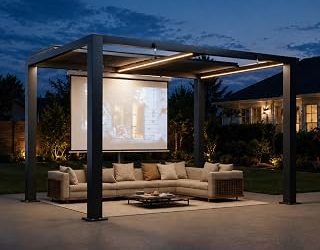
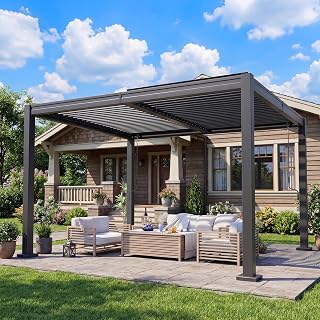
This hardtop gazebo pairs dual independently adjustable louvered roofs with a built-in drainage channel, giving you precise control over light angles — close the left panel while leaving the right open to chase afternoon shade across your deck. The dark grey finish reads sleek under warm string lights and doesn’t wash out next to modern outdoor furniture.
Aoxun Louvered Pergola 10×16
With 3.8″ thickened posts and a patented easy-assembly frame, the Aoxun 10×16 is the oversized pick for anyone designing a multi-zone outdoor room. The generous 160-square-foot canopy creates a broad, evenly diffused light field — ideal if you’re lighting both a dining area and a separate conversation nook underneath.
10’×13′ Patio Louvered Pergola Aluminum Deep Grey
At 13 feet long, this mid-range louvered model fills the sweet spot between the compact 10×12 and the sprawling 10×16. Its deep grey aluminum reads more charcoal than silver, absorbing rather than reflecting harsh midday glare — a subtle win if your patio faces west and sun bleaching is a concern.
10′ × 10′ Lean-to Gazebo, Hardtop Wall Pergola
The lean-to polycarbonate roof on this wall-mounted unit produces soft, even diffused light with no hot spots — think of it as a giant overhead softbox for your patio. It’s the best option if your outdoor space borders a house wall and you want a clean, modern line without freestanding posts eating into the deck.
Airwire 10×12 FT Louvered Pergola with Curtains & Netting
What separates the Airwire is the included curtain and netting kit, which lets you modulate not just overhead light but the lateral ambiance too — sheer panels for golden-hour glow, nets for bug-free evenings, or everything drawn for a private, enclosed room feel. It’s the most versatile option for all-day-to-night use.
Frequently Asked Questions
Do louvered pergolas block rain completely?
Most louvered pergolas with integrated drainage — like the 10×12 Dark Grey and the Aoxun 10×16 — channel water through the frame when louvers are fully closed. They perform well in steady rain, though extreme wind-driven storms may push water through small gaps. They’re not meant to replace a solid roof for total waterproofing.
Can I attach string lights or ceiling fans to a pergola with a roof?
Aluminum-framed pergolas with substantial beam structures generally support lightweight fixtures like string lights and small ceiling fans. Always check the manufacturer’s stated load capacity, and use lag bolts rated for outdoor use rather than relying on adhesive clips.
What’s the difference between a lean-to pergola and a freestanding one?
A lean-to mounts against an existing wall, using your house as one structural side, while a freestanding pergola stands independently with four posts. Lean-tos save space and simplify wiring; freestanding units offer placement flexibility anywhere in the yard.
How much maintenance does a metal pergola roof need?
Powder-coated aluminum frames need minimal upkeep — rinse with water twice a year, inspect joints annually, and touch up chips in the finish to prevent any raw metal exposure. Polycarbonate panels may need occasional cleaning to keep light transmission clear.
Final Thoughts
For most homeowners designing a versatile outdoor room, the Aoxun Louvered Pergola 10×16 offers the best balance of adjustability, build quality, and sheer coverage. If you’re working with a house-adjacent patio, the 10×10 Lean-to Gazebo delivers a clean modern silhouette with excellent light diffusion. And for anyone who values day-to-night flexibility, the Airwire 10×12 with Curtains & Netting gives you the most control over the full sensory experience under your roof.