Key takeaways
- Material and grain character: Cedar outperforms pressure-treated pine in both rot resistance and visual warmth. Tight-grained cedar catches low-angle sunlight and glows amber rather than washing flat, which is the single biggest factor separating a beautiful pergola from a generic one.
- Slat spacing and trellis density: Narrower spacing (two to three inches between slats) produces dappled, constantly shifting shade patterns that feel alive. Wider gaps flood the seating area with harsher light and reduce the intimate canopy effect most homeowners are chasing.
- Structural rating for your climate: Snow load and wind resistance are not optional checkboxes. A 12×16 footprint in a northern climate demands heavier posts and reinforced brackets, while southern installations prioritize UV stability and airflow over sheer mass.
- Hardware quality and finish: Rust-proof brackets and galvanized or powder-coated fasteners determine whether the pergola looks intentional after three winters or begins leaking orange streaks across every surface beneath it.
- Footprint relative to furniture layout: A 10×12 kit suits a four-seat dining arrangement or a pair of lounge chairs with a side table. Going to 12×16 lets you layer zones — a dining area beneath the trellis and an open lounge beyond the post line — which dramatically elevates how the space functions at night with string lights.
What's inside
Choosing a pergola kit in 2026 means navigating a market crowded with cedar, brackets, trellis options, and load ratings — none of which actually tell you what it will feel like to sit underneath the finished structure at golden hour. Buyers fixate on square footage and wind ratings while overlooking the detail that shapes every evening outdoors: how the overhead lattice filters light onto skin, furniture, and surfaces. Get that wrong and you own a very expensive shadow that feels sterile or suffocating depending on the season.
This guide cuts past the spec sheets. As someone who designs ambient outdoor environments for a living, I evaluated each kit through two lenses — structural reliability and the quality of light and atmosphere it creates once built. Below you will find honest breakdowns of six popular options, a concise buying framework, and answers to the questions that actually matter before you click “Add to Cart.”
As an Amazon Associate we earn from qualifying purchases.


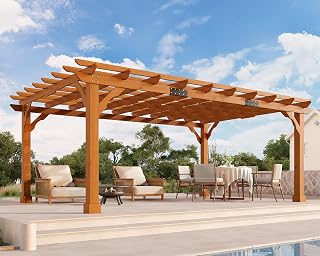
How to Choose a Pergola Kit (2026)
- Material and grain character: Cedar outperforms pressure-treated pine in both rot resistance and visual warmth. Tight-grained cedar catches low-angle sunlight and glows amber rather than washing flat, which is the single biggest factor separating a beautiful pergola from a generic one.
- Slat spacing and trellis density: Narrower spacing (two to three inches between slats) produces dappled, constantly shifting shade patterns that feel alive. Wider gaps flood the seating area with harsher light and reduce the intimate canopy effect most homeowners are chasing.
- Structural rating for your climate: Snow load and wind resistance are not optional checkboxes. A 12×16 footprint in a northern climate demands heavier posts and reinforced brackets, while southern installations prioritize UV stability and airflow over sheer mass.
- Hardware quality and finish: Rust-proof brackets and galvanized or powder-coated fasteners determine whether the pergola looks intentional after three winters or begins leaking orange streaks across every surface beneath it.
- Footprint relative to furniture layout: A 10×12 kit suits a four-seat dining arrangement or a pair of lounge chairs with a side table. Going to 12×16 lets you layer zones — a dining area beneath the trellis and an open lounge beyond the post line — which dramatically elevates how the space functions at night with string lights.
The Best Pergola Kit (2026)s Reviewed
Backyard Discovery Beaumont 12′ × 10′
The Beaumont stands apart because of its integrated PowerPort, which lets you run lighting and speakers through the structure itself rather than routing extension cords across the ground. The cedar trellis roof produces a tightly filtered shade that shifts beautifully throughout the afternoon, and the high-wind rating makes it genuinely four-season. This is the kit I recommend when ambience and durability are equally non-negotiable.
Jocisland 12×16 FT Premium Cedar Pergola
The largest footprint in this roundup gives you room to design layered lighting zones — pendant strings over a dining table with uplighting at the posts for a dramatic evening silhouette. The reddish-brown finish reads warm without looking stained, and the included stakes simplify anchoring on level patios. If you host gatherings and want the pergola to anchor the entire backyard layout, this is the one to measure against.
MUPATER 10×12 FT All Cedar Pergola
MUPATER delivers honest, straightforward cedar construction without overcomplicating the design. The slat spacing creates a balanced shade-to-light ratio that feels comfortable from mid-morning onward, and the quality-supported structure handles moderate snow without fuss. For buyers who want clean lines and reliable ambient shade on a sensible budget, it hits the sweet spot.
BlueWish 10′ × 12′ Patio Pergola
BlueWish uses a solid slatted trellis roof that produces some of the most visually dramatic light patterns in this group — bold linear shadows that move across the deck like a sundial. The cedar construction holds up well, and the compact footprint keeps installation manageable for a weekend project. Pair it with warm-toned string lights for a genuinely atmospheric backyard setting.
Pergola Kit Heavy Duty Brackets (DIY 4×4)
This bracket-based kit appeals to builders who want total control over lumber selection and slat spacing — and that control translates directly into ambience customization. You choose the wood, set the gaps, and fine-tune exactly how much light penetrates. The rust-proof hardware is legitimately durable, and the freedom to pair these brackets with locally sourced cedar means you can match existing landscape woodwork precisely.
Frequently Asked Questions
What is the ideal pergola slat spacing for comfortable shade?
For most residential settings, two to three inches between slats delivers a dappled shade pattern that blocks roughly fifty to sixty percent of direct overhead sunlight while still allowing air and filtered light through. This range creates the shifting, organic shadow play that defines a well-designed outdoor room.
Can I add lighting to a pergola kit after assembly?
Yes, and it is one of the most impactful upgrades you can make. Warm-white string lights woven through the trellis, post-mounted sconces, or a single pendant over a dining table transform the structure from a daytime shade solution into a year-round evening destination. Choose kits with accessible post channels or pre-drilled routing paths if integrated wiring matters to you.
Do cedar pergola kits require annual maintenance?
Cedar is naturally resistant to rot and insects, so it performs well without aggressive upkeep. A protective sealant reapplied every one to two years preserves the warm color; without it, cedar weathers to a silver-gray that some owners actually prefer. Structural inspections before and after winter are more important than cosmetic treatments.
Final Thoughts
For most homeowners, the Backyard Discovery Beaumont offers the best balance of ambient light quality, integrated power, and all-season durability. If you need a larger footprint for entertaining, the Jocisland 12×16 gives you room to layer zones and lighting beautifully. Budget-conscious buyers who want dependable cedar construction and honest shade should look closely at the MUPATER 10×12. Each of these transforms a backyard from a patch of grass into a place you actually want to be after sunset.