Key takeaways
- Reflectance value: Aim for mid-range surfaces. Anything highly polished becomes a mirror for your fixtures, and anything near-black absorbs so much output that you’ll over-light the space to compensate. Matte and satin finishes distribute light evenly and keep contrast comfortable.
- Warm-light compatibility: Browns, taupes, and driftwood tones bloom beautifully under 2200–2700K bulbs. Cool grays and graphite can read slightly green or muddy in warm light, so pair them with neutral 3000K fixtures instead.
- Texture and shadow depth: Woven resin wicker has real relief, so grazing light from a low fixture creates fine shadow detail that makes a set look expensive. Smooth extruded frames stay clean but need lighting from more than one direction to avoid looking flat.
- Finish stability under UV: Powder-coated aluminum and through-colored HDPE hold their tone for years. Painted steel and stained softwood shift unevenly, which is instantly visible once directional light rakes across a surface.
- Heat and flame proximity: If a fire feature is part of your ambience plan, keep genuinely heat-tolerant materials nearest the flame and check clearances. Firelight is a beautiful low-CRI source, but it’s also radiant heat.
What's inside
Most patio furniture gets chosen under the worst possible light. You browse in a warehouse lit by 5000K fluorescents, or you walk the yard at noon when everything looks flat and bleached. Then the set arrives, the sun drops, you switch on the string lights, and the material turns into something else entirely: a glossy tabletop throws a hard hotspot back at eye level, a pale frame glows like a landing strip, or a dark cushion swallows every lumen you paid to install. Material isn’t only a durability decision. It’s the surface your entire evening light scheme has to land on.
This guide looks at patio furniture materials the way I evaluate them on a lighting plan: how each one handles reflectance, how it behaves under warm 2700K bulbs versus cool moonlight-effect downlights, how much shadow depth its texture creates, and how it ages without going chalky or patchy under UV. Below you’ll find the current picks worth attention in 2026, a short checklist for judging a material before you commit, and answers to the questions that come up most once people start thinking about their patio after dark.
As an Amazon Associate we earn from qualifying purchases.


How to Choose a Patio Furniture Material (2026)
- Reflectance value: Aim for mid-range surfaces. Anything highly polished becomes a mirror for your fixtures, and anything near-black absorbs so much output that you’ll over-light the space to compensate. Matte and satin finishes distribute light evenly and keep contrast comfortable.
- Warm-light compatibility: Browns, taupes, and driftwood tones bloom beautifully under 2200–2700K bulbs. Cool grays and graphite can read slightly green or muddy in warm light, so pair them with neutral 3000K fixtures instead.
- Texture and shadow depth: Woven resin wicker has real relief, so grazing light from a low fixture creates fine shadow detail that makes a set look expensive. Smooth extruded frames stay clean but need lighting from more than one direction to avoid looking flat.
- Finish stability under UV: Powder-coated aluminum and through-colored HDPE hold their tone for years. Painted steel and stained softwood shift unevenly, which is instantly visible once directional light rakes across a surface.
- Heat and flame proximity: If a fire feature is part of your ambience plan, keep genuinely heat-tolerant materials nearest the flame and check clearances. Firelight is a beautiful low-CRI source, but it’s also radiant heat.
The Best Patio Furniture Materials (2026) Reviewed
HOOOWOOO 13-Piece Sectional with Fire Pit Table
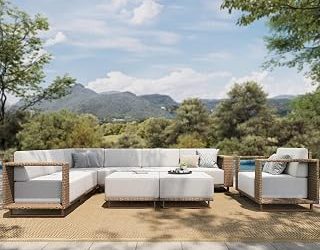
Resin wicker plus a built-in fire table is the most forgiving combination for evening ambience, because the flame supplies your key light and the woven texture catches it at every angle. The light gray weave keeps reflectance high enough that you can run dimmer perimeter lighting and still read faces across the L-shaped couch.
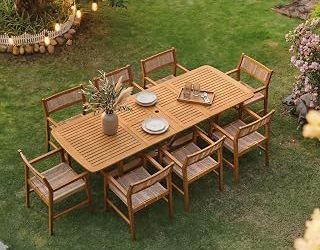
SERWALL 9-Piece HDPE Dining Set
Through-colored HDPE is the material I recommend most often for dining zones, since it doesn’t develop the blotchy sun-fade that betrays cheap finishes under a pendant. The 84-inch table’s umbrella hole is also the easiest legitimate mounting point for a battery pendant or solar column light.
11-Piece Aluminum and Wicker Dining Set
Pairing an aluminum frame with rattan-look chairs gives you two reflectance levels at one table, which is exactly what keeps a dining setup from looking staged and lifeless. The rectangular top handles a linear run of light well, whether that’s a pergola-mounted strip or a pair of hurricane candles.
7-Piece HDPE Sectional in Brown
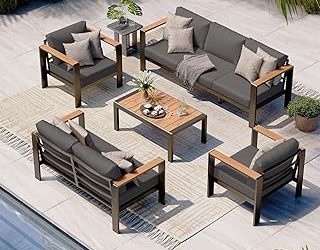
The warm brown HDPE frame is the standout here for anyone running amber-toned bulbs, since it pushes the whole seating area toward that golden-hour tone after sunset. Deep seats and thick foam cushions also cast a longer, softer shadow line, which reads as comfort before anyone sits down.
5-Piece Aluminum Conversation Set in Graphite
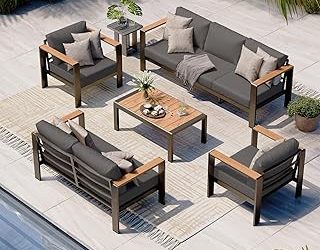
Graphite aluminum is the right call for a small balcony where you want the furniture to visually recede and the view or wall wash to lead. Light it from below or from the side rather than overhead, and keep the cushions lighter than the frame so the seating still registers at night.
Frequently Asked Questions
Which patio material looks best under string lights?
Warm-toned resin wicker and brown HDPE. Both have enough surface variation to catch the small, scattered light points that string lighting produces, so the set looks textured rather than washed out.
Does dark furniture make a patio feel smaller at night?
It can, because dark surfaces absorb rather than bounce light. Counter it by lighting vertical surfaces such as fences, planters, and walls so the room’s edges stay visible even when the furniture reads as shadow.
Is aluminum or HDPE better for hot, sunny patios?
HDPE stays cooler to the touch and won’t conduct heat the way bare metal does. Powder-coated aluminum is lighter to move and resists warping, so it’s the better pick if you rearrange your layout seasonally.
Do glass tabletops cause problems with outdoor lighting?
Frequently, yes. Glass produces specular reflections that put a bright hotspot directly in a seated person’s sightline. If you already own one, switch to indirect or shielded fixtures rather than anything aimed downward at the table.
Final Thoughts
If ambience is your priority, the HOOOWOOO 13-Piece Sectional with Fire Pit Table gives you a built-in light source and a texture that rewards it, making it the easiest set to make look good after dark. For dining, the SERWALL 9-Piece HDPE Set holds its color under years of sun and gives you a practical mounting point overhead, while the 7-Piece HDPE Sectional in Brown is the pick if you’re building the whole scheme around warm, low-Kelvin light.