Key takeaways
- Finish reflectivity: Brushed and powder-coated aluminum diffuses sunlight softly. Polished or high-gloss surfaces bounce it straight into your eyes and into every photo you take. If your lounger faces west, matte wins.
- Color temperature in daylight: Khaki, taupe, and warm gray hold their character from morning through dusk. Cool grays can turn flat and gray-blue at golden hour, and stark white blows out in bright sun. Sample against your decking, not against a screen.
- Heat retention after sundown: Solid HDPE and cast aluminum store daytime heat and release it slowly, which is pleasant in October and unpleasant in July. Sling-style textilene breathes and cools within minutes of shade arriving.
- Recline geometry and sightlines: A fully flat position is for sunbathing; a mid-notch recline of roughly 30 to 45 degrees is what you want for watching a horizon or a lit tree line. More positions means more control over where your gaze lands.
- Mobility as a lighting tool: Wheels aren’t a luxury feature. Sun and shade move across a patio all afternoon, and a lounger you can reposition with one hand is a lounger you’ll actually chase the good light with.
What's inside
Most people shop for a chaise lounge the way they shop for a mattress — they sit down, decide it feels fine, and stop there. Then the chair arrives, gets placed wherever there’s room, and something is off. The frame throws hard glare at four in the afternoon. The seat sits too low to catch the last warm light over the fence. The color that looked calm in a photo reads chalky and washed out under a midday sun, then disappears entirely once the deck lights come on. Comfort was never the whole problem. Placement and light were.
This guide looks at outdoor loungers the way an ambience designer would: how a finish behaves in direct sun, whether a frame casts shadow lines you actually want on a deck, how a recline angle changes your sightline to a sunset or a string-light canopy, and which materials stay usable after the sun drops and surfaces start radiating stored heat. Below are six loungers worth considering in 2026, followed by what to weigh before you buy and honest notes on how each one performs in real outdoor light.
As an Amazon Associate we earn from qualifying purchases.




🛒 Best Price Today on Amazon
Prime members get fast, free shipping on everything above, plus member-only deals. New members get a 30-day free trial — cancel anytime.
How to Choose an Outdoor Chaise Lounge Chair (2026)
- Finish reflectivity: Brushed and powder-coated aluminum diffuses sunlight softly. Polished or high-gloss surfaces bounce it straight into your eyes and into every photo you take. If your lounger faces west, matte wins.
- Color temperature in daylight: Khaki, taupe, and warm gray hold their character from morning through dusk. Cool grays can turn flat and gray-blue at golden hour, and stark white blows out in bright sun. Sample against your decking, not against a screen.
- Heat retention after sundown: Solid HDPE and cast aluminum store daytime heat and release it slowly, which is pleasant in October and unpleasant in July. Sling-style textilene breathes and cools within minutes of shade arriving.
- Recline geometry and sightlines: A fully flat position is for sunbathing; a mid-notch recline of roughly 30 to 45 degrees is what you want for watching a horizon or a lit tree line. More positions means more control over where your gaze lands.
- Mobility as a lighting tool: Wheels aren’t a luxury feature. Sun and shade move across a patio all afternoon, and a lounger you can reposition with one hand is a lounger you’ll actually chase the good light with.
The Best Outdoor Chaise Lounge Chairs (2026) Reviewed
Aluminum Foldable 5-Position Recliner, Khaki
The no-assembly folding build and fully grounded legs make this the most flexible option here — you can stage it poolside for an afternoon and fold it away before evening lighting takes over the space. The khaki sling reads warm and consistent from noon through dusk, and the matte aluminum won’t throw glare back at your seating group.
Oversized HDPE Chaise with Wheels and Cup Holder
Solid HDPE gives you a heavier visual presence and a wide, generous seat, which suits an open backyard where a slim frame would look lost. The wheels earn their keep here: this is a chair you’ll roll from morning shade into late-day sun without asking for help.
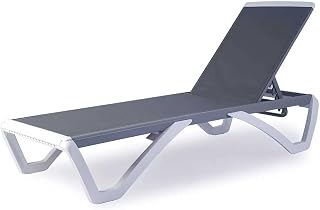
Kozyard Fully Flat Adjustable Patio Lounger, Gray
The textilene sling breathes well and cools off fast once shade arrives, and the aluminum-and-resin frame keeps the silhouette light enough to sit near a pool edge without visually crowding it. The fully flat setting is genuinely flat, which matters if you sunbathe rather than just recline.
Cast Aluminum Poolside Lounger, Set of 2, Beige Cushion
Buying in pairs solves a composition problem most single-chair purchases create: two matched loungers read as an intentional arrangement rather than an afterthought. The beige cushions stay warm-toned under both daylight and low-Kelvin patio lighting, and cast aluminum has the visual weight to anchor a larger deck.
Aluminum Foldable Lounger, 1PC, Khaki
Essentially the single-chair, take-it-anywhere version — beach, lawn, or a narrow side patio where storage is the real constraint. The five-position backrest gives you enough range to dial in a sightline, and folding flat means it disappears when you want the space back.
Frequently Asked Questions
Which material stays coolest to sit on?
Textilene sling fabric, by a clear margin. It’s open-weave, sits away from the frame, and sheds heat within minutes of moving into shade. Solid HDPE and cushioned cast aluminum both hold warmth considerably longer.
Do darker frames look better at night?
They recede, which is usually the goal — dark frames let your lighting become the focal point instead of competing with it. Light frames stay visible after dark and can act as soft reflectors if you have uplighting or low path lights nearby.
Are wheels worth prioritizing?
If your patio gets uneven sun exposure, yes. Being able to move a lounger 6 feet without lifting it is the difference between using a chair and looking at it.
How much space should I leave between two loungers?
Roughly 18 to 24 inches. That’s enough for a side table and enough that shadows from each frame don’t overlap into a single dark mass on your decking.
Final Thoughts
If you want one chair that adapts to shifting light, the Aluminum Foldable 5-Position Recliner in khaki is the easiest pick — matte, portable, and warm-toned in every condition. For a permanent, composed setup, the Cast Aluminum Set of 2 gives you symmetry and enough visual weight to hold a large deck, while the Kozyard Fully Flat Lounger is the one to choose if breathability and a light silhouette near the pool matter most.