Key takeaways
- Spray Angle and Surface Match: A 0° red tip concentrates force onto a pinpoint — great for embedded grime on concrete but risky on painted wood or automotive clear coats. A 25° or 40° white or green tip spreads the stream wider, which is what you want on large flat surfaces where an even, uniform finish matters. Think of it like choosing a light fixture: narrow beam for targeted accents, wide flood for full coverage.
- Orifice Size and GPM Compatibility: A nozzle rated for 2.5 GPM will starve a 4.0 GPM machine, producing weak pressure. Always check that the tip’s orifice rating matches or exceeds your washer’s flow output. Turbo nozzles like the AURORA CAR and the Upgrade 360° Rotating model are specifically engineered for 4.0 GPM systems.
- Quick-Connect Fitting Standard: Nearly every modern consumer pressure washer uses a 1/4-inch quick-connect inlet. All six products here share that standard, which means interchangeability is almost guaranteed — but always verify before purchasing if you own an older or commercial-grade unit.
- Versatility vs. Specialization: Multi-tip kits like the Hourleey 7-piece set and the Tool Daily 5-pack give you a full range of angles in one purchase. A single turbo nozzle, by contrast, does one thing extremely well: rotating high-impact cleaning on hard, non-delicate surfaces. Decide whether you need a toolkit or a specialist tool.
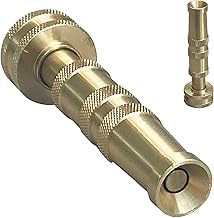
- Build Material and Durability: Brass construction (as seen on the High Pressure Hose Nozzle) resists corrosion and mineral buildup far longer than plastic housings. For tips you plan to leave attached season after season, metal construction pays for itself in longevity.
What's inside
Choosing a pressure washer nozzle feels deceptively simple until you’re standing in front of a wall of 1/4-inch quick-connect tips, each promising different spray angles and flow rates, and wondering which one won’t strip the finish off your patio pavers or leave streaks on your siding. The wrong orifice size or spray degree can turn a weekend cleaning session into a repair project.
This guide breaks down the six top-rated nozzles and tip kits available in 2026, compares their flow capacity and spray patterns, and walks you through exactly how to match a tip to your surface — so you get that crisp, even clean that makes outdoor furniture, stone, and vinyl actually catch the light the way they were meant to.
As an Amazon Associate we earn from qualifying purchases.


How to Choose a Nozzle For Pressure Washer (2026)
- Spray Angle and Surface Match: A 0° red tip concentrates force onto a pinpoint — great for embedded grime on concrete but risky on painted wood or automotive clear coats. A 25° or 40° white or green tip spreads the stream wider, which is what you want on large flat surfaces where an even, uniform finish matters. Think of it like choosing a light fixture: narrow beam for targeted accents, wide flood for full coverage.
- Orifice Size and GPM Compatibility: A nozzle rated for 2.5 GPM will starve a 4.0 GPM machine, producing weak pressure. Always check that the tip’s orifice rating matches or exceeds your washer’s flow output. Turbo nozzles like the AURORA CAR and the Upgrade 360° Rotating model are specifically engineered for 4.0 GPM systems.
- Quick-Connect Fitting Standard: Nearly every modern consumer pressure washer uses a 1/4-inch quick-connect inlet. All six products here share that standard, which means interchangeability is almost guaranteed — but always verify before purchasing if you own an older or commercial-grade unit.
- Versatility vs. Specialization: Multi-tip kits like the Hourleey 7-piece set and the Tool Daily 5-pack give you a full range of angles in one purchase. A single turbo nozzle, by contrast, does one thing extremely well: rotating high-impact cleaning on hard, non-delicate surfaces. Decide whether you need a toolkit or a specialist tool.
- Build Material and Durability: Brass construction (as seen on the High Pressure Hose Nozzle) resists corrosion and mineral buildup far longer than plastic housings. For tips you plan to leave attached season after season, metal construction pays for itself in longevity.
The Best Nozzle For Pressure Washer (2026) Reviewed
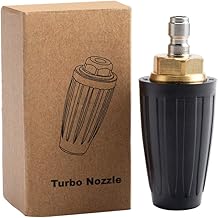
AURORA CAR Turbo Nozzle 4000 PSI
This rotating turbo tip delivers a concentrated 360° cone of water at up to 4.0 GPM, making it one of the most aggressive cleaning nozzles in its class. It excels on brick, concrete, and vinyl where you want fast, deep grime removal without manually sweeping the wand back and forth.
Tool Daily 5-Pack Nozzle Tips
A well-curated starter kit that covers the essential spray angles from 0° to 65°, each with a color-coded body for quick identification mid-job. At 2.5 GPM and 4000 PSI rating, these tips are a reliable match for most residential pressure washers and perform consistently across car, deck, and siding tasks.
Hourleey 7-Piece Nozzle Set with Holder
Seven tips and a dedicated holder bracket make this the most complete kit on the list. The inclusion of both narrow and wide-angle tips alongside a soap nozzle means you can tackle everything from pinpoint stain removal to full-surface foam washing without switching products.
Twinkle Star Pressure Washer Tip Set
Compact and affordable, this set covers the core angles you need for everyday washing at 2.5 GPM. The build quality holds up well through repeated hot-water cycles, and the quick-connect fittings seat firmly without leaking — a small detail that makes a noticeable difference in sustained output pressure.
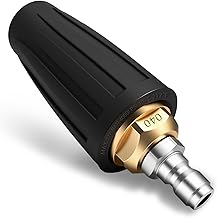
Turbo Nozzle 360° Rotating Spray Tips
An upgrade-oriented turbo nozzle with a wider rotating spray pattern than many competitors. The 4.0 GPM rating handles high-flow machines comfortably, and the brass internals resist wear even when used daily on garden paths, driveways, and concrete retaining walls.
Frequently Asked Questions
What spray angle is safest for car paint?
A 40° white tip is the standard recommendation for automotive surfaces. It distributes pressure widely enough to avoid cutting through clear coat while still providing enough force to lift road film and bugs effectively.
Can I use a turbo nozzle on wood decks?
Turbo nozzles generate a rotating cone of concentrated force that can gouge soft wood fibers. For decks, a 25° green or 40° white stationary tip at reduced pressure is the safer choice to preserve the wood grain and any existing stain or sealant.
Do I need different tips for hot and cold water pressure washers?
Standard tips work with both, but hot-water units (above 140°F) benefit from brass or stainless-steel construction to prevent gasket degradation over time. The Hourleey and Twinkle Star kits use materials rated for typical hot-water temperatures.
What does the orifice number on a nozzle mean?
The orifice number indicates the internal bore diameter that controls water flow. A 4.0 orifice allows more volume than a 2.5, so matching orifice size to your washer’s GPM rating ensures you get the full rated pressure at the tip rather than a throttled, underpowered spray.
Final Thoughts
For high-flow machines that need aggressive cleaning power, the AURORA CAR Turbo Nozzle and the Upgrade 360° Rotating Turbo Nozzle stand out as the strongest performers. For everyday versatility across multiple surfaces, the Hourleey 7-piece kit offers the broadest range in a single, well-organized package. Any of these three will give you a clean finish that lets your outdoor spaces look their best.