Key takeaways
- Certifications over adjectives: GOLS for organic latex, GOTS for cotton and wool, OEKO-TEX Standard 100 for tested-for-substances textiles. “Eco,” “green,” and “natural” are marketing words with no floor under them. A certificate number you can look up is worth more than a whole page of leaf icons.
- Know what the fill actually is: Rayon and viscose derived from bamboo are processed cellulose, not raw plant fiber — fine to sleep on, but the sustainability story is thinner than the packaging suggests. Latex, wool, and cotton are the three genuinely low-intervention fills.
- Flame retardants and adhesives: These are the two most common hidden inputs. Wool passes fire standards on its own chemistry, which is why wool toppers rarely need treatment. Glued or laminated constructions are worth a question; quilted and hand-tufted ones usually aren’t.
- Heat behavior, not just heat claims: Latex and wool move moisture structurally. Thick polyester-shelled pillow tops trap it. If you run hot, prioritize open cell structure and fiber breathability over any cooling coating, which wears off.
- Depth and anchoring: Measure your mattress including any existing protector. A pocket rated to 18–21 inches on a 12-inch mattress will sag and wrinkle, and wrinkles under raking lamplight are the fastest way to make a nice bed look cheap.
What's inside
I light rooms for a living, which means I spend a lot of time looking at bedding under a 2700K bulb at nine at night, watching how a surface takes shadow. A topper changes a bed more than most people expect: it lifts the mattress line, softens the edge where quilting meets shadow, and shifts the whole sheen of the sleeping surface. What I’ve learned from that close looking is that the materials which behave best under warm light tend to be the same ones that behave best in a sealed bedroom — natural fibers, honest weaves, finishes that aren’t hiding behind a chemical gloss. The plasticky ones announce themselves twice: once in the specular hot spot they throw off a bedside lamp, and again in that faint sweet smell on night three.
That smell is the real problem buyers are trying to solve. A bedroom is a small, closed, low-airflow room you occupy for a third of your life, and a topper sits inches from your face. This guide covers what “non toxic” actually means when you’re shopping in 2026 — which certifications carry weight, which materials off-gas and which don’t, and how six well-reviewed toppers compare on fill, breathability, and build. I’ve weighted comfort and heat performance alongside material safety, because a clean topper you sweat through at 3am isn’t a solution.
As an Amazon Associate we earn from qualifying purchases.


How to Choose a Non Toxic Mattress Topper (2026)
- Certifications over adjectives: GOLS for organic latex, GOTS for cotton and wool, OEKO-TEX Standard 100 for tested-for-substances textiles. “Eco,” “green,” and “natural” are marketing words with no floor under them. A certificate number you can look up is worth more than a whole page of leaf icons.
- Know what the fill actually is: Rayon and viscose derived from bamboo are processed cellulose, not raw plant fiber — fine to sleep on, but the sustainability story is thinner than the packaging suggests. Latex, wool, and cotton are the three genuinely low-intervention fills.
- Flame retardants and adhesives: These are the two most common hidden inputs. Wool passes fire standards on its own chemistry, which is why wool toppers rarely need treatment. Glued or laminated constructions are worth a question; quilted and hand-tufted ones usually aren’t.
- Heat behavior, not just heat claims: Latex and wool move moisture structurally. Thick polyester-shelled pillow tops trap it. If you run hot, prioritize open cell structure and fiber breathability over any cooling coating, which wears off.
- Depth and anchoring: Measure your mattress including any existing protector. A pocket rated to 18–21 inches on a 12-inch mattress will sag and wrinkle, and wrinkles under raking lamplight are the fastest way to make a nice bed look cheap.
The Best Non Toxic Mattress Topper (2026)s Reviewed
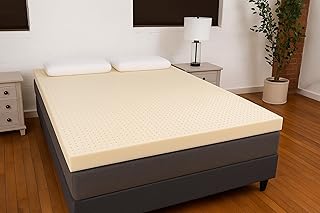
Pure Green Natural Latex Topper, 2 Inch Soft (Queen)
GOLS-certified organic latex with nothing laminated to it — the cleanest construction on this list and the one I’d point a chemically sensitive sleeper toward first. The two-inch soft profile adds genuine give without floating you above the mattress, and latex’s open cell structure keeps night heat moving instead of pooling.
Organic Merino Wool Topper, 1650 GSM
Handmade, dense, and naturally flame-resistant, which sidesteps the treated-textile problem entirely. Wool’s temperature buffering is the most underrated feature in bedding: it dulls both the 2am chill and the pre-dawn overheat, and it takes light with a soft matte fall that flatters a bed rather than shining back at you.
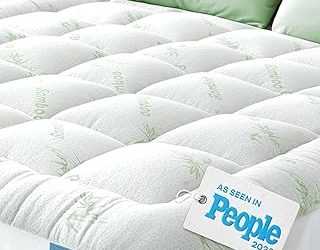
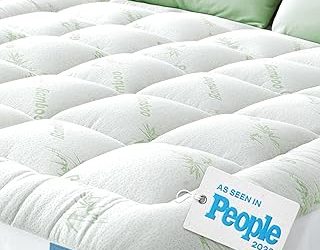
BEDLORE Viscose Bamboo Pillow Top (Queen)
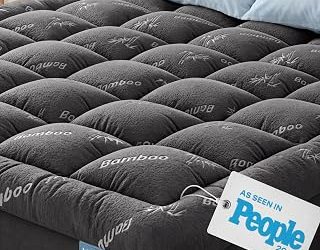
A thick, plush pillow top with stretch pockets that genuinely handle 6″ to 18″ mattresses, which is a wider real-world range than most claim. The viscose surface is smooth and cool to first touch — the softest landing here, though the fill is processed cellulose rather than a raw natural fiber.
Niagara Sleep Solution Cooling Topper (Full)
Bamboo-derived rayon over a lofted pillow top, with a 20-inch pocket that suits deep mattresses and toppers layered over protectors. It’s the value pick for hot sleepers who want plush comfort without a foam core, and the full-size availability fills a gap most brands skip.
100% Cotton Extra Thick Pillow Top (Queen)
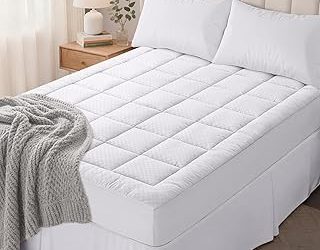
Straightforward cotton on top, generous loft, machine washable — the low-drama option when you want breathability and a fabric you can identify by touch. Expect it to compress somewhat over the first month and settle into a flatter, cooler surface.
Frequently Asked Questions
Does a non toxic topper still have a smell?
Natural latex has a faint milky scent that fades within a week of airing; wool can smell mildly of lanolin. Neither is off-gassing. What you’re avoiding is the sharp chemical sweetness of memory foam, which can persist for weeks.
Is bamboo viscose genuinely non toxic?
The finished fabric is safe to sleep on and typically OEKO-TEX tested, but the fiber is chemically processed from plant pulp. If your priority is minimal processing, latex, wool, or cotton are the more consistent choices.
Wool in summer — really?
Yes. Wool absorbs moisture vapor without feeling damp and releases it as your room cools, so it regulates rather than insulates. It’s the fill I recommend for people who sleep in rooms that swing 10 degrees overnight.
Do I need a protector over it?
Over latex and wool, a thin cotton or OEKO-TEX protector is worth it since neither is easy to launder. Quilted cotton pillow tops like the EASELAND Cotton Pad are machine washable and can serve as the protective layer themselves.
Final Thoughts
For the cleanest materials and the best long-term structure, the Pure Green Natural Latex topper is the one I’d buy, with the Organic Merino Wool topper close behind for anyone who wants natural flame resistance and real temperature buffering. If plush comfort matters more than fiber purity, the BEDLORE Viscose Bamboo pillow top gives you the softest surface here at a far gentler price — and under a warm bedside lamp, it still reads like a properly made bed.