Key takeaways
- Cut-line indication: Laser guides project a thin red line that reads beautifully in dim rooms but washes out under bright daylight or strong overhead LEDs. Shadow-line systems cast the blade’s own silhouette onto the workpiece, which stays legible in almost any lighting and never needs recalibration. If your shop is bright, favor shadow-line.
- Single vs. dual bevel: Single-bevel saws tilt one direction, so you flip stock for opposing angles. Dual bevel tilts both ways, which matters for crown molding and long furniture aprons where flipping a workpiece is awkward or introduces error.
- Slide vs. fixed head: A sliding saw handles wide boards — shelf panels, tabletop breadboards, stair treads. Fixed compound saws are lighter, cheaper, and hold zero better over time. Match this to your widest realistic cut, not your most ambitious one.
- Corded or MultiVolt battery: Cordless removes the cord-snag hazard around your feet and lets you work where lighting is portable too. Corded 15-amp saws deliver relentless power for hardwood and long sessions without watching a charge indicator.
- Fence height and dust behavior: Tall sliding fences support crown stock; effective dust collection keeps sawdust off your workpiece and out of the air, where it scatters light and dulls your view of the cut. Both quietly affect accuracy more than most spec sheets admit.
What's inside
Anyone who has cut trim under a single bare bulb knows the problem: the blade path disappears into its own shadow at the exact moment precision matters. Shop light placement, blade shadow, and how a saw indicates its cut line are not accessories to accuracy — they are the mechanism of it. Most buyers evaluate a 10-inch miter saw on amp draw and slide capacity, then discover the real limiting factor is whether they can see the line they are supposed to be following.
This guide looks at six 10-inch miter saws through that lens alongside the usual fundamentals — bevel range, crosscut capacity, motor type, and build quality. Laser guides and LED shadow-line systems behave very differently depending on your workshop’s ambient light, so we treat cut-line visibility as a spec worth comparing rather than a marketing bullet. Whether you are milling furniture components in a bright garage bay or working in a dim basement corner, the right pick depends heavily on the light you already have.
As an Amazon Associate we earn from qualifying purchases.


How to Choose a Miter Saw 10 Inch (2026)
- Cut-line indication: Laser guides project a thin red line that reads beautifully in dim rooms but washes out under bright daylight or strong overhead LEDs. Shadow-line systems cast the blade’s own silhouette onto the workpiece, which stays legible in almost any lighting and never needs recalibration. If your shop is bright, favor shadow-line.
- Single vs. dual bevel: Single-bevel saws tilt one direction, so you flip stock for opposing angles. Dual bevel tilts both ways, which matters for crown molding and long furniture aprons where flipping a workpiece is awkward or introduces error.
- Slide vs. fixed head: A sliding saw handles wide boards — shelf panels, tabletop breadboards, stair treads. Fixed compound saws are lighter, cheaper, and hold zero better over time. Match this to your widest realistic cut, not your most ambitious one.
- Corded or MultiVolt battery: Cordless removes the cord-snag hazard around your feet and lets you work where lighting is portable too. Corded 15-amp saws deliver relentless power for hardwood and long sessions without watching a charge indicator.
- Fence height and dust behavior: Tall sliding fences support crown stock; effective dust collection keeps sawdust off your workpiece and out of the air, where it scatters light and dulls your view of the cut. Both quietly affect accuracy more than most spec sheets admit.
The Best Miter Saw 10 Inch (2026)s Reviewed
Metabo HPT MultiVolt 36V Sliding Miter Saw (C3610DRAQA)
This is the most capable saw here: cordless freedom with corded-class power, dual bevel, and a slide that handles wide furniture panels without hesitation. The absence of a cord is a genuine safety and workflow win in tight or poorly lit spaces where you cannot easily see what is underfoot.
DOVAMAN Dual Bevel 10-Inch Sliding Miter Saw
The LED shadow-line system is the standout — it stays readable under bright shop lights where lasers vanish, and it never drifts out of alignment. Dual bevel, two-speed control, and three included TCT blades make it unusually versatile for mixed-material furniture work.
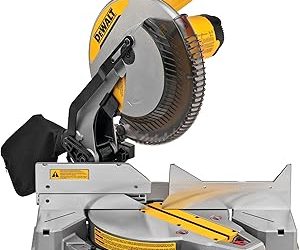
DEWALT 10-Inch Single Bevel Compound Miter Saw (DWS713)
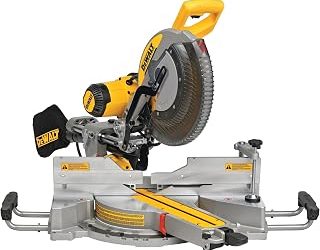
A no-nonsense fixed compound saw that holds its angles and shrugs off hard use. Its tall sliding fence supports crown stock well, and the stainless miter detent plate keeps positive stops crisp after years of adjustment.
Metabo HPT 10-Inch Single Bevel Compound Miter Saw (C10FCG2)
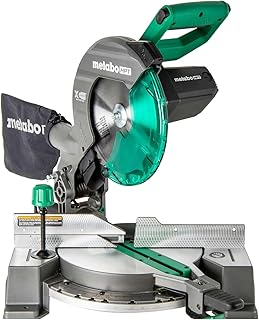
The lightest genuinely accurate option in this group, with the Xact Cut shadow line delivering excellent visibility for the price. Ideal if you carry your saw between rooms or work in a space where you set up temporary lighting each session.
DOVAMAN Updated 10-Inch Sliding Miter Saw
Ambidextrous controls and a 13.4-inch crosscut capacity make this a practical single-bevel slider for shelving and case goods. The laser guide performs best in moderate-to-dim light; under strong daylight you will rely more on the blade itself.
Frequently Asked Questions
Is a laser guide or LED shadow line better?
Shadow lines are more reliable overall because they show the blade’s actual kerf and cannot fall out of calibration. Lasers excel in dim workspaces but wash out under bright light and require occasional adjustment.
Do I need a sliding miter saw for furniture building?
If you cut shelf panels, wide aprons, or tabletop components, yes. For rails, stiles, legs, and trim under about six inches wide, a fixed compound saw is lighter and just as accurate.
How much does workshop lighting actually affect cut accuracy?
Considerably. Position two light sources at roughly 45 degrees to either side of the blade to eliminate the shadow that falls directly on your cut line. Single overhead lighting is the most common cause of “unexplained” off-line cuts.
Can a 10-inch saw cut hardwood cleanly?
Yes, with a 60- to 80-tooth fine-finish blade and a slower feed. The stock 40-tooth blades included with most of these saws are general-purpose; upgrading is the cheapest accuracy improvement you can make.
Final Thoughts
For most furniture makers, the DOVAMAN Dual Bevel Sliding Miter Saw offers the best balance of capacity, cut-line visibility, and value, while the Metabo HPT MultiVolt 36V is the pick if cordless flexibility and dual-bevel range justify the investment. If you want a compact, dependable saw that simply holds true, the DEWALT DWS713 remains hard to beat.