Key takeaways
- Coil gauge over coil count: Marketing loves big numbers, but a heavy side sleeper needs thicker steel (lower gauge) and reinforced perimeter zones. Pocketed springs in the 13–15 gauge range resist the trench that forms under hips after a year of nightly loading.
- Depth with purpose: Fourteen inches is roughly the sweet spot — enough foam above the coils to cradle a shoulder, enough support core beneath to stop bottoming out. Thickness alone means nothing if the top eight inches are soft filler.
- Firmness that reads soft on the surface, firm underneath: Side sleeping needs shoulder and hip give; higher body weight needs a resolute base. Look for medium-firm ratings with a plush comfort layer rather than a uniformly soft build.
- Heat, honestly assessed: Larger bodies generate and trap more heat, and dense memory foam compounds it. Gel infusions, graphene or copper conductivity, and open grid structures all help — but airflow through the coil layer matters most.
- Trial length as a durability signal: A 365-night trial or a decade-long warranty tells you the manufacturer expects the mattress to survive real load. Short trials on budget foam beds are a quiet admission.
What's inside
I spend most of my working life deciding how a bedroom should feel after sunset — where the light pools, how low the color temperature drops, which surfaces absorb glow and which ones bounce it. And in the last few years I’ve had the same conversation with a particular kind of client over and over: a larger-bodied side sleeper who has done everything right with the room and still wakes up at 3 a.m. with a dead shoulder and a hip that feels bruised. No amount of warm 2200K light fixes a mattress that lets a 280-pound frame sink until the spine kinks. Ambience is the invitation to sleep; the sleep surface is what keeps the appointment.
This guide approaches the problem the way I approach a lighting plan — by looking at load, layering, and how a system behaves over years rather than on day one. Below are the mattresses I’ve seen hold up for heavier side sleepers, along with the specs that actually predict comfort at higher body weights, plus answers to the questions clients ask me while we’re standing in a half-lit bedroom at the end of a walkthrough.
As an Amazon Associate we earn from qualifying purchases.




How to Choose a Mattress For Obese Side Sleepers (2026)
- Coil gauge over coil count: Marketing loves big numbers, but a heavy side sleeper needs thicker steel (lower gauge) and reinforced perimeter zones. Pocketed springs in the 13–15 gauge range resist the trench that forms under hips after a year of nightly loading.
- Depth with purpose: Fourteen inches is roughly the sweet spot — enough foam above the coils to cradle a shoulder, enough support core beneath to stop bottoming out. Thickness alone means nothing if the top eight inches are soft filler.
- Firmness that reads soft on the surface, firm underneath: Side sleeping needs shoulder and hip give; higher body weight needs a resolute base. Look for medium-firm ratings with a plush comfort layer rather than a uniformly soft build.
- Heat, honestly assessed: Larger bodies generate and trap more heat, and dense memory foam compounds it. Gel infusions, graphene or copper conductivity, and open grid structures all help — but airflow through the coil layer matters most.
- Trial length as a durability signal: A 365-night trial or a decade-long warranty tells you the manufacturer expects the mattress to survive real load. Short trials on budget foam beds are a quiet admission.
The Best Mattress For Obese Side Sleepers (2026)s Reviewed
Sleepmax 14 Inch Hybrid
A well-balanced hybrid that gives shoulders somewhere to go while the pocketed coil core carries the load, and the 365-night trial gives you a full seasonal cycle to judge it. It’s the pick I recommend most often when someone wants hybrid support without a premium price.
Soft Plush 14 Inch Hybrid
Gel memory foam over pocketed springs, tuned deliberately for side sleepers who need the top layer to yield at the shoulder. The plush surface reads generous immediately, so it suits anyone who has been fighting a too-firm mattress rather than a too-soft one.
BedStory 14 Inch Hybrid
Built explicitly around heavier sleepers, with zoned lumbar reinforcement and a no-sag pocket spring design backed by a ten-year warranty. If your current mattress has developed a visible valley, this is the structural answer.
EGOHOME 14 Inch Memory Foam
An all-foam option that solves foam’s usual weakness — heat — with copper gel infusion and a graphene cover, plus genuinely excellent motion isolation for couples. Medium-firm and fiberglass-free, it’s the choice for sleepers who want contour over bounce.
Purple Plus 11″ King
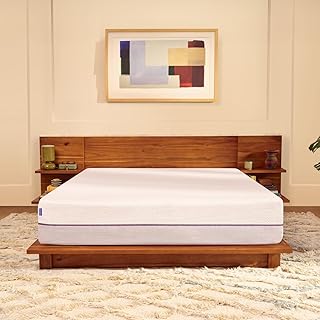
The GelFlex Grid behaves unlike anything else on this list: it buckles under concentrated pressure at the shoulder and hip while staying supportive everywhere else, and it runs temperature-neutral by design. Worth the premium if you sleep hot and dislike the sunken feeling of foam.
Frequently Asked Questions
Is hybrid always better than memory foam at higher body weights?
Usually, yes — coils resist compression fatigue better than foam over time. But a dense, well-engineered foam bed like the EGOHOME can outperform a cheap hybrid, so judge the build rather than the category.
How firm should I go as a side sleeper over 250 pounds?
Aim for medium-firm. Higher body weight compresses any surface further than the label suggests, so a mattress rated medium-firm often feels medium to you. The Sweetnight CoolNest, with its five-zone ergonomic support, is a good example of medium feel done with enough structure to hold up.
Will a 14-inch mattress work with my existing bed frame?
Check slat spacing first — no more than three inches apart, or the mattress will sag between them regardless of quality. A solid platform or bunkie board is cheap insurance.
Does bedroom temperature and lighting actually affect this?
It does. Dim, warm light in the last hour before bed and a room in the mid-60s Fahrenheit reduce how much cooling you need from the mattress itself. The two systems work together.
Final Thoughts
For most larger side sleepers, the Sleepmax 14 Inch Hybrid is the sensible starting point — supportive, cool enough, and generously trialed. Choose the BedStory if sagging is the enemy you’re trying to defeat, or the Purple Plus if you sleep hot and want pressure relief that doesn’t come with the sinking sensation of foam. Get the surface right, then let the lighting do its quieter work.