Key takeaways
- Cotton, memory foam, microfiber, bamboo or stone? Compare bath mat materials by absorbency, grip, washing care and feel to choose well for your bathroom.
Step out of the shower and the mat under your feet has one job: take the water off your skin and the floor, then dry again before the next shower. Materials handle that job very differently. Cotton soaks up a lot but stays damp for hours, stone pulls water in and dries at the surface within minutes, and bamboo slats do not absorb at all. The right choice depends on how wet your bathroom gets, how often you wash laundry, and whose feet need steady footing.
This guide walks through the six material families you will meet — cotton, memory foam, microfiber, bamboo and wood, diatomaceous stone, and chenille — and compares them on absorbency, grip, care, and feel. It is written for anyone furnishing a first bathroom, replacing a mat that never seems to dry, or making a family bathroom safer and easier to keep fresh. By the end, you should be able to match a material to your floor, your ventilation, and your laundry habits.
As an Amazon Associate we earn from qualifying purchases.
How to Choose
Absorbency and drying speed come first
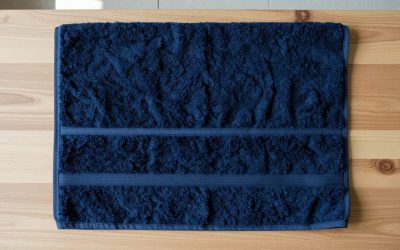
Cotton is the benchmark for soaking up water. Its natural fibers hold a generous amount, which is why cotton mats feel properly dry underfoot the first time you step on them. The trade-off is drying: a thick cotton pile releases moisture slowly, and in a busy bathroom it may still feel cool and damp at the next shower. Chenille, usually a shaggy polyester pile, also traps a lot of water between its strands and feels plush doing it, but that depth of pile dries more slowly than a flat weave.
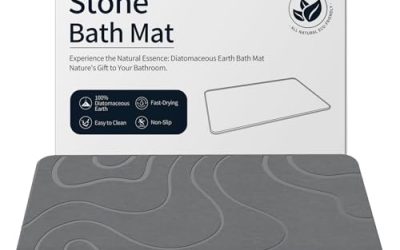
Microfiber takes a different route. Its split synthetic fibers pull in water quickly and spread it through a thin mat, so the total capacity is lower than cotton while the drying time is noticeably shorter. Memory foam absorbs into the foam core beneath its cover; the surface can feel dry while the inside stays wet for a long while, which is why foam mats benefit from being stood on edge to air. Diatomaceous stone barely behaves like fabric at all: water wicks into its porous surface and evaporates fast, so the top feels dry within minutes, though it stores far less water overall. Bamboo and wood slats absorb nothing — water falls through to the floor or evaporates off the slats, so the mat itself is dry almost immediately while the floor beneath is not.
Grip and backing keep you upright
A mat that skates across wet tile is worse than no mat, so look at the underside before the surface. Fabric mats stay put in different ways. Many cotton and chenille mats carry a sprayed or coated rubber backing that grips smooth floors well when new; that coating can crack and flake after repeated hot washes, and grip fades with it. Some cotton mats come unbacked and rely on weight and a textured weave, which is fine on rougher stone or textured tile but can wander on polished porcelain. A separate non-slip underlay solves that, at the cost of one more layer to wash and dry.
Microfiber mats often use a PVC or rubber dot backing that holds firmly and keeps the mat low and flat, which also helps doors clear it. Memory foam mats almost always have a rubberized base, and their weight helps, but a saturated foam mat can still hydroplane on a film of water if the backing is worn. Slatted bamboo and wood mats sit on small feet or pads; the platform itself does not slide easily, though the top surface can feel slick to wet feet until you learn to step flat. Stone mats are rigid and heavy for their size, so they stay where you put them, and their matte surface gives bare feet decent purchase even when wet.
Washing and care burden add up
Care is where the materials separate most sharply. Cotton is the easiest to live with if you have a washing machine: most cotton mats go in with towels, and they come out ready to hang or tumble dry. The catch is frequency. Because cotton holds water so long, it needs washing more often than other fabrics to keep it smelling fresh, and a mat left damp on the floor between washes can develop a musty odor. Chenille is usually machine washable too, though the pile sheds lint early on and prefers a gentle cycle and low heat so the backing survives.
Microfiber is also machine washable and dries on the line faster than cotton, but it loses absorbency if washed with fabric softener, which coats the fibers, so wash it with plain detergent. Memory foam asks the most patience: many foam mats are spot-clean or hand-wash only because the core breaks down in a machine, and a soaked foam mat can take a day or more to dry fully. Bamboo and wood need no laundry at all — a wipe down and air in a ventilated spot — but water sitting under the slats should be mopped up so the floor and the wood stay in good shape. Stone mats rinse or wipe clean, dry themselves, and occasionally need light sanding of the surface when absorption slows, a quirk worth knowing before you commit.
Feel underfoot and your bathroom conditions
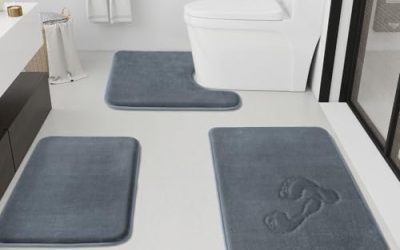
Comfort is personal, but it is not random: it follows the construction. Memory foam gives the deepest cushion, softening hard tile and feeling kind to tired feet and knees, and its cover feels warm rather than cold. Chenille is the plush fabric option, with a soft, almost shaggy texture that many people love in winter. Cotton sits in the middle — soft, familiar, slightly cool when damp. Microfiber feels smooth and low-profile rather than luxurious; you notice its dryness more than its padding.
Stone and bamboo sit at the firm end. A diatomaceous mat feels like smooth, cool stone because it is stone-like; some people enjoy the clean, dry sensation, others miss softness entirely. Bamboo slats feel firm and slightly raised, closer to a duckboard than a rug, and can feel cold in an unheated room. Match the material to the room as well as the feet. A steamy bathroom with weak ventilation punishes slow-drying cotton and foam, while a well-aired room with a heated floor forgives almost anything. Thick mats of any kind raise the floor level, so check that the door still swings over the pile and that nobody will catch a toe on a high edge at night.
Which One Fits Your Situation
A family bathroom with daily showers
Choose a workhorse fabric and buy it twice. Cotton or chenille with a sound rubber backing handles back-to-back showers, absorbs the splashes children leave behind, and goes straight into the wash with the towels. A second mat in rotation means one can dry fully while the other works, which keeps odor away and doubles the life of both. Avoid memory foam here: with no recovery time between showers, the core rarely dries, and the mat spends its life damp. Flat microfiber is the fallback if laundry already overflows.
A small bathroom that stays damp
Pick the material that dries itself. A diatomaceous stone mat pulls water off your feet and dries at the surface without laundry, and it takes up no drying space you do not have. Slatted bamboo is the other strong option, since the mat itself holds no water and air can move beneath it. Flat microfiber works if you prefer fabric and can hang it over the tub edge after use. Thick cotton and foam are the hardest to keep fresh in a room that never fully dries.
Safer footing for older adults
Prioritize a mat that stays flat, stays put, and does not surprise anyone. A low-profile microfiber or cotton mat with a full rubber backing grips the floor, presents no high edge to catch a toe, and will not bunch under a walking aid. Skip thick memory foam, whose soft edge can compress unevenly, and be cautious with unbacked cotton on polished tile. Whatever you choose, lift it weekly to check the backing still grips and the floor beneath is dry.
A household that avoids laundry
Stone and bamboo ask almost nothing of your laundry routine. A diatomaceous mat needs only an occasional rinse and time in open air, plus light sanding if its surface ever drinks more slowly. A bamboo platform needs a wipe and a quick mop beneath it. If you want one fabric option in reserve, flat microfiber is the lightest wash and the fastest line-dry of the fabrics. The materials to avoid are the thirsty ones — deep cotton and chenille — which earn their keep only with regular washing.
Common Mistakes
- Choosing by softness alone. The plushest mat in the shop can be the worst fit for a steamy bathroom if it never dries; match drying speed to your room before you fall for a texture.
- Trusting an old rubber backing. Backings crack and smooth out with heat and age, quietly turning a safe mat into a skating rink; flex the corners now and then and replace the mat when the grip feels polished.
- Leaving the mat down and damp all week. Fabric left flat on a wet floor traps moisture against both surfaces and grows musty fast; hang fabric mats over the tub or a rail between uses.
- Washing microfiber with fabric softener. Softener coats the split fibers that make microfiber absorbent, so each wash quietly removes the property you bought it for; use plain detergent instead.
- Expecting a stone mat to behave like a rug. Diatomaceous mats are rigid, cool, and uncushioned, and they can crack if dropped on a hard floor; buy one for dryness, not for comfort.
Frequently Asked Questions
Which bath mat material absorbs the most water?
For sheer volume, deep cotton and chenille hold the most water in their pile, which is why they feel dry underfoot even in a busy bathroom. Microfiber absorbs less in total but spreads water thinly and releases it faster. Stone works differently: it stores little, yet its surface feels dry again within minutes because water wicks in and evaporates. The best absorber for you depends on whether you need capacity across many showers or a dry surface between two.
Which bath mat material dries the fastest?
At the surface, diatomaceous stone dries fastest — water disappears into the porous board and evaporates, leaving the top feeling dry in minutes. Bamboo slats also stay dry themselves, though the floor beneath them does not. Among fabrics, thin microfiber dries quickest, well ahead of chenille and cotton. Memory foam is the slowest of all, because water that reaches the core has to work its way back out through the cover, which can take a day or more in a humid room.
Are stone bath mats hard to look after?
They ask for different care rather than more care. There is no laundry: rinse or wipe the surface, let the mat dry standing in open air, and keep soaps off it where you can, since residue can clog the pores. If absorption slows over time, a light sanding of the surface restores it, which is the maintenance step makers describe for this material. The real cautions are physical — the board is rigid and can crack if dropped or struck on a hard floor.
How often should you wash a fabric bath mat?
Let the bathroom decide. In a family bathroom with daily showers, washing a cotton or chenille mat once a week is a sensible rhythm, and hanging it to dry between uses matters as much as the wash itself. A mat in a guest bathroom that sees weekend use can go far longer. Microfiber follows the same rhythm but skips the fabric softener. Any fabric mat that smells musty after washing has usually been left damp too long, so dry it fully before it goes back down.
More from Amazon
Programs that pair well with the guide above. Offers and eligibility are set by Amazon and may change.
Collect the home and kitchen items you want in one registry that guests can shop from.
Create a wedding registrySet up recurring deliveries of everyday items on eligible products. Terms and savings are set by Amazon.
Explore Subscribe & SaveFree shipping on eligible items, Prime Video and more. Eligible new members can start with a free trial.
Start a Prime free trialAudiobooks and podcasts to listen to on the go. Eligible new members can start with a free trial.
Try Audible freeAs an Amazon Associate we earn from qualifying purchases.