Key takeaways
- Sheen behaviour: Silicone-heavy formulas leave a semi-gloss film that turns your sofa into a mirror for every lamp and window in the room. If your leather started matte, choose a conditioner that dries without a surface film — you want the light to sink into the grain, not bounce off it.
- UV protection: Direct sun is the single fastest way to fade dyed leather, and diffused daylight is barely gentler over years. A conditioner with stated UV inhibitors buys you real time on any sofa within reach of a window.
- Finished vs. unfinished leather: Most sofas are finished (pigmented) leather with a clear topcoat, which conditions differently than aniline or nubuck. Check the label for the leather type it’s rated for, and test on a hidden panel — the back of a skirt or under a cushion — before committing.
- Cleaner-then-conditioner sequence: Conditioning over body oil and dust seals the grime in and produces blotchy sheen. Either buy a two-step kit or plan on a separate cleaning pass first; single-bottle hybrids are convenient but do less on heavily soiled seats.
- Coverage per bottle: A three-seat sofa plus a matching chair will eat a small 8 oz bottle in one session. Size up, or buy multipacks, so you can commit to a full even application rather than rationing product across panels.
What's inside
Anyone who works with light for a living learns to read leather before they read a spec sheet. Under a north-facing window at four in the afternoon, a neglected sofa announces itself instantly: the seat cushions go chalky and flat where the raking light hits, the arms hold a greasy shine from hand oils, and the piping shows fine grey lines that catch highlight like cracks in old plaster. Most people don’t notice the drying-out phase at all, because they see the sofa under diffuse ceiling light that flattens everything. By the time the damage is visible in ordinary light, the surface has already lost the flexibility it needs to move without splitting.
This guide looks at leather conditioners the way I’d evaluate a finish sample on a lighting mock-up: how the product changes sheen, whether it darkens the hide, how evenly it lays down across an eight-foot expanse, and whether it survives the UV load of a sunlit room. Below you’ll find the products worth using on furniture specifically, plus the criteria that actually matter once you stop thinking of a sofa as a leather object and start thinking of it as a large reflective surface in your room.
As an Amazon Associate we earn from qualifying purchases.




How to Choose a Leather Conditioner For Sofa (2026)
- Sheen behaviour: Silicone-heavy formulas leave a semi-gloss film that turns your sofa into a mirror for every lamp and window in the room. If your leather started matte, choose a conditioner that dries without a surface film — you want the light to sink into the grain, not bounce off it.
- UV protection: Direct sun is the single fastest way to fade dyed leather, and diffused daylight is barely gentler over years. A conditioner with stated UV inhibitors buys you real time on any sofa within reach of a window.
- Finished vs. unfinished leather: Most sofas are finished (pigmented) leather with a clear topcoat, which conditions differently than aniline or nubuck. Check the label for the leather type it’s rated for, and test on a hidden panel — the back of a skirt or under a cushion — before committing.
- Cleaner-then-conditioner sequence: Conditioning over body oil and dust seals the grime in and produces blotchy sheen. Either buy a two-step kit or plan on a separate cleaning pass first; single-bottle hybrids are convenient but do less on heavily soiled seats.
- Coverage per bottle: A three-seat sofa plus a matching chair will eat a small 8 oz bottle in one session. Size up, or buy multipacks, so you can commit to a full even application rather than rationing product across panels.
The Best Leather Conditioner For Sofa (2026)s Reviewed
Leather Honey Leather Conditioner
The benchmark for furniture, and the one I recommend when someone wants softness without gloss — it soaks in, dries to a natural low sheen, and doesn’t leave the plasticky highlight that ruins matte upholstery. It’s rated safe for light and white leather, which matters because many conditioners noticeably deepen pale hides.
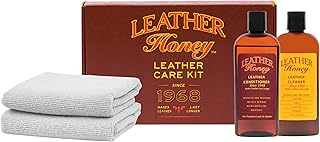
Leather Honey Complete Leather Care Kit
The same conditioner bundled with the matching cleaner and cloths, which is the honest way to buy it: cleaning first is not optional on a sofa that gets daily use. For a full living-room restoration this kit removes the guesswork about what to apply in which order.
Weiman Leather Cleaner & Conditioner
A one-bottle cleaner-conditioner with UV protection built in, making it the sensible pick for a sofa parked near a window or under skylights. It leaves a slightly brighter finish than Leather Honey, so it suits pigmented leather with an existing satin sheen more than raw matte hides — and the 2-pack, 22 oz version is better value if you’re treating multiple pieces.
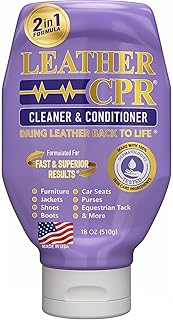
Leather CPR Cleaner and Conditioner
Best for tired, thirsty leather that’s lost colour depth and gone stiff at the seat edges; it restores suppleness and evens out patchy tone in a single pass. The 18 oz bottle is a realistic amount for a full sofa, and the finish reads warm rather than shiny under lamplight.
Chemical Guys Leather Cleaner & Conditioner Kit
A pH-balanced two-step system with generous 16 oz bottles, developed for car interiors but perfectly at home on sealed furniture leather. If you want maximum control over the cleaning stage before you condition, this is the most thorough kit here.
Frequently Asked Questions
How often should I condition a leather sofa?
Every six months for average use, quarterly if the sofa sits in strong daylight or a dry, heated room. Watch the seat cushions under raking window light — dulling and a faint chalky cast are your early signals.
Will conditioner darken my leather?
Some formulas darken pale hides slightly, and the change is permanent on unfinished leather. Test on a concealed panel and view it under the same light your sofa lives in, since a shift that’s invisible under warm lamplight can be obvious in daylight.
Can I use car leather conditioner on furniture?
Yes, if the product is rated for finished leather — automotive and furniture leather are often the same material with different topcoats. The main caution is sheen, as some automotive products aim for a glossier look than living-room leather wants.
Do I really need a separate cleaner?
For a sofa, usually yes. Skin oils build up on arms and headrests, and conditioning over that residue creates uneven glossy patches that show up under any directional light source.
Final Thoughts
For most leather sofas, Leather Honey Leather Conditioner is the safest and most forgiving choice, and the Leather Honey Complete Care Kit is the version to buy if the piece hasn’t been cleaned in a while. If your sofa sits in sunlight, Weiman’s cleaner-conditioner with UV protection is the smarter long-term defence — and Leather CPR is the one to reach for when the leather has already gone stiff and dull and needs bringing back.