Key takeaways
- Working Height vs. Reach: Match the ladder’s maximum extension to your roofline. A second-story gutter run typically requires at least 20 feet of total ladder length; anything shorter forces dangerous overreaching.
- Stability Mechanism: Look for built-in stabilizer bars or compatible standoff arms. A stabilizer widens the contact patch against the fascia, preventing the side-to-side sway that makes gutter work nerve-wracking.
- Locking System Quality: Auto-lock rungs outperform manual flip-locks under stress. Test each lock engagement before climbing—any play in the mechanism compounds at height.
- Weight Capacity and Build Material: Aluminum alloy frames balance portability with strength. A 330-pound capacity rating provides headroom for your body weight plus tools, wet debris, and sudden shifts.
- Transport and Storage Footprint: Telescoping designs collapse to under four feet, fitting in a garage corner or truck bed. Wheels and carry handles matter more than you’d expect when moving a ladder along a building’s perimeter.
What's inside
As someone who designs how spaces feel long after the furniture is placed, I spend a lot of time thinking about the “in-between” moments of home care—the ones that happen at dusk, under overcast skies, or in that sharp morning light that exposes every clogged downspout. Gutter cleaning is one of those tasks: it demands attention during a narrow window when gutters are dry, debris is visible, and the light angle reveals exactly where buildup clusters. Choosing the wrong ladder turns a manageable weekend job into something precarious and miserable.
This guide breaks down the best ladders and stabilizer systems for gutter cleaning in 2026. I evaluated each pick for structural confidence, ease of repositioning, and how it actually performs when you’re working six feet up with both hands occupied. You’ll find real aluminum and steel construction, mechanisms that lock without a fight, and setups that respect the rhythm of working solo.
As an Amazon Associate we earn from qualifying purchases.



How to Choose a Ladder For Gutter Cleaning (2026)
- Working Height vs. Reach: Match the ladder’s maximum extension to your roofline. A second-story gutter run typically requires at least 20 feet of total ladder length; anything shorter forces dangerous overreaching.
- Stability Mechanism: Look for built-in stabilizer bars or compatible standoff arms. A stabilizer widens the contact patch against the fascia, preventing the side-to-side sway that makes gutter work nerve-wracking.
- Locking System Quality: Auto-lock rungs outperform manual flip-locks under stress. Test each lock engagement before climbing—any play in the mechanism compounds at height.
- Weight Capacity and Build Material: Aluminum alloy frames balance portability with strength. A 330-pound capacity rating provides headroom for your body weight plus tools, wet debris, and sudden shifts.
- Transport and Storage Footprint: Telescoping designs collapse to under four feet, fitting in a garage corner or truck bed. Wheels and carry handles matter more than you’d expect when moving a ladder along a building’s perimeter.
The Best Ladder For Gutter Cleaning (2026)s Reviewed
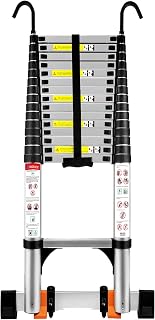
Telescoping Ladder with Hooks, 20.3 FT
At 20.3 feet with a 330-pound capacity, this is the ladder you want when you need genuine second-story reach without renting equipment. The integrated roof hooks and wheel assembly let you reposition along the gutter line without descending—a real time-saver during a full-perimeter clean. Auto-lock rungs engage crisply, and the anti-slip feet hold firm on damp concrete and grass alike.
Multi-Position Telescoping Ladder with Wheels, 17 FT
Five distinct configurations make this the most adaptable option on the list. As an A-frame, it handles single-story gutter sections; extended, it reaches elevated eaves with room to spare. The stabilizer bar and locking hinges eliminate the wobble that cheaper multi-position ladders introduce, and the blue aluminum frame looks sharp enough that you won’t feel embarrassed leaving it out mid-project.
Telescoping Ladder A Frame 16.5Ft with Stabilizer Bar
The black-and-orange A-frame configuration is purpose-built for homeowners who work close to the structure. The stabilizer bar locks wide against the roofline, and at 16.5 feet extended, it handles most ranch-style and split-level homes comfortably. Collapsible design stores flat, and the non-slip feet grip textured roofing without scuffing.
Ladder Stabilizer, Roof Hook with Wheel
This is a dedicated stabilizer accessory—not a standalone ladder—but it transforms any extension ladder into a gutter-safe platform. The steel hook cradles the roof ridge, the wheel lets you slide laterally along the eave, and the standoff arms keep the ladder off the gutter itself. Think of it as a safety upgrade that costs a fraction of an ER visit.
Ladder Stabilizer for Gutter Cleaning, Heavy Duty
Heavy-gauge steel construction and thick anti-slip rubber feet define this stabilizer. It mounts to standard extension ladders and creates a wide, confident contact zone against siding and fascia. The silver-gray finish resists weather exposure, so you can leave it attached between seasonal cleanings without worrying about corrosion creeping in.
Frequently Asked Questions
Can I use a standard stepladder for gutter cleaning?
A standard A-frame stepladder only reaches about six to eight feet of working height. Most residential gutters sit at 10 to 20 feet, making a stepladder inadequate and unsafe for the task. An extension or telescoping ladder with proper stabilization is the correct choice.
How often should gutters be cleaned?
Most homes need gutter cleaning twice per year—once in late spring after seed pods and pollen drop, and again in late autumn after leaf fall. Homes surrounded by mature trees or located in heavy-rainfall regions may require quarterly attention.
Do I need a stabilizer if my ladder has anti-slip feet?
Anti-slip feet prevent the base from shifting on the ground, but they do nothing to steady the ladder against the house. A stabilizer or standoff arm creates lateral stability at the contact point, which is where most gutter-cleaning falls originate.
What is the safest way to clean gutters solo?
Use a stabilizer to prevent gutter damage and lateral sway. Work from a ladder with a hook or shelf system so both hands remain free. Move the ladder every three to four feet rather than reaching sideways, and keep your belt buckle between the rails at all times.
Final Thoughts
For sheer reach, the Telescoping Ladder with Hooks at 20.3 feet handles the broadest range of homes. If versatility matters most, the Multi-Position Telescoping Ladder with Wheels covers five configurations in one purchase. And for anyone already owning an extension ladder, adding the Ladder Stabilizer with Roof Hook is the single highest-impact safety upgrade you can make before the next cleaning season.