Key takeaways
- Measure the pocket, not the topper: King toppers list stretch ranges like 6″–18″ or 8″–21″. Measure your mattress from seam to seam including any existing protector, then buy with two inches of headroom. A skirt stretched to its limit will pop a corner every time you turn over.
- Match the fill to your complaint: Overfilled down-alternative pillowtops deliver plush cushioning and pressure relief for side sleepers and back pain. Thinner quilted cotton pads smooth out surface irregularities without changing the mattress’s support profile. Know which job you’re hiring for.
- Watch the face fabric for heat: Viscose and rayon derived from bamboo move moisture faster and feel cooler on contact than polyester. Cotton percale-style tops breathe well and get better with washing. Anything with a slick, plasticky hand will trap heat under a king-sized duvet.
- Check baffling and stitch density: Box-quilted or boxing-stitched construction keeps fill from migrating into a lumpy perimeter. Sparse channel stitching on a king is a shifting problem waiting to happen, because there’s simply more distance for fill to travel.
- Think about how it reads under lamplight: A matte, slightly textured top layer diffuses light instead of bouncing it, which is why a well-chosen topper makes a bed look deeper and softer at night. Mid-tone grays and greens absorb warm 2700K light beautifully; bright white reflects it and can look clinical unless your bulbs run warm.
What's inside
Most bedroom problems get blamed on the mattress when they actually start with the room. I spend my working hours dialing in lamp placement, bulb temperature, and the way fabric catches a low beam at 10 p.m., and the bed is always the largest light-reflecting surface in the space. A king bed is roughly forty square feet of texture sitting directly under your bedside lamps. When that surface is flat, compressed, and shiny with synthetic sheen, the whole room reads harder and colder than it should, and your body reads it the same way your eye does. Add a mattress that has quietly gone concave in the middle, and you get a bed that neither looks restful nor behaves restfully.
A topper is the fastest correction available for both problems at once. It rebuilds loft where the mattress lost it, adds a diffusing layer that softens how light lands on the bed, and does it for a fraction of a mattress replacement. This guide covers six king toppers worth considering in 2026, judged on fill quality, heat behavior, how the skirt handles a genuinely deep mattress, and how the surface holds its shape after a few wash cycles. I’ve weighted cooling performance heavily, because a warm sleeper will abandon a beautiful bed within a week.
As an Amazon Associate we earn from qualifying purchases.


How to Choose a King Size Mattress Topper (2026)
- Measure the pocket, not the topper: King toppers list stretch ranges like 6″–18″ or 8″–21″. Measure your mattress from seam to seam including any existing protector, then buy with two inches of headroom. A skirt stretched to its limit will pop a corner every time you turn over.
- Match the fill to your complaint: Overfilled down-alternative pillowtops deliver plush cushioning and pressure relief for side sleepers and back pain. Thinner quilted cotton pads smooth out surface irregularities without changing the mattress’s support profile. Know which job you’re hiring for.
- Watch the face fabric for heat: Viscose and rayon derived from bamboo move moisture faster and feel cooler on contact than polyester. Cotton percale-style tops breathe well and get better with washing. Anything with a slick, plasticky hand will trap heat under a king-sized duvet.
- Check baffling and stitch density: Box-quilted or boxing-stitched construction keeps fill from migrating into a lumpy perimeter. Sparse channel stitching on a king is a shifting problem waiting to happen, because there’s simply more distance for fill to travel.
- Think about how it reads under lamplight: A matte, slightly textured top layer diffuses light instead of bouncing it, which is why a well-chosen topper makes a bed look deeper and softer at night. Mid-tone grays and greens absorb warm 2700K light beautifully; bright white reflects it and can look clinical unless your bulbs run warm.
The Best King Size Mattress Toppers (2026) Reviewed
Niagara Sleep Solution Ultra Soft & Cooling Bamboo Topper
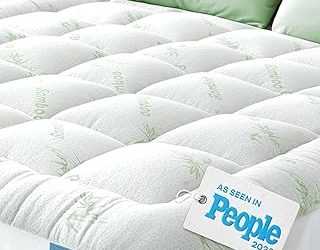
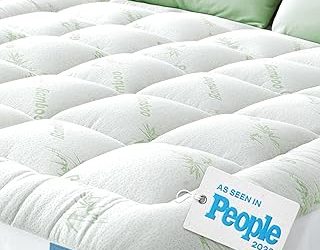
The rayon-derived-from-bamboo face is the standout here: it stays genuinely cool to the touch and has a soft matte drape that keeps the bed from looking glossy under a bedside lamp. The 20″ deep pocket handles tall hybrid mattresses without straining, and the pillowtop loft is generous without swallowing you.
ELEMUSE Extra Thick Pillowtop Pad
This is the plushest option in the group, with overfilled down-alternative fill that reads as a true pillowtop rather than a thin pad. Best for side sleepers and anyone whose mattress has gone too firm; back sleepers who need a defined support surface may find it too giving.
BEDLORE Viscose Bamboo Pillow Top
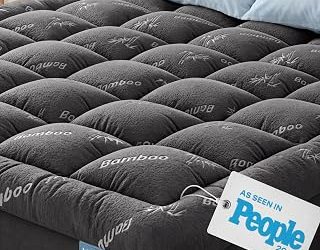
A smart middle path: substantial loft paired with a breathable viscose bamboo top and a stretch pocket that genuinely accommodates 6″ to 18″. The dark gray colorway is the one I’d pick for a room with warm, low-level lighting, since it holds shadow well and hides the surface wrinkling that shows up on white pads.
EASELAND Cotton Pillow Top Mattress Pad
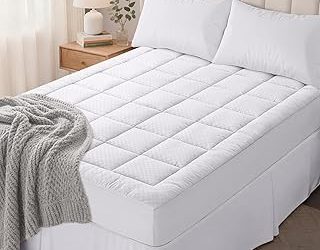
The boxing-quilted cotton top is the most durable construction here and the most forgiving in the wash. It adds a moderate, even cushion rather than dramatic loft, which makes it the right choice when your mattress is fundamentally sound and you just want a cooler, softer contact layer.
SameBed Extra Thick Cooling Topper
Strong value in the thick-pad category, with an 8″–21″ pocket that fits nearly any king setup and enough overfill to relieve hip and shoulder pressure. Expect a short break-in period while the fill settles into its baffles.
Frequently Asked Questions
Will a topper fix a sagging king mattress?
It will mask a shallow dip and restore comfort at the surface, but it cannot replace lost core support. If you can see a visible trough or feel the springs, the topper buys you time rather than solving the problem.
How do I keep a king topper from sliding?
Buy the correct pocket depth and use a fitted sheet with deep corners over the top. Elastic skirts stretched near their maximum are the usual culprit behind midnight corner blowouts.
Are cotton or bamboo-derived tops better for hot sleepers?
Viscose and rayon from bamboo feel cooler on immediate contact and wick faster. Cotton breathes steadily over a full night and improves with age. If you wake up damp, choose bamboo-derived; if you simply sleep warm, cotton is plenty.
Can these go in a home washer?
The quilted cotton pads generally handle a home machine on cold and gentle. Thick overfilled pillowtops are heavy when wet and often do better at a laundromat with a commercial drum, since cramming one into a residential washer can tear seams.
Final Thoughts
For most king beds I’d start with the Niagara Sleep Solution bamboo topper, which balances real cooling performance with a surface that flatters warm evening light. If your priority is maximum plushness over a firm or aging mattress, the ELEMUSE pillowtop is the deeper cushion, while the EASELAND cotton pad is the pick for anyone who wants a cooler, cleaner-looking bed without altering how the mattress supports them.