Key takeaways
- Surface finish: Matte, slightly irregular weaves scatter light and keep the bed reading as fabric. Smooth, tightly laminated tops produce a sheen line along every fold — most visible with a low, side-mounted lamp.
- Acoustic behaviour: Test it in a quiet room, not a showroom. Anything described as noiseless should stay silent when you shift weight; crinkle is amplified once ambient sound drops at bedtime.
- Pocket depth versus real mattress height: Measure your mattress with the topper on. King covers commonly stretch to 16, 17, or 18 inches; a cover that’s fractionally too small pulls the corners taut and creates the shadowed ridges that make a bed look unmade.
- Breathability and heat: Membranes trap warmth. Viscose derived from bamboo and cotton faces move moisture better, which matters if you sleep warm or run a heavier duvet in winter.
- Wash resilience: Repeated hot washes stiffen backings and polish fibres. Check the recommended cycle before you buy and expect a two-cover rotation to double the useful life of both.
What's inside
I spend my working hours deciding how light lands in a room: the angle of a bedside sconce, the warmth of a dimmed bulb, the way a surface either drinks light or throws it back at you. Beds are the largest soft plane in most bedrooms, which makes them the biggest variable in how a room reads at night. And the layer nobody thinks about — the mattress cover hiding under the sheets — quietly decides whether that plane looks like calm linen or a lightly crumpled sandwich wrapper. A stiff, film-backed protector creates hard specular highlights that a 2700K lamp will find every single time, plus a papery rustle that becomes deafening once the lights are low and the room goes quiet.
This guide looks at king size mattress covers the way I’d assess any surface in a scheme: how it behaves under raking light, whether its texture stays legible when dimmed, whether it makes noise in a hushed room, and whether it survives washing without turning glossy. Below are six covers worth your attention, followed by the criteria I’d hold them to and honest notes on where each one belongs.
As an Amazon Associate we earn from qualifying purchases.




How to Choose a King Size Mattress Cover (2026)
- Surface finish: Matte, slightly irregular weaves scatter light and keep the bed reading as fabric. Smooth, tightly laminated tops produce a sheen line along every fold — most visible with a low, side-mounted lamp.
- Acoustic behaviour: Test it in a quiet room, not a showroom. Anything described as noiseless should stay silent when you shift weight; crinkle is amplified once ambient sound drops at bedtime.
- Pocket depth versus real mattress height: Measure your mattress with the topper on. King covers commonly stretch to 16, 17, or 18 inches; a cover that’s fractionally too small pulls the corners taut and creates the shadowed ridges that make a bed look unmade.
- Breathability and heat: Membranes trap warmth. Viscose derived from bamboo and cotton faces move moisture better, which matters if you sleep warm or run a heavier duvet in winter.
- Wash resilience: Repeated hot washes stiffen backings and polish fibres. Check the recommended cycle before you buy and expect a two-cover rotation to double the useful life of both.
The Best King Size Mattress Covers of 2026, Reviewed
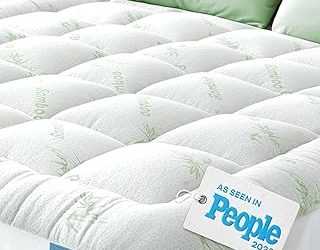
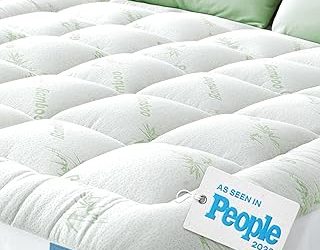
PlushDeluxe Bamboo Waterproof Mattress Protector
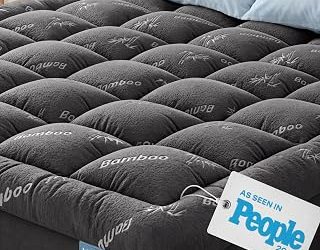
The viscose-from-bamboo face has a soft, low-lustre hand that stays visually quiet under warm light, and the waterproof layer is well enough integrated that it doesn’t announce itself acoustically. The 76×80″ cut handles mattresses up to 18 inches, making it my default recommendation for a pillow-top king.
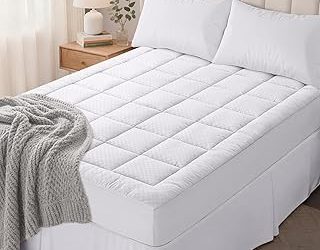
Utopia Bedding Quilted Fitted Mattress Pad
Quilting is the honest solution to glare: the stitched grid breaks up reflections and adds a little loft that softens the mattress edge. It isn’t waterproof, so treat it as a comfort-and-texture layer rather than a defensive one, with deep pockets stretching to 16 inches.
BEDLORE Waterproof Mattress Protector
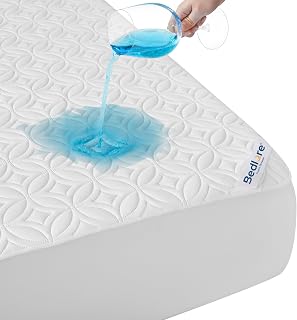
A pragmatic pick with an unusually generous 6″–18″ pocket range, which is genuinely useful if you’re covering a guest room mattress of uncertain depth. The surface is soft and stays quiet, and the fit is tidy enough that corners don’t bunch under a fitted sheet.
Utopia Bedding 200 GSM Waterproof Protector
Cut like a fitted sheet and light at 200 GSM, this is the least intrusive option here — a sensible choice when you already have a topper and don’t want to add bulk. It fits up to 17 inches and disappears under bedding, which is precisely the point.
100% Cotton Organic Quilted Mattress Protector
At 300 GSM with GOTS-certified organic cotton, this is the most textural cover in the group, and it photographs and reads beautifully in soft light. Choose it for comfort, breathability, and finish rather than spill protection.
Frequently Asked Questions
Will a waterproof cover make my bed look shiny?
Only if the top layer is smooth and thin. Fabric-faced protectors — bamboo viscose, cotton, or quilted constructions — diffuse light and won’t produce the reflective highlights that thin laminated covers do.
How do I stop the corners from lifting?
Match the pocket depth to your actual mattress height including any topper, and choose a cover with elasticated deep pockets rather than corner straps. Taut corners are the main source of visible wrinkling.
Protector or mattress pad?
A protector defends against liquid and allergens; a pad adds cushioning and surface texture. Many people layer a slim waterproof protector beneath a quilted pad and get both.
How often should it be washed?
Every one to two months for most households, more often with children or pets. Use a warm rather than hot cycle and skip high heat drying to keep the backing supple and quiet.
Final Thoughts
For most king beds, the PlushDeluxe bamboo protector is the best all-rounder: matte, quiet, breathable, and deep enough for a tall mattress. If protection isn’t the priority, the Utopia Bedding quilted pad gives you the most flattering surface for the money, and the 100% cotton organic quilted protector is the one I’d specify when finish and breathability matter more than waterproofing.