Key takeaways
- Loft and quilt pattern: Box quilting creates a grid of soft shadow lines that make a bed look intentionally dressed. Tight, shallow stitching flattens under diffuse light; generous baffles with real fill depth hold their shape and give the bed visible presence from across the room.
- Fiber and sheen: Cotton and bamboo-derived rayon tops scatter light rather than reflect it, which is why they photograph and read as more expensive than they are. High-gloss microfiber does the opposite — it picks up specular hotspots from overhead fixtures and looks synthetic no matter how good the fill underneath is.
- Pocket depth and skirt tension: Measure your mattress, then add any protector you already use. A pad rated 8–21 inches gives you room to layer; one that barely clears your mattress will lift at the corners and throw creases exactly where side lighting exposes them.
- Thermal behavior: Hot sleepers should prioritize breathable natural-fiber tops and moderate fill weight over plush density. Heat retention is mostly a function of loft plus fiber, and thick synthetic batting will undo a good cooling cover.
- Care and quietness: Machine washable and dryer safe is non-negotiable on a king, since dry cleaning something this large gets expensive fast. If you need waterproofing, look for a membrane described as noiseless — older TPU-backed pads crinkle and also add a faint sheen you’ll notice under lamplight.
What's inside
Spend enough years aiming lamps at bedrooms and you start seeing the bed as a surface, not just a place to sleep. A king mattress is the largest uninterrupted plane in most bedrooms — roughly 43 square feet of fabric sitting right where your bedside lamps throw their widest pool of light. Whatever that surface does with light, the whole room inherits. A slick polyester pad bounces a hard, plasticky highlight across the middle of the bed. A limp one wrinkles at the corners and reads as a row of small dark creases under any raking light. And the practical failures are just as visible: pads that shift overnight, skirts that pop off deep mattresses, fills that trap heat until you’re awake at 3 a.m. rearranging bedding.
This guide looks at king mattress pads from both angles at once — how they sleep and how they read in a lit room. Below you’ll find current picks spanning cooling bamboo-rayon, cotton-topped quilting, straightforward budget protectors, and waterproof options, plus a short framework for judging loft, sheen, fit, and thermal behavior before you commit.
As an Amazon Associate we earn from qualifying purchases.



How to Choose a King Mattress Pad (2026)
- Loft and quilt pattern: Box quilting creates a grid of soft shadow lines that make a bed look intentionally dressed. Tight, shallow stitching flattens under diffuse light; generous baffles with real fill depth hold their shape and give the bed visible presence from across the room.
- Fiber and sheen: Cotton and bamboo-derived rayon tops scatter light rather than reflect it, which is why they photograph and read as more expensive than they are. High-gloss microfiber does the opposite — it picks up specular hotspots from overhead fixtures and looks synthetic no matter how good the fill underneath is.
- Pocket depth and skirt tension: Measure your mattress, then add any protector you already use. A pad rated 8–21 inches gives you room to layer; one that barely clears your mattress will lift at the corners and throw creases exactly where side lighting exposes them.
- Thermal behavior: Hot sleepers should prioritize breathable natural-fiber tops and moderate fill weight over plush density. Heat retention is mostly a function of loft plus fiber, and thick synthetic batting will undo a good cooling cover.
- Care and quietness: Machine washable and dryer safe is non-negotiable on a king, since dry cleaning something this large gets expensive fast. If you need waterproofing, look for a membrane described as noiseless — older TPU-backed pads crinkle and also add a faint sheen you’ll notice under lamplight.
The Best King Mattress Pads (2026), Reviewed
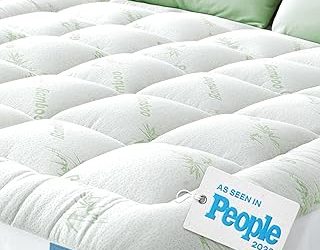
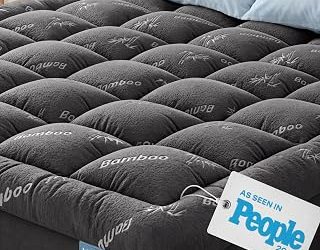
Niagara Sleep Solution Ultra Soft & Cooling Topper (Bamboo)
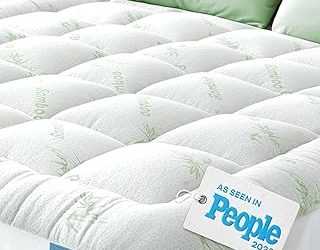
The bamboo-derived rayon surface has a soft, low-luster finish that keeps light diffuse and forgiving, and the 20-inch pockets swallow even a tall pillow-top king. It’s the pick if you sleep warm but still want visible pillow-top loft on the bed.
EASELAND King Cotton Pillow Top Mattress Pad
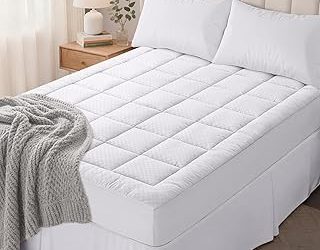
Cotton-topped, box-quilted, and substantial enough that the quilting reads clearly under a warm bedside bulb without looking overstuffed. The 8–21 inch skirt range makes it one of the more layer-friendly options here, and it washes without going lumpy.
Utopia Bedding Quilted Fitted Mattress Pad
A clean, honest protector-plus-padding layer that stretches to 16 inches and stays silent under sheets. The loft is modest, so treat it as a smoothing and protective base rather than a comfort upgrade — it’s excellent at erasing the small surface irregularities that catch light.
MATBEBY Cooling Breathable King Mattress Pad
Breathable quilting with deep 8–21 inch pockets and a matte white finish that stays neutral under both cool and warm color temperatures. A sensible middle choice when you want a little plushness without adding heat.
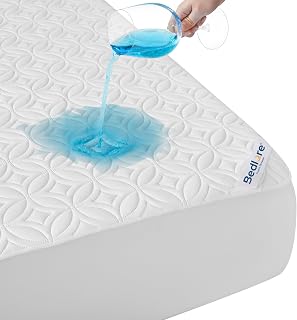
BEDLORE Waterproof King Mattress Protector
The one to buy when spills, pets, or kids are the actual problem. It’s genuinely quiet for a waterproof pad and the surface is soft rather than slick, which keeps that telltale plastic gleam off your bed.
Frequently Asked Questions
Does a mattress pad really change how a bedroom looks?
More than people expect. The pad determines the bed’s silhouette and how evenly light lands across it, so a well-lofted, matte pad softens the whole room while a thin, shiny one creates a hard highlight down the center.
What’s the difference between a pad, a topper, and a protector?
A protector defends the mattress, a topper adds significant comfort height, and a pad sits between the two — light padding with a fitted skirt. Several products here blur those lines, so read the fill description rather than the label.
Can I layer a waterproof protector under a cooling pad?
Yes, and it’s often the best setup: protection underneath, breathable comfort on top. Just confirm your pad’s maximum pocket depth accommodates the extra thickness, or the corners will lift.
How often should I wash a king mattress pad?
Every one to two months for most sleepers, more often if you sleep hot. Cold wash, low-heat dry, and pull it out before it’s bone dry to keep the fill evenly distributed.
Final Thoughts
For hot sleepers who still want a bed with real presence, the Niagara bamboo topper is the strongest all-around choice, with the Niagara 100% cotton version close behind if you prefer a crisper hand. The EASELAND cotton pillow top is the best balance of loft, matte finish, and deep-pocket flexibility, and Utopia Bedding remains the sensible budget layer when you mainly need a smooth, quiet, protective surface.