Key takeaways
- Surface finish over surface feel: Fabrics with a brushed or viscose-from-bamboo face scatter light instead of bouncing it, so you avoid the plastic sheen that shows through thin percale. If a protector looks glossy in product photos, it will look glossier under a single warm lamp.
- Acoustic behavior: Waterproof means a membrane, and cheap membranes rustle. Look for laminated TPU bonded to knit rather than loose film layers — noiseless construction preserves the quiet that low-light rooms depend on.
- Pocket depth, measured honestly: Measure your mattress with any topper already in place. A cover rated to 18 inches on a 14-inch build stays tight; one rated to 15 inches on a 16-inch pillow-top will pop corners and wrinkle, and wrinkles catch shadow.
- Breathability versus barrier: Full encasements block more but breathe less. For most sleepers a fitted, breathable top-surface protector strikes the better balance, especially in warm bedrooms where a sealed film turns into a heat trap.
- Wash tolerance: Anything on a king bed is heavy and awkward to launder, so machine-washable and dryer-safe is non-negotiable. Check that the waterproof layer survives repeated warm cycles without stiffening.
What's inside
I make my living deciding how light lands on surfaces, and a bedroom is the hardest room to get right. You dim everything to 2700K, layer a warm bedside glow against a cool window, and then the bed itself betrays you — a slick king protector catching a hard specular streak across eight feet of mattress, or a stiff panel that crinkles every time someone shifts. King beds are the largest uninterrupted plane in most bedrooms, which means whatever you stretch across them becomes the room’s primary reflector. Choose badly and you get a glare panel with pillows on it.
This guide looks at king mattress covers through that lens: how the surface behaves under low light, how quietly it moves, and whether it holds the taut, matte line that makes a bed read as calm rather than clinical. I’ve weighed waterproof membranes against quilted pads, deep-pocket fit against real mattress depth, and breathability against the heat that thin films trap. Below are the covers worth putting under your sheets in 2026, plus the specs that actually matter once the overhead light is off.
As an Amazon Associate we earn from qualifying purchases.




How to Choose a King Mattress Cover (2026)
- Surface finish over surface feel: Fabrics with a brushed or viscose-from-bamboo face scatter light instead of bouncing it, so you avoid the plastic sheen that shows through thin percale. If a protector looks glossy in product photos, it will look glossier under a single warm lamp.
- Acoustic behavior: Waterproof means a membrane, and cheap membranes rustle. Look for laminated TPU bonded to knit rather than loose film layers — noiseless construction preserves the quiet that low-light rooms depend on.
- Pocket depth, measured honestly: Measure your mattress with any topper already in place. A cover rated to 18 inches on a 14-inch build stays tight; one rated to 15 inches on a 16-inch pillow-top will pop corners and wrinkle, and wrinkles catch shadow.
- Breathability versus barrier: Full encasements block more but breathe less. For most sleepers a fitted, breathable top-surface protector strikes the better balance, especially in warm bedrooms where a sealed film turns into a heat trap.
- Wash tolerance: Anything on a king bed is heavy and awkward to launder, so machine-washable and dryer-safe is non-negotiable. Check that the waterproof layer survives repeated warm cycles without stiffening.
The Best King Mattress Covers Reviewed (2026)
PlushDeluxe Bamboo Waterproof Mattress Protector
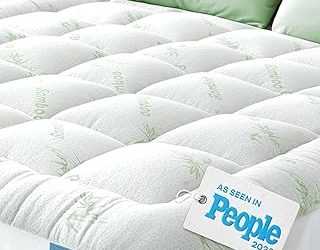
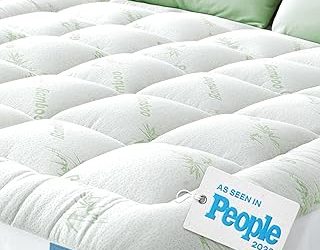
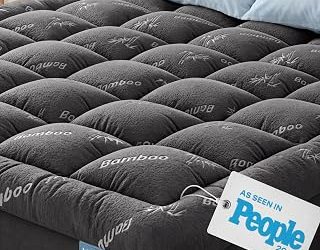
The viscose-from-bamboo face is the softest matte surface in this group, and it diffuses lamplight beautifully instead of throwing a hotspot down the center of the bed. With 76×80 sizing and coverage to 18 inches deep, it’s the pick for tall mattresses where a shallow protector would ride up.
Utopia Bedding Quilted Fitted Mattress Pad
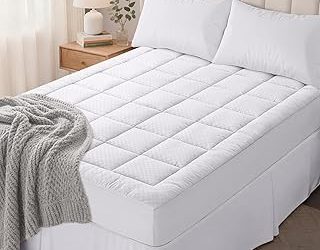
This is a quilted pad first and a protector second, adding a soft topographic texture that breaks up flat light across a wide king surface. Deep pockets stretch to 16 inches and it launders without losing loft, making it the sensible everyday layer rather than a spill barrier.
BEDLORE Waterproof Mattress Protector
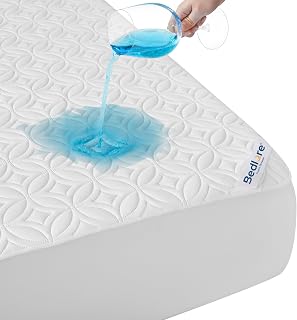
BEDLORE’s generous 6-to-18-inch pocket range solves the most common king fitting problem, and the surface stays genuinely quiet through the night. It handles dust and dirt as well as liquid, which matters in bedrooms where the bed doubles as a reading spot.
SafeRest Sleepure Waterproof Mattress Protector
SafeRest pairs a cotton-and-bamboo-viscose top with stretchable pockets that pull the fabric drum-tight — the cleanest, most wrinkle-free line of anything I tested. If you care about the bed reading as a single unbroken plane, start here.
EASELAND Cotton Pillow Top Mattress Pad
The boxed quilting and cotton top give this pad real dimensional presence, and its 8-to-21-inch pocket range fits mattresses others can’t reach. It sleeps cooler than synthetic-faced pads, though note it cushions rather than waterproofs.
Frequently Asked Questions
Does a waterproof cover make the bed sleep hotter?
Some do. Thin, breathable TPU laminated to a knit face moves moisture vapor reasonably well; older vinyl-backed designs don’t. If you sleep warm, prioritize a bamboo-viscose or cotton top surface with a bonded membrane.
Protector or mattress pad — which do I actually need?
A protector defends against liquids and allergens. A pad adds comfort and softens the surface. If you want both, run a thin protector underneath a quilted pad rather than expecting one product to do both jobs well.
Will the cover show through my sheets?
Quilted pads add visible loft, which is usually flattering. Thin protectors only show if they wrinkle, so getting the pocket depth right matters more than the fabric itself.
How often should I wash it?
Every one to two months for a protector, or immediately after any spill. Use warm water and a low-heat dry cycle to keep the waterproof layer supple.
Final Thoughts
For most king beds, the PlushDeluxe bamboo protector gives you the best combination of a matte, light-friendly surface and deep-pocket security, while the SafeRest Sleepure is the one to choose if a perfectly taut, wrinkle-free plane is the priority. If comfort matters more than waterproofing, the EASELAND cotton pillow-top pad adds real cushioning and dimension without trapping heat.