Key takeaways
- Target Range: Most infrared panels operate between 110 °F and 150 °F. Lower settings (110–120 °F) suit beginners and longer, meditative sessions, while upper ranges (140–150 °F) cater to experienced users seeking vigorous sweat. Pick a model whose dial lets you move freely across that full spectrum rather than locking into a few presets.
- Heater Wattage & Warm-Up: Higher wattage doesn’t just mean a hotter room—it means faster thermal ramp-up and less idle standing in a lukewarm box. Units rated 1500 W or above typically reach 130 °F within 10–15 minutes; 1200 W panels may need 20 minutes. Consider your patience threshold and whether the sauna offers a pre-heat timer.
- EMF Levels: Low-EMF certification (under 3 mG at body level) matters for anyone planning daily sessions. Ceramic and carbon-panel heaters differ in electromagnetic output, so always verify independently measured data rather than relying solely on the manufacturer’s sticker.
- Cabin Size & Airflow: Temperature perception shifts with volume. A compact 33 × 33 in. one-person cabin heats faster and feels more intense at the same thermostat reading than a spacious corner unit built for two or three. Match cabin dimensions to both your physical space and your thermal comfort preference.
- Ambience Features: Chromotherapy lighting and Bluetooth speakers aren’t gimmicks—they extend the sensory envelope of a session. When warm light spills across natural hemlock grain at 135 °F, the combined effect is closer to a boutique spa than a box with a heater. Treat these extras as legitimate variables in your decision.
What's inside
Shopping for an infrared sauna online in 2026 feels a lot like walking into a dimly lit showroom where every cabinet looks the same but glows a slightly different shade of amber. The spec sheets pile on numbers—wattage, EMF ratings, wood types—yet the single variable that shapes how every session actually feels (temperature range, ramp-up time, and thermal consistency) often gets buried under marketing copy. Without a clear framework, buyers end up guessing whether a 1200 W hemlock unit or a 1500 W ceramic-corner model will deliver the deep, enveloping warmth they’re after.
This guide cuts through the noise. We evaluated six leading infrared saunas specifically through the lens of thermal ambience: how evenly heat distributes, how quickly a cabin reaches target temperature, and what kind of atmosphere each unit creates once it’s glowing. Below you’ll find our curated picks, a practical buyer’s checklist, and direct answers to the questions that matter most when you’re investing in a personal heat sanctuary.
As an Amazon Associate we earn from qualifying purchases.


🛒 Best Price Today on Amazon
Prime members get fast, free shipping on everything above, plus member-only deals. New members get a 30-day free trial — cancel anytime.
How to Choose an Infrared Sauna Temperature (2026)
- Target Range: Most infrared panels operate between 110 °F and 150 °F. Lower settings (110–120 °F) suit beginners and longer, meditative sessions, while upper ranges (140–150 °F) cater to experienced users seeking vigorous sweat. Pick a model whose dial lets you move freely across that full spectrum rather than locking into a few presets.
- Heater Wattage & Warm-Up: Higher wattage doesn’t just mean a hotter room—it means faster thermal ramp-up and less idle standing in a lukewarm box. Units rated 1500 W or above typically reach 130 °F within 10–15 minutes; 1200 W panels may need 20 minutes. Consider your patience threshold and whether the sauna offers a pre-heat timer.
- EMF Levels: Low-EMF certification (under 3 mG at body level) matters for anyone planning daily sessions. Ceramic and carbon-panel heaters differ in electromagnetic output, so always verify independently measured data rather than relying solely on the manufacturer’s sticker.
- Cabin Size & Airflow: Temperature perception shifts with volume. A compact 33 × 33 in. one-person cabin heats faster and feels more intense at the same thermostat reading than a spacious corner unit built for two or three. Match cabin dimensions to both your physical space and your thermal comfort preference.
- Ambience Features: Chromotherapy lighting and Bluetooth speakers aren’t gimmicks—they extend the sensory envelope of a session. When warm light spills across natural hemlock grain at 135 °F, the combined effect is closer to a boutique spa than a box with a heater. Treat these extras as legitimate variables in your decision.
The Best Infrared Sauna Temperature (2026)s Reviewed
Homsido 1-Person Hemlock Infrared Sauna
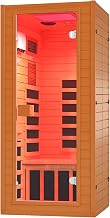
The Homsido’s 1200 W panels hit 120 °F in roughly ten minutes, and the LCD control panel lets you pre-set both time and temperature before you even step inside. It’s a compact, no-fuss entry point that delivers surprisingly even heat distribution for a single-occupancy cabin—ideal for a bedroom corner or small home gym.
2-Person Smart App-Control Infrared Sauna
With 1500 W of heating power and WiFi-enabled app control, this model lets you dial in temperature remotely while you finish your evening routine. The flame-retardant construction adds peace of mind, and the dual-occupancy size provides enough air volume that temperatures above 140 °F feel immersive rather than oppressive.
1–2 Person Infrared Sauna with Red Light Therapy
Seven-color therapy lighting transforms this compact 40 × 36 × 73 in. unit into a genuine ambience experience. The infrared panels pair with integrated red-light zones so you can run a lower temperature session and still benefit from photobiomodulation—a thoughtful crossover for wellness-minded buyers who want more than dry heat alone.
2–3 Person Ceramic Infrared Corner Sauna
Corner-mounted ceramic heaters push warm air along two walls simultaneously, creating a thermal envelope that wraps around occupants rather than blasting from a single plane. The hemlock construction and chromotherapy lights complete a spa-like setting, though the larger volume does mean a longer warm-up on cooler days.
Wood 1-Person Infrared Sauna with Red Light
At 33.4 × 33.4 × 70 in., this is one of the most space-efficient infrared cabins available. Low-EMF far-infrared panels reach therapeutic range quickly despite the modest footprint, and the built-in chromotherapy ring casts a soft wash of color that makes solo sessions feel anything but utilitarian.
Frequently Asked Questions
What is the ideal temperature for an infrared sauna session?
For most adults, 125–140 °F strikes the balance between comfortable warmth and an effective sweat. Beginners should start at the lower end and work upward over several weeks as their tolerance builds.
How long does it take an infrared sauna to reach operating temperature?
Compact single-person units with 1200 W heaters typically need 15–20 minutes, while larger models rated at 1500 W or above can reach 130 °F in about 10–15 minutes. Pre-heat timers eliminate guesswork entirely.
Are low-EMF infrared saunas worth the premium?
Yes—especially if you plan to use the sauna multiple times per week. Independent testing consistently shows that low-EMF models keep electromagnetic exposure well below safety thresholds, giving you the freedom to extend sessions without concern.
Can I use an infrared sauna in an apartment?
Most infrared saunas draw between 1200 and 1500 W—comparable to a standard space heater—and plug into a regular 120 V outlet. Ventilation is the only real constraint; crack a window or position the unit near an exhaust fan so humid air can escape.
Final Thoughts
If we had to narrow the field to three standouts, the 2-Person Smart App-Control Sauna earns the top spot for its fast, even heating and remote convenience; the Homsido 1-Person Hemlock delivers the best value for solo users who want reliable thermal performance without overspending; and the 1–2 Person Red Light Therapy model edges ahead for anyone who treats ambience as a core part of the wellness equation. Pair any of these with a measured approach to temperature, and your living-room spa will rival the real thing.