Key takeaways
- Nickel-safe formulation: Most evaporator plates are nickel-plated. Harsh acids strip that plating, and once it pits, cubes fuse and cloud permanently. Nickel-safe is non-negotiable, not a marketing badge.
- Tablets vs. liquid: Tablets are pre-dosed and travel well — ideal for countertop and nugget units you clean monthly. Liquid gives you control over concentration for heavier commercial scale or a badly neglected machine.
- Active chemistry: Citric acid handles mineral scale gently and rinses clean without leaving a taste signature. Phosphoric-based liquids cut aggressive hard-water buildup faster but demand a careful rinse cycle.
- Supply length vs. your cadence: A 24-tablet pack is roughly a year at two treatments a month. If your machine runs constantly for entertaining, size up rather than rationing doses.
- Stated brand compatibility: Check that your unit is named — Opal and GE Profile nugget makers, KitchenAid, Scotsman, and Frigidaire all have different tolerances, and manufacturers often tie warranty coverage to approved cleaners.
What's inside
Spend enough time designing home bars and you learn that ice is a light-handling material. A clear cube picks up the amber from a dimmed pendant and throws it back through the glass; a cloudy, mineral-scarred cube absorbs that same light and goes flat and grey. Most people blame their ice maker, or their water, or the LED temperature over the counter. The real culprit is usually a thin film of limescale and biofilm coating the evaporator plate, quietly changing the shape and finish of every cube the machine drops.
That film also does something less poetic: it insulates the freezing surface, slows harvest cycles, and starts pushing a stale, faintly mineral taste into drinks you spent good money on. This guide covers the cleaners and descalers worth keeping under the bar cabinet in 2026 — what separates a nickel-safe formula from a generic descaler, how tablets compare to liquid, and which products actually restore the optical clarity you designed the room around.
As an Amazon Associate we earn from qualifying purchases.


🛒 Best Price Today on Amazon
Prime members get fast, free shipping on everything above, plus member-only deals. New members get a 30-day free trial — cancel anytime.
How to Choose an Ice Maker Cleaner (2026)
- Nickel-safe formulation: Most evaporator plates are nickel-plated. Harsh acids strip that plating, and once it pits, cubes fuse and cloud permanently. Nickel-safe is non-negotiable, not a marketing badge.
- Tablets vs. liquid: Tablets are pre-dosed and travel well — ideal for countertop and nugget units you clean monthly. Liquid gives you control over concentration for heavier commercial scale or a badly neglected machine.
- Active chemistry: Citric acid handles mineral scale gently and rinses clean without leaving a taste signature. Phosphoric-based liquids cut aggressive hard-water buildup faster but demand a careful rinse cycle.
- Supply length vs. your cadence: A 24-tablet pack is roughly a year at two treatments a month. If your machine runs constantly for entertaining, size up rather than rationing doses.
- Stated brand compatibility: Check that your unit is named — Opal and GE Profile nugget makers, KitchenAid, Scotsman, and Frigidaire all have different tolerances, and manufacturers often tie warranty coverage to approved cleaners.
The Best Ice Maker Cleaners (2026) Reviewed
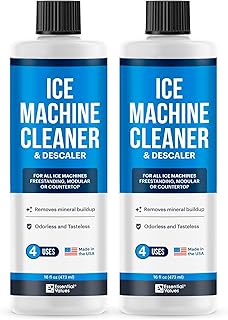
Essential Values Ice Machine Cleaner and Descaler (2 x 16 fl oz)
The liquid choice when scale has been building for a season or more — the concentration is strong enough to dissolve a genuinely crusted evaporator plate, and the two-bottle pack covers a deep clean plus follow-ups. Nickel-safe, US-made, and compatible with Scotsman and KitchenAid units, which matters if you’re maintaining a built-in undercounter machine.
ACTIVE Ice Machine Cleaner Descaler Tablets (24 Pack)
My default recommendation for Opal, GE Profile, and Frigidaire nugget makers, largely because the dosing is foolproof — drop, run cycle, rinse, done. The clarity difference after two treatments on a neglected nugget machine is the kind of thing you notice immediately under a spotlit bar shelf.
Ice Machine Cleaner Tablets, Citric Acid-Based (36 Tablets)
The best value here, with up to 18 months of coverage and a citric acid base that leaves no chemical aftertaste in the first batch after cleaning. It scales up to commercial units as well, so it’s a sensible single purchase if you maintain both a countertop maker and a larger machine.
Affresh Ice Machine Cleaner
The safest pick for anyone nervous about chemistry, and the one most likely to be explicitly named in your appliance manual. It’s less aggressive than the concentrated liquids, which makes it ideal as a monthly maintenance product rather than a rescue treatment for a heavily fouled machine.
Ice Machine Cleaner Tablets Descaler (24 Pack, 1 Year Supply)
A well-rounded nickel-safe tablet that targets mold and odor alongside mineral scale — worth prioritizing if your machine sits in a warm, enclosed cabinet where biofilm forms faster than limescale. Taste improvement tends to be the first thing users report.
Frequently Asked Questions
How often should I clean my ice maker?
Every one to two months for household use, or monthly if you have hard water or run the machine daily. Visible white film or slower harvest cycles means you’re already overdue.
Can I just use vinegar?
Vinegar removes light scale but isn’t reliably nickel-safe at working strength, and it lingers in the first several batches of ice. Purpose-made descalers rinse cleaner and won’t void a warranty.
Will a cleaner make my ice clearer?
Partly. Descaling restores the smooth freezing surface, which noticeably improves finish and reduces cloudiness — though true optical clarity also depends on directional freezing and water filtration.
Are tablets and liquid interchangeable?
Functionally yes, but follow each product’s dose and rinse instructions. Never mix two cleaners in one cycle.
Final Thoughts
For most home setups, the ACTIVE 24-tablet pack is the easiest habit to keep, and the 36-tablet citric acid option stretches furthest if you’re maintaining more than one machine. Reach for Essential Values liquid when a neglected unit needs a genuine reset — then let the lighting do what you designed it to do.