Key takeaways
- Canopy material and UV rating: Solution-dyed acrylic and proprietary fade-resistant fabrics (such as Terylast or Sunbrella) retain their hue for a decade or more, while cheaper polyester will chalk and thin within two summers. Look for UPF 50+ certification if prolonged midday use is expected — the fabric should filter light without creating a dingy, greenish cast underneath.
- Frame construction and rib count: An aluminum frame resists rust far better than steel, and eight or more reinforced ribs distribute wind loads evenly, preventing the umbrella from warping into an asymmetric silhouette. Heavier-gauge tubing means less wobble and cleaner shadow lines on the ground below.
- Cantilever vs. center-pole design: Offset cantilever umbrellas free up the table surface and allow more dramatic, asymmetric light play — ideal for dining setups or lounge zones. Center-pole market umbrellas are simpler to anchor and often more affordable but commit you to a fixed geometry.
- Tilt mechanism and adjustability: As the sun arcs, a push-button tilt or auto-tilt system lets you redirect shade without repositioning the entire base. This continuous adjustment keeps the light quality consistent and avoids the harsh side-light that defeats the purpose of having shade at all.
- Ventilation and wind management: Tiered canopies and vented tops allow air to escape rather than building up lift underneath. A double-top or triple-tier design acts like a pressure release, keeping the umbrella planted during gusts that would flip a single-layer canopy inside out.
What's inside
A patio umbrella that buckles in a gust or bleaches to a ghost of its original color doesn’t just fail structurally — it undermines the entire atmosphere you’ve built outdoors. From a lighting-and-ambience perspective, the canopy overhead is arguably the single most influential surface in any exterior room: it shapes the quality of filtered light, sets the color temperature on your skin and furniture, and defines the shadow patterns that give a space depth and intimacy. Choosing the wrong one means living under a drooping, washed-out tarp instead of a composed outdoor ceiling.
This guide cuts through the noise for 2026 by evaluating heavy-duty patio umbrellas through that designer lens — fabric longevity, frame rigidity, light diffusion, and how each model actually performs as a spatial element in your yard, deck, or poolside setting. Below you’ll find our curated picks, a straightforward buying framework, and answers to the questions we hear most often from clients.
As an Amazon Associate we earn from qualifying purchases.



🛒 Best Price Today on Amazon
Prime members get fast, free shipping on everything above, plus member-only deals. New members get a 30-day free trial — cancel anytime.
How to Choose a Heavy Duty Patio Umbrella (2026)
- Canopy material and UV rating: Solution-dyed acrylic and proprietary fade-resistant fabrics (such as Terylast or Sunbrella) retain their hue for a decade or more, while cheaper polyester will chalk and thin within two summers. Look for UPF 50+ certification if prolonged midday use is expected — the fabric should filter light without creating a dingy, greenish cast underneath.
- Frame construction and rib count: An aluminum frame resists rust far better than steel, and eight or more reinforced ribs distribute wind loads evenly, preventing the umbrella from warping into an asymmetric silhouette. Heavier-gauge tubing means less wobble and cleaner shadow lines on the ground below.
- Cantilever vs. center-pole design: Offset cantilever umbrellas free up the table surface and allow more dramatic, asymmetric light play — ideal for dining setups or lounge zones. Center-pole market umbrellas are simpler to anchor and often more affordable but commit you to a fixed geometry.
- Tilt mechanism and adjustability: As the sun arcs, a push-button tilt or auto-tilt system lets you redirect shade without repositioning the entire base. This continuous adjustment keeps the light quality consistent and avoids the harsh side-light that defeats the purpose of having shade at all.
- Ventilation and wind management: Tiered canopies and vented tops allow air to escape rather than building up lift underneath. A double-top or triple-tier design acts like a pressure release, keeping the umbrella planted during gusts that would flip a single-layer canopy inside out.
The Best Heavy Duty Patio Umbrella (2026)s Reviewed
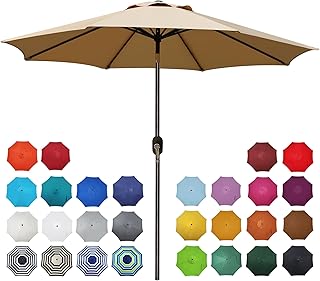
Midtown 9 Ft Auto-Tilt Market Umbrella
The Terylast fabric delivers a saturated cobalt that reads beautifully under afternoon sun, producing the kind of cool-toned shade a designer would deliberately choose for a poolside vignette. The auto-tilt aluminum frame with eight reinforced ribs keeps the canopy taut and visually crisp even after years of exposure, making this a reliable workhorse for standard patio tables.
EliteShade USA 9 Ft 3-Tier Market Umbrella
Three ventilation tiers give this model genuinely superior airflow, which translates into a canopy that holds its shape and, more subtly, creates layered shadow patterns that add visual texture to the space below. The crank-open mechanism is smooth and the fade-resistant fabric stays sharp-looking, making it a strong pick for commercial-grade durability at a residential price.
Grand Patio 12 Ft Sunbrella Cantilever Umbrella
Twelve feet of Sunbrella fabric on an offset aluminum arm produce a broad, even wash of filtered light with virtually no color distortion — exactly the kind of neutral shade that lets your landscaping and furniture do the visual heavy lifting. The tilt adjustment is fluid, and the cantilever design opens up the entire seating area without a center post interrupting sightlines or table layout.
PURPLE LEAF 10 x 10 Ft Square Cantilever Umbrella
The square geometry is a designer favorite because it creates clean, architectural shadow edges rather than the organic curves of a round canopy. Rated to 35 MPH winds with a 240GSM double-top canopy, this model balances structural confidence with a thirty-minute assembly time — a rare combination that makes it practical for homeowners who want substance without a weekend-long installation.
Tempera Market Outdoor Table Umbrella
For straightforward patio table coverage, the Tempera delivers a no-nonsense combination of fade-resistant canopy fabric, a sturdy pole, and a push-button tilt that lets you chase the shade as the afternoon progresses. It’s the kind of dependable, clean-lined umbrella that recedes into the design rather than competing with it — sometimes exactly what a space needs.
Frequently Asked Questions
What makes a patio umbrella “heavy duty”?
Heavy-duty construction refers to thicker-gauge frame tubing, a higher rib count (typically eight or more), and premium canopy fabrics rated for years of UV and weather exposure. These umbrellas are engineered to resist bending, fading, and wind damage far beyond budget models.
Do I need a separate base for a cantilever umbrella?
Yes. Cantilever umbrellas require a weighted base — often 100 to 155 pounds — to counterbalance the offset canopy. Without adequate ballast, the umbrella will lean or topple, regardless of frame quality.
How long does fade-resistant fabric actually last?
Premium solution-dyed fabrics like Sunbrella and Terylast carry ten-year fade warranties and routinely exceed that in real-world use. Lower-tier fade-resistant coatings on polyester may last two to three years before noticeable lightening occurs.
Can I leave my heavy-duty umbrella open in wind?
Most quality heavy-duty umbrellas handle breezy conditions up to 20–35 MPH depending on the model. However, closing any umbrella during storms or sustained high winds is always the safest practice to maximize lifespan.
Final Thoughts
For the best overall blend of light quality, fabric longevity, and frame resilience, the Grand Patio Sunbrella Cantilever stands apart as a top-tier investment for open outdoor rooms. The PURPLE LEAF Square Cantilever earns its place for anyone prioritizing wind resistance and clean architectural lines, while the EliteShade 3-Tier offers the most compelling ventilation-driven design at a competitive price point.