Key takeaways
- Match output to the pocket, not the yard: A 46,000–50,000 BTU tower covers roughly a nine-foot radius, which suits a full dining set; a 1,500W infrared unit warms a two-person bench or a narrow balcony. Oversizing an enclosed nook just means you’ll run it on low and waste fuel.
- Decide whether you want visible flame: Pyramid heaters with quartz glass tubes read as vertical firelight and become the brightest object on the patio. If your scheme relies on soft, low-level pools of light, that column will dominate everything — beautiful, but it’s a design decision, not an afterthought.
- Propane versus electric is a placement question: Propane goes anywhere and needs clearance overhead; electric infrared needs an outlet but mounts on a wall or tripod, keeping floor space clear and eliminating tank swaps mid-dinner.
- Check the stability and cutoff hardware: Anti-tilt switches, tip-over shutoff, overheat protection, and a water-fillable base all matter on a windy deck. A weighted or ballasted base is worth more than an extra few thousand BTUs.
- Look for weather ratings and controls you’ll actually use: IPX5 or CSA-certified waterproofing means you can leave a unit out through a shower. Remotes, nine-step heat settings, and timers sound like extras until you’re seated with a drink in each hand.
What's inside
Anyone who has designed an outdoor room knows the cruel arithmetic of autumn: the string lights finally look right, the seat cushions are broken in, and then a 48-degree evening empties the whole space by eight o’clock. Most people respond by shopping for BTUs alone, which is a bit like buying a bulb without thinking about the fixture. Heat has a footprint, a color, and a glare pattern, and a badly chosen heater will flatten a carefully layered patio into a parking-lot glow with one hot side and one cold one.
This guide looks at patio heaters the way I look at lighting plans — as sources placed in a space, each with a throw distance, a visual temperature, and a mood it either supports or ruins. Below you’ll find propane towers that double as a focal flame, tabletop units that work like a candle you can feel, and infrared panels that heat bodies without adding a single lumen to your carefully dimmed evening. I’ve noted where each one earns its footprint and where it fights the ambience you already built.
As an Amazon Associate we earn from qualifying purchases.


How to Choose a/an Heater For Outside Patio (2026)
- Match output to the pocket, not the yard: A 46,000–50,000 BTU tower covers roughly a nine-foot radius, which suits a full dining set; a 1,500W infrared unit warms a two-person bench or a narrow balcony. Oversizing an enclosed nook just means you’ll run it on low and waste fuel.
- Decide whether you want visible flame: Pyramid heaters with quartz glass tubes read as vertical firelight and become the brightest object on the patio. If your scheme relies on soft, low-level pools of light, that column will dominate everything — beautiful, but it’s a design decision, not an afterthought.
- Propane versus electric is a placement question: Propane goes anywhere and needs clearance overhead; electric infrared needs an outlet but mounts on a wall or tripod, keeping floor space clear and eliminating tank swaps mid-dinner.
- Check the stability and cutoff hardware: Anti-tilt switches, tip-over shutoff, overheat protection, and a water-fillable base all matter on a windy deck. A weighted or ballasted base is worth more than an extra few thousand BTUs.
- Look for weather ratings and controls you’ll actually use: IPX5 or CSA-certified waterproofing means you can leave a unit out through a shower. Remotes, nine-step heat settings, and timers sound like extras until you’re seated with a drink in each hand.
The Best Heater For Outside Patio (2026)s Reviewed
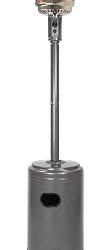
Amazon Basics 46,000 BTU Propane Patio Heater
The reference standard for open-air seating: a wide reflector head that pushes an even nine-foot radius with no scorching hot spot, plus a water-fillable base that keeps it planted on a breezy deck. Slate gray reads as neutral hardware rather than a feature piece, so it disappears into the background while the rest of your lighting does the talking.
EAST OAK 50,000 BTU Patio Heater with Table
The integrated round table is smarter than it sounds — it turns a utilitarian pole into a functional station for glasses and a small lantern, consolidating what would otherwise be two pieces of clutter. Its double-layer stainless burner runs steady, and the triple protection system covers tilt, flame-out, and gas shutoff.
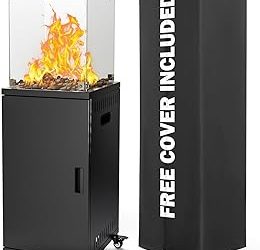
Pamapic 48,000 BTU Pyramid Flame Heater
This is the one you buy for atmosphere first, warmth second: an 87-inch hammered bronze column with a quartz glass tube that throws genuine dancing firelight up its full height. Treat it as your patio’s primary visual anchor and dim everything else, then let the included cover protect the finish off-season.
Cuisinart 11,000 BTU Tabletop Patio Heater
A tidy 30-square-foot heat pocket that sits right on the dining table, functioning like an oversized candle with real output for two to four people. The anti-tilt safety switch and burner screen guard make it sensible around a crowded tabletop, and it stows in a cabinet all winter.
Paraheeter 1500W Outdoor Electric Infrared Heater
The lighting designer’s pick, because infrared warms people instead of the air and adds almost no ambient glow to compete with your fixtures. Wall-mount it above a bench or drop it on the tripod for flexibility, and the remote plus waterproof CSA-certified build means you can leave it installed year-round.
Frequently Asked Questions
How far away should I sit from a patio heater?
For a full-size propane tower, three to six feet is the sweet spot within its nine-foot radius. Infrared panels are more directional — aim them at seated torso height from six to eight feet back for even coverage.
Can I use these under a covered patio or pergola?
Electric infrared units are the safer choice under cover; propane heaters need substantial vertical clearance and open airflow. Always confirm the manufacturer’s minimum overhead distance before installing anything beneath a roof or fabric shade.
Do patio heaters produce a lot of light?
Pyramid flame models do — significantly. Standard mushroom-top propane heaters give off a modest amber glow at the burner, and infrared units emit only a faint reddish shimmer, which makes them ideal if you’ve tuned your lighting scheme carefully.
How long does a propane tank last?
A 20-pound tank typically runs eight to ten hours at full output on a 46,000–50,000 BTU heater, and considerably longer on lower settings. Keeping a spare tank on hand prevents the mid-evening scramble.
Final Thoughts
For most patios, the Amazon Basics 46,000 BTU tower is the reliable workhorse — broad, even coverage and a stable water-filled base without visual noise. If you want the heater to double as the evening’s focal point, the Pamapic pyramid delivers genuine firelight in a bronze column, while the Paraheeter infrared panel is the discreet choice for anyone protecting a carefully dimmed, layered lighting scheme.