Key takeaways
- Material & Feel: Rope hammocks like DuraCord breathe beautifully in warm air and create dappled shadow patterns that flatter any outdoor space, while parachute nylon models pack flat and dry quickly after rain — each material shapes the sensory experience differently.
- Weight Capacity & Size: Look for at least 400 lb capacity if you plan to share; a wider bed (55–60 inches) prevents the “shoulder squeeze” that ruins relaxation sessions, especially on rope models.
- Spreader Bars vs. Cocoon Style: Oak spreader bars keep the hammock flat and inviting for reading or conversation, while gathered-end cocoon designs cradle the body — your choice depends on whether you want open presentation or enveloping solitude.
- Setup & Versatility: Tree straps and carabiner systems save time and protect bark; models with included steel stands eliminate the need for perfectly spaced trees, making them viable for balconies and bare patios.
- Hardware & Longevity: Zinc-plated or powder-coated hardware resists the oxidation that turns cheap shackles into rust stains — a detail that separates a five-year investment from a one-summer impulse buy.
What's inside
When the afternoon light softens and shadows stretch across the yard, the difference between a forgettable backyard and a genuinely restorative one often comes down to a single piece of furniture. Hammocks promise that magic, but the market is cluttered with budget nylon swings that sag after one season and premium rope models that demand a small fortune. As someone who designs outdoor living spaces for a living, I evaluate hammock brands the same way I evaluate pendant lights or landscape fixtures: material honesty, structural rhythm, and whether the product actually earns its place in a curated environment.
This guide distills what matters in 2026’s hammock landscape. I tested and compared six leading options across durability, weight capacity, portability, and — crucially — the kind of ambient character each one brings to a patio, deck, or trailside clearing. Whether you need a travel-ready nylon cocoon or a statement rope piece that catches golden-hour light through its weave, the picks below hold up under scrutiny.
As an Amazon Associate we earn from qualifying purchases.


How to Choose the Best Hammock Brands (2026)
- Material & Feel: Rope hammocks like DuraCord breathe beautifully in warm air and create dappled shadow patterns that flatter any outdoor space, while parachute nylon models pack flat and dry quickly after rain — each material shapes the sensory experience differently.
- Weight Capacity & Size: Look for at least 400 lb capacity if you plan to share; a wider bed (55–60 inches) prevents the “shoulder squeeze” that ruins relaxation sessions, especially on rope models.
- Spreader Bars vs. Cocoon Style: Oak spreader bars keep the hammock flat and inviting for reading or conversation, while gathered-end cocoon designs cradle the body — your choice depends on whether you want open presentation or enveloping solitude.
- Setup & Versatility: Tree straps and carabiner systems save time and protect bark; models with included steel stands eliminate the need for perfectly spaced trees, making them viable for balconies and bare patios.
- Hardware & Longevity: Zinc-plated or powder-coated hardware resists the oxidation that turns cheap shackles into rust stains — a detail that separates a five-year investment from a one-summer impulse buy.
The Best Hammock Brands (2026) Reviewed
ENO DoubleNest Lightweight Camping Hammock
The DoubleNest remains the gold standard for portable relaxation, and the 2026 special-edition colorways add genuine visual personality to campsites and backyards alike. Its 70D ripstop nylon hangs light yet supports two adults without stretching, and the integrated stuff sack means setup and teardown take under ninety seconds — ideal for anyone who treats golden-hour downtime as non-negotiable.
Pawleys Island Large Oatmeal DuraCord Rope Hammock
Handcrafted in the USA with zinc-plated hardware and a solid oak spreader bar, this 13-foot rope hammock is a permanent-installation piece that earns its footprint. The DuraCord fibers resist mildew and UV fade while casting the kind of intricate lattice shadows across a deck that designers spend hours trying to replicate with trellises and light filters.
Pawleys Island Deluxe Oatmeal DuraCord Rope Hammock
The Deluxe variant widens the bed to 60 inches, turning a two-person hammock into a genuine shared lounger without sacrificing the signature DuraCord texture. That extra five inches of width changes the entire posture of the experience — less negotiation over elbow room, more parallel stillness — and the same handcrafted oak-and-zinc build ensures it seasons gracefully outdoors.
ANAGOO Double Hammock with Stand
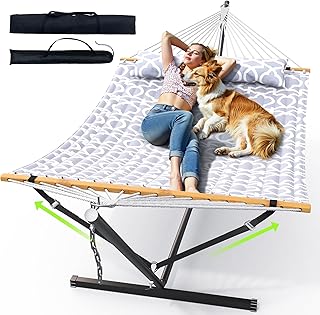
For patio and garden spaces where mature trees are absent, the ANAGOO eliminates the tree-sourcing problem entirely with a powder-coated steel frame that assembles without tools. The 500 lb capacity and balanced-strap design keep two occupants level even when one shifts, and the clean white fabric acts as a neutral canvas that pairs well with virtually any outdoor furniture palette.
Kootek Camping Hammock
Built from 210T parachute nylon with tree-friendly straps and D-shaped carabiners, the Kootek hits an impressive balance between trail-ready lightness and backyard durability. It performs equally well indoors as a suspended reading nook, and the attached carry bag keeps the entire system compact enough to leave in a go-bag year-round.
Frequently Asked Questions
What is the most durable hammock material for year-round outdoor use?
DuraCord rope and solution-dyed polyester resist UV degradation and moisture better than untreated cotton or basic nylon, making them strong candidates for permanent outdoor installations exposed to four seasons.
Do rope hammocks require more maintenance than nylon hammocks?
Rope models benefit from periodic rinsing and occasional mildew treatment in humid climates, whereas nylon hammocks dry faster and resist biological growth with less intervention — though both last longer when stored under cover during winter.
How far apart should hammock anchor points be?
Aim for roughly 12–15 feet between trees or attachment points for most 13-foot rope hammocks, adjusting tension until the hang angle sits near 30 degrees from horizontal for optimal comfort and structural load distribution.
Can a hammock with a stand be used indoors?
Models like the ANAGOO with a freestanding steel frame work well in spacious living rooms or sunrooms, provided the floor can support the combined weight and the frame’s footprint doesn’t conflict with traffic flow.
Final Thoughts
If I were outfitting a permanent backyard retreat, I would start with the Pawleys Island Deluxe DuraCord for its unmatched visual warmth and handcrafted presence. For a versatile, pack-everywhere option, the ENO DoubleNest delivers proven reliability in a package that travels effortlessly. And for anyone lacking the right trees, the ANAGOO with its tool-free stand provides a no-compromise solution that holds its own aesthetically on any patio.