Key takeaways
- Light color and position: Side-mounted or top-edge LED strips wash the contents evenly; a single ceiling puck creates a hot spot up top and murk at the bottom. Warmer output around 3000K flatters amber glass and wood cabinetry, while cooler 5000K light reads clinical and tends to fight warm room lighting.
- Glass tint and reflectivity: Lightly smoked or low-iron glass keeps the interior visible without turning the door into a mirror of your TV. Heavily tinted panels look sleek when off but swallow the LED output, so you lose the glow you were paying for.
- Shelf material and shadowing: Wire and slim chrome shelves let light pass through to lower rows. Solid glass or thick plastic shelving blocks it, leaving the bottom third of the cabinet dim regardless of how bright the fixture is.
- Temperature range and stability: A span reaching down to the low 30s°F handles beer and soda; anything that climbs into the mid-50s can double as cellar storage. Consistency matters more than the extremes, since a compressor that cycles hard will also cycle its noise.
- Footprint, venting, and door swing: Freestanding units need breathing room at the rear and sides. Only a fridge rated for built-in installation belongs inside a cabinet run, and a reversible or auto-closing door keeps the lit face pointed where you actually want it.
What's inside
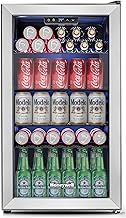
Most shoppers pick a beverage fridge by can count, then discover something nobody mentioned in the spec sheet: a glass door is a light fixture. It runs every hour you’re awake and most of the ones you aren’t, throwing a rectangle of illumination across your floor, your cabinet fronts, and whatever art you hung nearby. Get it wrong and you’ve installed a cold blue billboard in the corner of a room you spent months softening. Get it right and the unit reads like a backlit display case, the drinks glow like bottles behind a good bar, and the whole space gains a layer of depth after sunset.
This guide evaluates the leading glass door mini fridges of 2026 through that lens first: where the LEDs sit, what color temperature they throw, how much the door glass reflects versus transmits, and whether the shelving carves ugly shadows across the contents. The practical criteria still matter, so temperature range, compressor noise, venting clearance, and shelf adjustability are all covered too. Every recommendation below is a unit that behaves well as both an appliance and a light source.
As an Amazon Associate we earn from qualifying purchases.



🛒 Best Price Today on Amazon
Prime members get fast, free shipping on everything above, plus member-only deals. New members get a 30-day free trial — cancel anytime.
How to Choose a Glass Door Mini Fridge (2026)
- Light color and position: Side-mounted or top-edge LED strips wash the contents evenly; a single ceiling puck creates a hot spot up top and murk at the bottom. Warmer output around 3000K flatters amber glass and wood cabinetry, while cooler 5000K light reads clinical and tends to fight warm room lighting.
- Glass tint and reflectivity: Lightly smoked or low-iron glass keeps the interior visible without turning the door into a mirror of your TV. Heavily tinted panels look sleek when off but swallow the LED output, so you lose the glow you were paying for.
- Shelf material and shadowing: Wire and slim chrome shelves let light pass through to lower rows. Solid glass or thick plastic shelving blocks it, leaving the bottom third of the cabinet dim regardless of how bright the fixture is.
- Temperature range and stability: A span reaching down to the low 30s°F handles beer and soda; anything that climbs into the mid-50s can double as cellar storage. Consistency matters more than the extremes, since a compressor that cycles hard will also cycle its noise.
- Footprint, venting, and door swing: Freestanding units need breathing room at the rear and sides. Only a fridge rated for built-in installation belongs inside a cabinet run, and a reversible or auto-closing door keeps the lit face pointed where you actually want it.
The Best Glass Door Mini Fridges of 2026, Reviewed
hOmeLabs 120-Can Beverage Refrigerator
The most balanced glow of the group: the interior lighting spreads across all three adjustable shelves without a visible hot spot, and the 120-can cabinet gives you enough vertical space to stage taller bottles up front where the light catches them. A dependable pick for an office nook or a bar cart corner that needs a soft anchor after dark.
Honeywell 116-Can Commercial-Grade Beverage Cooler
Built with a heavier commercial-style door and frame, which means less flex and a tighter seal, and the crisper LED wash suits stainless and cool-toned kitchens far better than warm wood. Choose this one if you want the merchandiser look rather than a residential appliance disappearing into the millwork.
KB02 FLB-60 120-Can Freestanding Beverage Cooler
The all-black cabinet and dark trim let the illuminated interior do all the visual work, so at night you see floating rows of drinks rather than a box. Adjustable shelving makes it easy to build a two-tier arrangement that keeps the lower rows out of shadow.
Nutrichef 108-Can Beer Fridge
Its 21°F to 64°F range is the widest here, covering everything from properly cold lager to red wine service temperature, which makes it the most flexible single unit for mixed collections. At roughly 19 by 17 by 33 inches it slots neatly beside a desk or console without dominating the sightline.
EUHOMY 15-Inch 127-Can Under-Counter Beverage Fridge
The strongest choice for integrated installation, with a front-venting design rated for built-in use and interior LED lighting that turns a cabinet gap into a genuine light detail. At 15 inches wide it fills a standard base cabinet opening and delivers a low, grazing glow across the floor that reads beautifully in a kitchen island or entertainment wall.
Frequently Asked Questions
Can I leave the interior light on all the time?
Most models offer a manual light switch independent of the door, and LED draw is negligible, so leaving it on overnight costs almost nothing. If you want the fridge to serve as ambient lighting, this is the feature to confirm before buying.
Do glass doors waste energy or cause condensation?
Single-pane doors will sweat in humid rooms, while double-pane or coated glass resists it and holds temperature better. Keep the unit out of direct sun and away from heat sources, both for efficiency and to prevent glare washing out the display.
Can I install one inside a cabinet?
Only if the manufacturer lists it as built-in capable with front venting, like the EUHOMY. Rear-venting freestanding models trapped in cabinetry overheat, run louder, and shorten compressor life.
Will these store wine properly?
For short-term serving, yes, especially models reaching the 50s and low 60s°F such as the Nutrichef. Long-term cellaring needs humidity control and UV-filtered glass that beverage coolers generally don’t provide.
Final Thoughts
For most rooms the hOmeLabs 120-can cooler delivers the cleanest, most even light for the money, while the EUHOMY 15-inch is the one to specify when the fridge needs to vanish into cabinetry and glow like an intentional design detail. If you’re storing beer and wine side by side, the Nutrichef’s wider temperature range earns its place.