Key takeaways
- Penetrating vs. Film-Forming: Penetrating oils (like linseed and teak oil) soak into the grain and let the wood breathe, producing a matte, natural glow that reads beautifully under warm patio lighting. Film-forming sealers sit on top and create a visible barrier — better for waterproofing but they can crack and peel in direct sun.
- UV Resistance: Sunlight is the number-one killer of outdoor wood. Look for formulas with built-in UV absorbers or stabilizers. Without them, even the best finish buys you only a few months before the wood turns silver again.
- Reapplication Cadence: Some products need re-coating every 3–4 months, others last a full year. If you enjoy the ritual of maintenance, a frequent-touch-up oil can be meditative. If you’d rather set it and forget it, prioritize long-life sealers.
- Wood Species Compatibility: Teak, acacia, cedar, and oak each absorb finishes differently. Dense tropical hardwoods like teak demand oils specifically formulated to penetrate their tight grain; softer woods can handle heavier polyurethane blends without looking plastic.
- Sheen and Ambience: This is the detail most guides skip. A golden-toned oil warms up a stone patio and makes string lights feel cozier. A matte, natural finish keeps things Scandinavian and understated. Choose the finish you want your furniture to project at dusk, not just in a hardware-store swatch.
What's inside
Every wood patio owner eventually stares at the same bleached, ashen surface and wonders whether to sand, stain, or surrender entirely. The real frustration isn’t the damage — it’s choosing a finish when every product claims to be the miracle cure. UV degradation, moisture cycling, and foot traffic all attack outdoor wood differently, and the wrong product can leave you re-coating every season.
As someone who designs outdoor living spaces for a living, I obsess over how a finish reads under golden-hour light, under string lights, and in the flat grey of a rainy Tuesday. A great wood sealer doesn’t just protect — it shapes the entire mood of your patio. This guide breaks down six leading contenders for 2026, narrowed to the five that earned a permanent spot on my recommendation list.
As an Amazon Associate we earn from qualifying purchases.



🛒 Best Price Today on Amazon
Prime members get fast, free shipping on everything above, plus member-only deals. New members get a 30-day free trial — cancel anytime.
How to Choose a Finish For Wood Patio Furniture (2026)
- Penetrating vs. Film-Forming: Penetrating oils (like linseed and teak oil) soak into the grain and let the wood breathe, producing a matte, natural glow that reads beautifully under warm patio lighting. Film-forming sealers sit on top and create a visible barrier — better for waterproofing but they can crack and peel in direct sun.
- UV Resistance: Sunlight is the number-one killer of outdoor wood. Look for formulas with built-in UV absorbers or stabilizers. Without them, even the best finish buys you only a few months before the wood turns silver again.
- Reapplication Cadence: Some products need re-coating every 3–4 months, others last a full year. If you enjoy the ritual of maintenance, a frequent-touch-up oil can be meditative. If you’d rather set it and forget it, prioritize long-life sealers.
- Wood Species Compatibility: Teak, acacia, cedar, and oak each absorb finishes differently. Dense tropical hardwoods like teak demand oils specifically formulated to penetrate their tight grain; softer woods can handle heavier polyurethane blends without looking plastic.
- Sheen and Ambience: This is the detail most guides skip. A golden-toned oil warms up a stone patio and makes string lights feel cozier. A matte, natural finish keeps things Scandinavian and understated. Choose the finish you want your furniture to project at dusk, not just in a hardware-store swatch.
The Best Finish For Wood Patio Furniture (2026) Reviewed
LinSheen Boiled Linseed Oil
A fast-drying, flaxseed-based treatment that revitalizes tired wood without building up a glossy film. From a design standpoint, boiled linseed oil delivers that warm, honey-amber undertone that makes patio furniture look alive under soft evening light. It’s an excellent first-line restorer for weathered pieces, and its quick dry time means you can recoat in a single afternoon.
Seal-Once Nano+Poly Penetrating Wood Sealer
This nano-polyurethane hybrid bridges the gap between penetrating oil and topcoat sealer. The cedar-tinted formula pushes serious waterproofing deep into the wood fibers while the polyurethane component adds a subtle protective sheen. It’s the strongest long-term barrier in this lineup, ideal for patio furniture exposed to rain, pool splash, and heavy seasonal swings.
STAR BRITE Premium Golden Teak Oil
Formulated with tung oil polymers and UV absorbers, STAR BRITE gives teak and other fine hardwoods a rich, golden warmth that photographs beautifully at golden hour. It dries fast, builds a warm color quickly, and is proudly made in the USA. For designers chasing that classic resort-terrace look, this is the closest shortcut available at retail.
Furniture Clinic Teak Oil
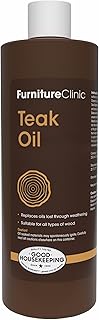
A straightforward, no-nonsense oil that restores and protects both indoor and outdoor wood with a natural matte finish. Furniture Clinic’s formula stands out for its versatility — boats, shower benches, and patio dining sets all benefit equally. The matte result reads clean and contemporary, perfect for minimalist outdoor spaces where you want the grain to do the talking.
Nordicare Teak Oil
Nordicare is built for restoring weathered wood on teak, acacia, and oak without complicated prep work. Its easy application and moisture-locking formula make it a smart choice for furniture that’s already showing age. The Scandinavian-made formula produces a restrained, understated finish — think matte rather than glossy — that pairs well with natural stone patios and overgrown garden settings.
Frequently Asked Questions
How often should I reapply finish to outdoor wood furniture?
Most penetrating oils need refreshing every 4–6 months in harsh climates, while polyurethane-blend sealers like Seal-Once can stretch to 12–18 months. Furniture that stays under a covered porch or pergola will always go longer between coats than furniture sitting in full sun and rain.
Can I apply a new finish over an old one without stripping?
If the existing finish is a penetrating oil, you can typically apply a fresh coat directly after cleaning and light sanding. Film-forming sealers are different — you’ll need to strip or sand down to bare wood first, otherwise the new layer won’t bond and will peel within weeks.
Which finish is best for teak specifically?
Teak’s natural oils make it incredibly durable, but those same oils migrate out over time, leaving the surface chalky. STAR BRITE and Nordicare are both engineered specifically for teak’s dense grain and will restore that warm, oiled look without trapping moisture underneath.
Does the finish color change how my patio feels at night?
Absolutely — this is the detail most people overlook. Golden and amber-toned oils amplify warm lighting ( Edison bulbs, candles, fire pits), making the space feel intimate and inviting. Clear or matte finishes keep things neutral and let cooler lighting tones dominate. Choose the emotional tone you want, then match the finish to it.
Final Thoughts
For most patio owners in 2026, STAR BRITE Premium Golden Teak Oil hits the sweet spot of UV protection, beautiful warm tone, and easy application. If maximum waterproofing is your priority, Seal-Once Nano+Poly is the strongest barrier here. And for a clean, modern matte look that lets the wood speak for itself, Furniture Clinic Teak Oil is hard to beat. All three earned their place not just on spec sheets, but on real patios under real light.