Key takeaways
- Fill character: Goose down clusters trap air and rebound quickly, giving you a rounded, cloud-lit profile. Straight feather fill is springier and heavier, holding a more architectural shape. Blends, like the fusion fill ELEMUSE uses, split the difference and are the safest default.
- Loft you can actually see: Anything under two inches disappears under a duvet and contributes nothing to the bed’s shadow line. Three to five inches is where the visual difference registers from across the room.
- Shell weave and sheen: A 100% cotton top with a tight, matte weave diffuses lamplight evenly. Slick synthetic covers throw specular hotspots that read cheap under any directional fixture, and they trap heat.
- Baffle construction: Sewn-through channels are cheaper but create visible compression lines. Baffle-box or quilted pillow-top construction keeps fill from migrating, which is what preserves that even gradient over time.
- Skirt depth and fit: Check the pocket depth against your mattress. A skirt that fits 8 to 21 inches, plus elastic bands or corner anchors, keeps the topper from shifting and bunching into a lopsided profile.
What's inside
Anyone who designs for atmosphere knows the bed is the largest soft surface in the room, which makes it the largest light-shaping surface too. A flat, compressed mattress reads as a hard rectangle under a bedside lamp: one bright plane, one abrupt shadow, no gradient. Add loft and the whole silhouette changes. Feathers and down settle into gentle hills that catch a 2700K bulb the way a diffusion panel catches a studio light, softening the edge between lit and unlit. Buyers usually shop toppers for comfort alone, then wonder why the room still photographs cold and feels clinical at 10 p.m.
This guide looks at featherbed toppers from both sides of that equation: how they sleep, and how they behave visually once the overheads go off. I’ve noted fill type, loft retention, shell weave, and how each option holds its shape under layered linens, because a topper that flattens by month three takes your ambience down with it. Below are the models worth considering in 2026, plus a few down-alternative and foam options for people who want the look without the quill.
As an Amazon Associate we earn from qualifying purchases.



How to Choose a Featherbed Mattress Topper (2026)
- Fill character: Goose down clusters trap air and rebound quickly, giving you a rounded, cloud-lit profile. Straight feather fill is springier and heavier, holding a more architectural shape. Blends, like the fusion fill ELEMUSE uses, split the difference and are the safest default.
- Loft you can actually see: Anything under two inches disappears under a duvet and contributes nothing to the bed’s shadow line. Three to five inches is where the visual difference registers from across the room.
- Shell weave and sheen: A 100% cotton top with a tight, matte weave diffuses lamplight evenly. Slick synthetic covers throw specular hotspots that read cheap under any directional fixture, and they trap heat.
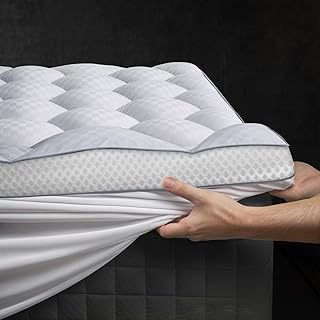
- Baffle construction: Sewn-through channels are cheaper but create visible compression lines. Baffle-box or quilted pillow-top construction keeps fill from migrating, which is what preserves that even gradient over time.
- Skirt depth and fit: Check the pocket depth against your mattress. A skirt that fits 8 to 21 inches, plus elastic bands or corner anchors, keeps the topper from shifting and bunching into a lopsided profile.
The Best Featherbed Mattress Toppers of 2026, Reviewed
WhatsBedding 5-Inch Duck Feather & Memory Foam Topper
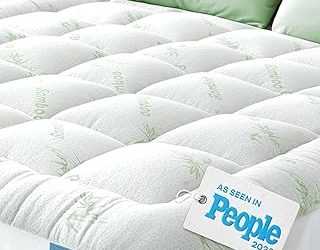
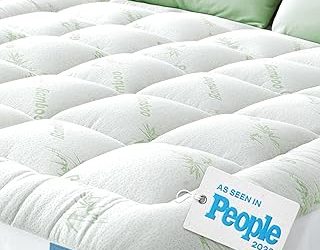
The hybrid build is smart: a foam base gives structural support while the duck feather layer above supplies the loft that actually shapes the bed visually. At five inches with a 100% cotton top, this is the most dramatic silhouette change on the list, and the elastic bands keep it honest through a night of movement.
ELEMUSE Queen Goose Down Feather Topper
The down-and-feather fusion fill is the classic featherbed experience, plush on contact with enough spring to avoid the sinkhole effect. Deep pockets and a forgiving pillow-top profile make it a strong pick for couples and guest rooms where you want the bed to look inviting before anyone touches it.
ELEMUSE King Goose Down Feather Topper
Same fill philosophy, scaled for a king, and the extra thickness matters here: large beds visually flatten faster than smaller ones, so a thicker pillow top keeps a master bedroom from reading as a slab. Expect to fluff it weekly to maintain even loft across that width.
King 1000GSM Down Alternative Pillow Top
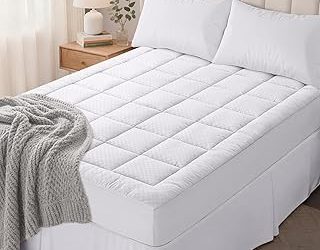
A genuinely good alternative for allergy sufferers, with 1000GSM fill that mimics feather loft without the quills poking through. It runs cooler than true down and fits 8-to-21-inch mattresses, though the synthetic clusters compress a little more readily under sustained pressure.
3-Inch Ultra-Fluffy Memory Foam Topper (Queen)
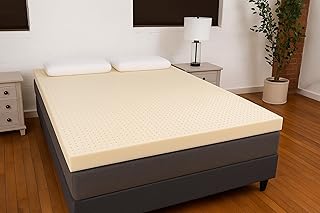
Marketed as a pillow top but engineered for support, this one suits back pain sufferers who still want a soft visual profile. The breathable mesh sides are a practical touch for airflow, and the plush surface layer keeps it from looking as rigid as standard foam.
Frequently Asked Questions
Do featherbeds sleep hot?
Less than foam, generally. Feather and down clusters allow air movement, and a cotton shell breathes. Heat problems usually come from the cover, not the fill, so avoid sealed synthetic tops.
How do I keep the loft even?
Shake and rotate it weekly, and rotate end-to-end monthly. Baffled construction helps, but no featherbed maintains itself.
Will a featherbed fix a sagging mattress?
No. Soft fill conforms to the dip rather than correcting it. For structural support, a firm foam option like the BedStory CertiPUR-US topper is the right tool.
What goes over a featherbed?
A deep-pocket fitted sheet sized for the combined height, then a lightweight quilt or duvet. Heavy layers crush the loft and erase the shadow gradient you paid for.
Final Thoughts
For maximum loft and the biggest visual transformation, the WhatsBedding 5-inch duck feather hybrid is the one to beat. The ELEMUSE goose down fusion toppers are the better balanced choice for most bedrooms, and if you need support rather than softness, the BedStory firm foam topper solves a different problem well.