Key takeaways
- Match extended length to your light span: Measure your string light run or pendant coverage first, then buy a table whose fully open length stays inside it. A 121″ table under a 10-foot catenary leaves both ends dim, and no centerpiece fixes that.
- Favor matte and low-sheen tops: Brushed aluminum, wood-grain powder coat, and oiled hardwood diffuse warm light softly. High-gloss slats mirror bulbs directly into sightlines, especially when guests are seated low in dining chairs.
- Decide on the umbrella hole early: A hole is useful for shade but it occupies the exact center where a hurricane lantern or low arrangement belongs. Look for a plug cap, and note that most umbrella poles block cross-table eye contact after dark anyway.
- Check the mechanism honestly: Self-storing leaves are the least annoying because nothing lives in your garage. Pull-out butterfly systems are fine, but test whether one person can operate them, since you’ll be extending the table while guests are already arriving.
- Plan the surface budget: Once extended, you need room for platters, candles, and drinks without crowding. Reserve a 10-inch center strip for lighting elements and measure the remaining depth against your serving style.
What's inside
Most patio tables are bought in daylight and lived with after dark. That’s the gap: you measure the deck at noon, pick something that looks handsome in the listing photos, then discover in August that your string lights hang over an empty stretch of stone while half your guests eat in shadow. An extendable table changes the footprint of your gathering by two or three feet on demand, which means the lit zone you carefully built for six people no longer lines up when you seat ten. Add a glossy top that bounces porch light straight into someone’s eyes, or an umbrella hole sitting exactly where you wanted a hanging lantern, and the whole scene reads more cafeteria than courtyard.
This guide looks at extendable outdoor dining tables through that lens. I’ve spent years planning ambience for terraces and backyard dinners, so alongside the usual concerns of build quality, corrosion resistance, and how painlessly the leaf slides out, I’ve flagged how each table behaves under warm light: surface reflectance, how the extended length maps to a typical overhead run, whether the frame casts hard shadows from low lanterns, and where you can realistically park candles once the table grows.
As an Amazon Associate we earn from qualifying purchases.



🛒 Best Price Today on Amazon
Prime members get fast, free shipping on everything above, plus member-only deals. New members get a 30-day free trial — cancel anytime.
How to Choose a/an Extendable Outdoor Dining Table (2026)
- Match extended length to your light span: Measure your string light run or pendant coverage first, then buy a table whose fully open length stays inside it. A 121″ table under a 10-foot catenary leaves both ends dim, and no centerpiece fixes that.
- Favor matte and low-sheen tops: Brushed aluminum, wood-grain powder coat, and oiled hardwood diffuse warm light softly. High-gloss slats mirror bulbs directly into sightlines, especially when guests are seated low in dining chairs.
- Decide on the umbrella hole early: A hole is useful for shade but it occupies the exact center where a hurricane lantern or low arrangement belongs. Look for a plug cap, and note that most umbrella poles block cross-table eye contact after dark anyway.
- Check the mechanism honestly: Self-storing leaves are the least annoying because nothing lives in your garage. Pull-out butterfly systems are fine, but test whether one person can operate them, since you’ll be extending the table while guests are already arriving.
- Plan the surface budget: Once extended, you need room for platters, candles, and drinks without crowding. Reserve a 10-inch center strip for lighting elements and measure the remaining depth against your serving style.
The Best Extendable Outdoor Dining Tables of 2026, Reviewed
Flexa Extendable Solid Wood Patio Table, 63″–94.5″
Solid wood is the most forgiving surface I know under 2700K bulbs, absorbing light instead of throwing it back, and the 63″–94.5″ range sits neatly under a standard two-post string light run. The umbrella hole is the tradeoff, so plan on the plug and side-mounted lanterns if you want a clear centerline.
Never-Rust Aluminum Extendable Table, 85″–107″
This is the banquet option: at 107″ you’re seating ten comfortably, and the wood-grain aluminum top gives you timber warmth without the maintenance or the swelling. Light it with two pendants or a doubled string run rather than one, because a single center fixture will fall off hard at the ends.
Soleil Jardin Aluminum Extendable Table, 35″–71″
The smartest pick for small balconies and narrow decks, collapsing to 35″ for coffee and opening to 71″ when friends turn up. The dark grey finish is genuinely useful after sunset, reading as a quiet base that makes candlelight and glassware the brightest things on the table.
RoyalCraft Expandable Aluminum Table, up to 121″
Three locking lengths and adjustable feet make this the most adaptable table here, and the feet matter more than people expect on uneven flagstone where a wobbling candle is a real hazard. Just be realistic: 121″ needs a dedicated lighting plan, ideally a linear run tracking the full length.
Never-Rust Aluminum Teak-Finish Table, 38″–77″
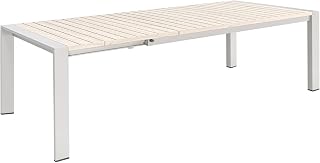
The teak tone is the standout, warming beautifully under amber light while the aluminum core shrugs off rain and salt air. The 38″–77″ span covers intimate dinners through to eight guests, which suits most suburban patios and their existing light coverage.
Frequently Asked Questions
Does table finish really affect outdoor lighting?
Noticeably. Matte and mid-tone surfaces soften reflected light and flatter faces, while glossy or very pale tops create hotspots and glare from low fixtures. Dark finishes make candles look brighter by contrast.
Can I use an umbrella hole for a hanging light?
Yes, with a weighted base and a rigid pole rated for the fixture, but check the load and never run mains cable through it. Battery or low-voltage lanterns are the safer, simpler route.
Is aluminum or wood better for an extendable outdoor table?
Aluminum wins on weather resistance, weight, and mechanism smoothness over years of use. Wood wins on warmth and how it handles light, but expects annual oiling and covered storage in harsh climates.
How much clearance do I need behind the extended length?
Allow 36 inches from the fully extended edge to any wall, planter, or railing. Also confirm your lighting posts sit outside that envelope so nobody backs a chair into them.
Final Thoughts
For most patios, the Flexa solid wood table strikes the best balance of warmth, honest materials, and a length range that fits typical overhead light spans. If you host large groups, the 85″–107″ never-rust aluminum table handles ten guests without drama, and for tight balconies the Soleil Jardin’s 35″–71″ range gives you flexibility in a footprint that looks intentional at every setting.