Key takeaways
- Match capacity to cubic feet, not marketing: A 95 oz tank rated for 1000 sq ft is generous in a trailer; a 35 oz unit rated to 280 sq ft is right for a van, cabover, or single closet. Oversizing wastes counter space you don’t have.
- Insist on a drain hose for long stays: Peltier units fill fast in humid climates. A gravity-fed hose into the shower pan or a jug turns a twice-daily chore into a set-and-forget system.
- Noise is measured at night, not in a showroom: Look for 28–35 dB and a dedicated sleep mode. In a rig, the unit is often three feet from your pillow, which changes the math entirely.
- Treat the light as a design element: Seven-color ambient lighting sounds gimmicky until you realize it doubles as a soft amber nightlight. What matters is a full-off setting and dimmable warm tones, not the color count.
- Auto shut-off and defrost are non-negotiable: Rigs get bumped, parked on slopes, and dropped into 40°F mornings. Full-tank shut-off protects the floor; auto defrost keeps compressor models working in shoulder season.
What's inside
Anyone who has spent a damp weekend in a travel trailer knows the tell: condensation blooming across the dinette window at 6 a.m., a faint mustiness in the overhead cabinets, and cushions that never quite dry out. RVs concentrate every moisture source a house has — cooking, showering, breathing — into 200 square feet of thin, poorly ventilated shell. As someone who designs lighting and atmosphere for small interiors, I’ll add a second complaint that rarely makes buying guides: most compact dehumidifiers are visually loud. They sit on the floor with a hard blue LED that turns a cozy sleeping nook into a server closet at 2 a.m.
This guide looks at the best dehumidifiers for RVs in 2026 through both lenses — moisture removal that actually keeps up with a rig, and units that behave themselves after dark. I’ve weighted quiet operation, tank capacity relative to footprint, continuous-drain options for long stays, and whether the onboard lighting reads as warm ambience or interrogation lamp. Whether you’re winterizing a fifth wheel or living full-time in a Class B, there’s a match below.
As an Amazon Associate we earn from qualifying purchases.


How to Choose a Dehumidifier For Rvs (2026)
- Match capacity to cubic feet, not marketing: A 95 oz tank rated for 1000 sq ft is generous in a trailer; a 35 oz unit rated to 280 sq ft is right for a van, cabover, or single closet. Oversizing wastes counter space you don’t have.
- Insist on a drain hose for long stays: Peltier units fill fast in humid climates. A gravity-fed hose into the shower pan or a jug turns a twice-daily chore into a set-and-forget system.
- Noise is measured at night, not in a showroom: Look for 28–35 dB and a dedicated sleep mode. In a rig, the unit is often three feet from your pillow, which changes the math entirely.
- Treat the light as a design element: Seven-color ambient lighting sounds gimmicky until you realize it doubles as a soft amber nightlight. What matters is a full-off setting and dimmable warm tones, not the color count.
- Auto shut-off and defrost are non-negotiable: Rigs get bumped, parked on slopes, and dropped into 40°F mornings. Full-tank shut-off protects the floor; auto defrost keeps compressor models working in shoulder season.
The Best Dehumidifier For Rvs (2026)s Reviewed
95OZ Dehumidifier with 7 Color Ambient Light (Black)
This is the one I recommend most often for larger trailers: a 1000 sq ft rating, a tank big enough to run a full damp night, and a color-cycling glow that can be locked to a single low-intensity hue. In black, it disappears against darker cabinetry instead of drawing the eye the way white plastic tends to.
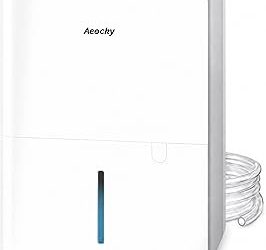
68oz Small Dehumidifier with Drain Hose
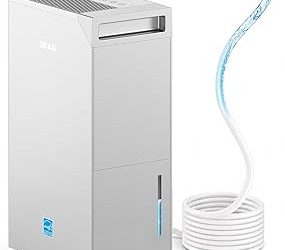
The sweet spot for full-timers who don’t want to empty a reservoir every morning — 650 sq ft of coverage with continuous drainage straight into a shower or basin. It runs genuinely quiet, and the pared-back housing reads as appliance-neutral rather than gadget.
21 Pint Dehumidifier with Intelligent Humidity Control
The serious option when you’re fighting real humidity: a compressor unit with three modes, a 24-hour timer, auto defrost, and enough capacity to dry out a soaked storage bay. Heavier and louder than the thermoelectric picks, so I’d run it on a timer during the day and shut it down at night.
95 OZ Dehumidifier with Sleep Mode (White)
Mechanically the sibling of the black 95 oz model, but the sleep mode is what earns it a spot — the display dims and the fan drops to a whisper, so the only thing left is a soft glow you can tune or extinguish. White suits bright, coastal-styled interiors and Scandi-toned conversions.
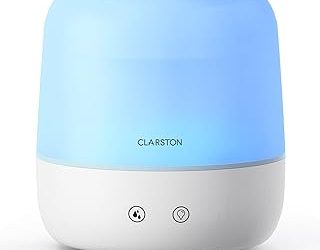
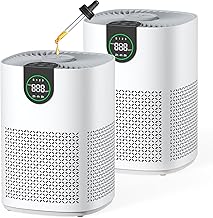
35 OZ Small Dehumidifier for Bedroom RV
At 28 dB and 280 sq ft, this is the closet, wardrobe, and camper-van specialist. The seven-color light makes it a legitimate bedside object rather than something you hide, and the auto shut-off means an overnight run won’t end in a puddle.
Frequently Asked Questions
How many pints do I need for an RV?
Most travel trailers are well served by a 68–95 oz thermoelectric unit. Step up to a 21-pint compressor model only if you’re in the Gulf South, camping near water, or drying out an actual leak.
Can I run one overnight while sleeping?
Yes, provided it has auto shut-off and a sleep or quiet mode. The 35 oz and 95 oz models here are designed for exactly that scenario.
Is the color-changing light just a novelty?
It’s more useful than it sounds. Set to a low amber, it works as a wayfinding light for the bathroom run — bright enough to navigate, dim enough not to wake anyone.
What about big whole-home units like the Waykar 80 Pint?
The Waykar 80 Pints covers 5000 sq ft and is excellent in a basement, but it’s too large and power-hungry for most rigs. Consider it for a garage or storage building where you park.
Final Thoughts
For most RVers, the 95OZ Dehumidifier with 7 Color Ambient Light strikes the best balance of capacity, quiet, and evening atmosphere, while the 68oz model with a drain hose is the smarter buy for anyone parked long-term. In vans and sleeping nooks, the 35 OZ unit does the job at 28 dB without ever looking out of place.