Key takeaways
- Pint capacity vs. actual footprint: Marketing numbers assume saturated air. Match the rating to your real square footage with headroom, not to the biggest figure on the box. A 1,000 sq ft crawl space rarely needs a 155-pint industrial unit.
- Drainage method: Crawl spaces almost never have a floor drain. A built-in condensate pump that lifts water 15 feet or more to an exterior discharge point is the difference between a set-and-forget install and a bucket you crawl in to empty.
- Height and access clearance: Measure the shortest point of your entry hatch and the tightest joist gap. Compact chassis designs exist specifically because a standard upright dehumidifier will not physically fit through many access doors.
- Auto defrost and low-temperature operation: Crawl spaces run cold. Without auto defrost, coils ice over below roughly 41°F and the unit stops removing moisture while still drawing power.
- Memory restart and timers: Power flickers happen, and nobody notices a dead dehumidifier under the floor for weeks. Memory restart resumes your last setting automatically; a 24-hour timer lets you run cycles during off-peak hours.
What's inside
Anyone who has ever run a work light under a house knows the moment the beam hits floating moisture. The air goes soft and hazy, the joists overhead look darker than they should, and the light itself seems to lose half its reach. That haze is not a lighting problem. It is airborne water, and in a crawl space it quietly moves upward into subfloors, insulation, and eventually the finished rooms where you actually care how a lamp reads against a wall. Damp air also shifts how surfaces behave: unsealed wood swells, paint sheens flatten unevenly, and cold-toned bulbs pick up a gray cast off the walls above.
Fixing that starts below the floor. A properly sized crawl space dehumidifier pulls standing humidity out of the cavity, stabilizes the moisture content of the framing, and protects the finishes and furniture upstairs. This guide covers the units worth considering for 2026, what specifications genuinely matter in a low-clearance environment, and how to match capacity to your square footage without overspending on a machine built for flood restoration.
As an Amazon Associate we earn from qualifying purchases.


How to Choose a Dehumidifier For Crawl Spaces (2026)
- Pint capacity vs. actual footprint: Marketing numbers assume saturated air. Match the rating to your real square footage with headroom, not to the biggest figure on the box. A 1,000 sq ft crawl space rarely needs a 155-pint industrial unit.
- Drainage method: Crawl spaces almost never have a floor drain. A built-in condensate pump that lifts water 15 feet or more to an exterior discharge point is the difference between a set-and-forget install and a bucket you crawl in to empty.
- Height and access clearance: Measure the shortest point of your entry hatch and the tightest joist gap. Compact chassis designs exist specifically because a standard upright dehumidifier will not physically fit through many access doors.
- Auto defrost and low-temperature operation: Crawl spaces run cold. Without auto defrost, coils ice over below roughly 41°F and the unit stops removing moisture while still drawing power.
- Memory restart and timers: Power flickers happen, and nobody notices a dead dehumidifier under the floor for weeks. Memory restart resumes your last setting automatically; a 24-hour timer lets you run cycles during off-peak hours.
The Best Dehumidifier For Crawl Spaces (2026)s Reviewed
Waykar 125 Pint Crawl Space Dehumidifier
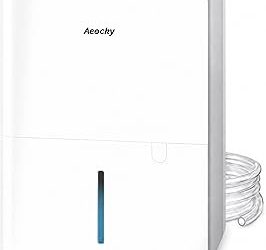
Waykar’s 125-pint unit covers up to 6,500 sq ft and pairs a built-in pump with a drain hose, which makes it a strong default for large or vented crawl spaces. The five-year coverage is unusually generous for this category and reflects real confidence in the compressor.
HBN 125 Pint Crawl Space Dehumidifier
Rated to 5,900 sq ft, the HBN brings industrial-grade extraction with a 24-hour timer that lets you schedule dehumidification around your electrical load. It is a sensible pick when you want serious capacity but prefer scheduled cycles over continuous runtime.
155 Pint Commercial Dehumidifier with Drain Hose
This is the restoration-class option: 155 pints, auto defrost, and memory starting in a compact portable housing. Choose it if you are drying out active water damage or managing a genuinely wet crawl space rather than maintaining an already-stable one.
5000 Sq.Ft Dehumidifier with Pump, 100 Pint
Smart humidity control and ENERGY STAR 2024 certification make this the efficiency pick, with a pump that lifts condensate up to 16.4 feet and three drainage configurations. No floor drain required, which solves the most common crawl space installation headache.
CADPXS 80 Pints Crawl Space Dehumidifier
At 80 pints and rated for spaces up to 1,000 sq ft, the CADPXS is the right-sized choice for smaller crawl spaces where a larger unit would short-cycle. Auto defrost, memory restart, a timer, and five-year limited warranty round out a well-specified compact package.
Frequently Asked Questions
What humidity level should I target in a crawl space?
Aim for 50–55% relative humidity. Below 50% you burn energy for little benefit; above 60% you enter the range where mold colonizes wood and insulation.
Do I need to encapsulate before installing a dehumidifier?
A vapor barrier over bare soil dramatically reduces the moisture load, letting a smaller unit work less. Full encapsulation is ideal, but even a properly lapped ground barrier makes a measurable difference.
Will running a dehumidifier down there raise my power bill much?
Expect a noticeable but manageable increase. ENERGY STAR-rated models and timer-controlled cycles keep costs down, and stabilized humidity often reduces HVAC load upstairs enough to offset part of it.
Can I leave the unit running unattended year-round?
Yes, provided it has a pumped drain to the exterior and memory restart. Check the discharge line and filter seasonally, since a clogged hose is the most common failure point.
Final Thoughts
For most homes, the Waykar 125 Pint is the balanced choice, delivering serious coverage with a pump and long warranty. Smaller crawl spaces are better served by the CADPXS 80 Pint, while the ENERGY STAR-certified 100 Pint model with 16.4-foot pump lift is the smartest option if efficiency and flexible drainage matter most to your install.