Key takeaways
- Light path and headboard height: Measure the distance from your window or primary fixture to where the daybed will sit. A double-layer storage headboard over 40 inches tall will cast a hard shadow in a small room, while a low spindle or slat design lets ambient light travel through. If the daybed goes into a dim corner, choose an open frame and add a wall sconce rather than a tall solid panel.
- Integrated lighting versus separate fixtures: Built-in LED strips give you a controllable low-level glow that works well for reading nooks and guest rooms without bedside surface area. Check whether the LEDs are dimmable and what color temperature they run — cooler strips near 6000K read clinical, while anything around 2700K to 3000K stays comfortable at night.
- Upholstery color and reflectance: Fabric finish changes how a room feels far more than most buyers expect. Light neutrals and saturated warm tones like mustard bounce daylight outward and lift a shaded room; deep charcoal and dark walnut absorb it, which suits a bright south-facing space that needs grounding.
- Support system and mattress fit: Steel or solid wood slats spaced under three inches apart eliminate the need for a box spring and keep the sleeping surface at seating height. Wider spacing means sagging within a year, especially with memory foam.
- Storage, trundle, or neither: A trundle doubles sleeping capacity but demands clear floor space in front and blocks under-bed access. Drawers and bookcases handle small-room storage better, though they add depth to the footprint. Decide which problem you actually have before paying for both.
What's inside
A daybed sits in an awkward category. It has to read as seating during daylight hours and function as a real bed after dark, and most of them fail at one job or the other. But there’s a third factor buyers rarely weigh until the thing is assembled and pushed against the wall: how the frame interacts with the light in the room. A tall storage headboard can shadow half a corner. A pale upholstered panel bounces afternoon sun back into the space. Open spindles let a lamp’s glow pass through instead of stopping dead against a slab of wood. These are not small details when the piece lives in a guest room that doubles as an office, or a den where the only window faces north.
This guide looks at six daybeds through that lens alongside the usual structural questions: slat support, trundle mechanics, assembly headaches, and whether the thing actually survives being sat on daily. A few of the picks include integrated LED strips and USB charging, which changes the calculus for anyone tired of running an extension cord behind a nightstand. Others go the opposite direction and stay deliberately low and open, letting existing fixtures do the work. Both approaches can be right depending on your room’s natural light and where your outlets sit.
As an Amazon Associate we earn from qualifying purchases.



How to Choose a Daybed (2026)
- Light path and headboard height: Measure the distance from your window or primary fixture to where the daybed will sit. A double-layer storage headboard over 40 inches tall will cast a hard shadow in a small room, while a low spindle or slat design lets ambient light travel through. If the daybed goes into a dim corner, choose an open frame and add a wall sconce rather than a tall solid panel.
- Integrated lighting versus separate fixtures: Built-in LED strips give you a controllable low-level glow that works well for reading nooks and guest rooms without bedside surface area. Check whether the LEDs are dimmable and what color temperature they run — cooler strips near 6000K read clinical, while anything around 2700K to 3000K stays comfortable at night.
- Upholstery color and reflectance: Fabric finish changes how a room feels far more than most buyers expect. Light neutrals and saturated warm tones like mustard bounce daylight outward and lift a shaded room; deep charcoal and dark walnut absorb it, which suits a bright south-facing space that needs grounding.
- Support system and mattress fit: Steel or solid wood slats spaced under three inches apart eliminate the need for a box spring and keep the sleeping surface at seating height. Wider spacing means sagging within a year, especially with memory foam.
- Storage, trundle, or neither: A trundle doubles sleeping capacity but demands clear floor space in front and blocks under-bed access. Drawers and bookcases handle small-room storage better, though they add depth to the footprint. Decide which problem you actually have before paying for both.
The Best Daybed (2026)s Reviewed
L-Shaped Twin Corner Daybed with Storage and LED
This is the most complete solution here for a room doing three jobs at once — the side bookcase, bedside rack, and drawers absorb clutter while the integrated LEDs and charging station remove the need for a lamp entirely. The vintage brown finish and tall headboard do soak up light, so pair it with a warm overhead fixture or reserve it for a room that already gets good daylight.
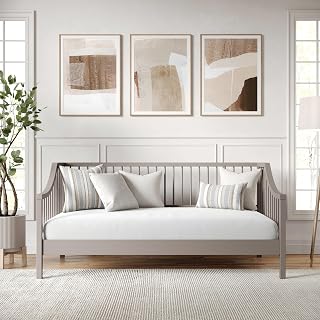
Martha Stewart Neely Solid Wood Platform Daybed
The turned spindles are the point: they break up the visual mass of the frame and let lamplight and daylight pass through, which keeps small rooms from feeling walled off. Solid wood construction and a slatted foundation mean it holds up as daily seating, and the gray finish stays neutral under both cool and warm bulbs.
YUHUASHI Upholstered Twin Daybed
The yellow upholstery is genuinely useful in a north-facing or basement room, where it acts as a soft reflector and warms the ambient tone without any change to your fixtures. Wood slat support handles a twin mattress without a box spring, and the low profile keeps sightlines open.
SHA CERLIN Metal Daybed with LED and USB
The double-layer storage headboard plus built-in LED lighting makes this the strongest pick for a guest room with no nightstand and one inconveniently placed outlet. Black steel with an open under-bed span keeps the footprint visually light despite the headboard’s bulk, and assembly is straightforward.
Full Size Upholstered Daybed with Twin Trundle
Button-tufted backs and piped waved arms give this more of a sofa presence than most daybeds manage, and the full-over-twin trundle configuration sleeps two properly. The tufting does create shadow texture, so it looks best with soft diffuse light rather than a harsh directional lamp.
Frequently Asked Questions
Do daybeds with built-in LEDs need to be hardwired?
No. Every LED-equipped model in this roundup runs off a standard plug, typically feeding both the light strip and the USB charging ports from one cord. You still need an accessible outlet within reach of the headboard, so plan placement around that before assembly.
Will a daybed work as a full-time bed?
With proper slat support, yes. The limiting factor is usually width rather than durability — a twin daybed suits one adult, and the side and back rails mean you sleep against a boundary on two or three sides, which some people find restful and others find confining.
How does headboard height affect a small room?
A tall solid headboard blocks light and sightlines, which makes a small room read smaller. If you want storage in a compact space, put it under the bed or beside it and keep the vertical profile low, or choose an open spindle back that light can pass through.
Is a trundle worth the added cost?
Only if you regularly host two guests. Trundles require clearance to pull out, add weight to the frame, and eliminate under-bed storage. For occasional single guests, a simpler frame with drawers delivers more everyday value.
Final Thoughts
For a room that needs storage and light in one package, the L-Shaped Twin Corner Daybed does the most work, with the SHA CERLIN metal frame as the leaner alternative when you want LED and USB without the bookcase bulk. If you’d rather let your existing fixtures shape the room, the Martha Stewart Neely spindle daybed stays visually open and handles daily use without complaint — and the AFI Nantucket in walnut is the pick when you want solid wood warmth in a space that already has plenty of daylight to spare.