Key takeaways
- Match capacity to cubic feet, not marketing: Coverage claims assume mild conditions. A crawl space is cold, closed, and often has exposed soil, so size up one tier past the square footage on the box if you want the unit to cycle instead of running flat out.
- Built-in pump over gravity drain: Most crawl spaces have nowhere downhill to send water. A condensate pump that can lift 15 feet or more lets you route a hose up and out to a sump, exterior wall, or standpipe and forget about it.
- Auto defrost is non-negotiable: Crawl spaces drop into the 40s and below. Without defrost, coils ice over and the machine quietly stops removing water while still drawing power.
- Memory restart and clearance: Power blips are common on outbuilding circuits, and you do not want to crawl back in to press a button. Check height against your joist clearance before buying — many “compact” units are still too tall for 18-inch access.
- Filter access and warranty length: Dust and soil particulate load filters fast down there. Favor a washable filter you can reach in place, and treat a five- or six-year warranty as a signal of how the maker expects the compressor to hold up.
What's inside
Every home has a layer nobody lights on purpose. I spend my working life shaping how rooms feel — the warmth of a lamp on oak, the way a wall finish holds a beam of light — and the fastest way to lose all of it is moisture rising from the dark cavity under the floor. Damp crawl spaces push humidity upward into the living space, where it clouds glass shades, hazes mirrors, swells veneer on case goods, and drags a stale weight into air that should feel clean. You notice it before you can name it: the room reads dull, the finishes look flat, and no amount of dimming fixes it.
A crawl space dehumidifier is the least glamorous piece of equipment you will ever buy and one of the most consequential for how your interiors age. This guide covers what actually matters in a low-clearance, poorly ventilated, unlit environment — drainage that works without a floor drain, defrost behavior in cold months, physical footprint you can maneuver on your back with a headlamp — and reviews the units worth your money in 2026.
As an Amazon Associate we earn from qualifying purchases.



How to Choose a Crawl Space Dehumidifier (2026)
- Match capacity to cubic feet, not marketing: Coverage claims assume mild conditions. A crawl space is cold, closed, and often has exposed soil, so size up one tier past the square footage on the box if you want the unit to cycle instead of running flat out.
- Built-in pump over gravity drain: Most crawl spaces have nowhere downhill to send water. A condensate pump that can lift 15 feet or more lets you route a hose up and out to a sump, exterior wall, or standpipe and forget about it.
- Auto defrost is non-negotiable: Crawl spaces drop into the 40s and below. Without defrost, coils ice over and the machine quietly stops removing water while still drawing power.
- Memory restart and clearance: Power blips are common on outbuilding circuits, and you do not want to crawl back in to press a button. Check height against your joist clearance before buying — many “compact” units are still too tall for 18-inch access.
- Filter access and warranty length: Dust and soil particulate load filters fast down there. Favor a washable filter you can reach in place, and treat a five- or six-year warranty as a signal of how the maker expects the compressor to hold up.
The Best Crawl Space Dehumidifiers (2026) Reviewed
Waykar 125 Pint Crawl Space Dehumidifier
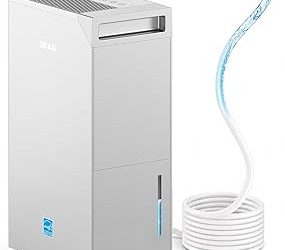
The most flexible large-capacity pick here, pairing serious extraction with an internal pump and hose so you can install it wherever the joists allow rather than wherever a drain happens to be. Its slim body and five-year coverage make it the default choice for a full-perimeter crawl space or a recently flooded basement.
ALORAIR Sentinel HD55
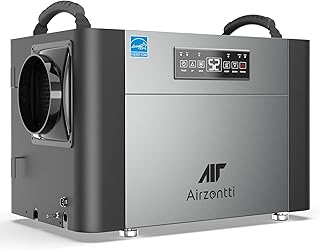
This is the unit restoration crews reach for, and it shows in the build: rugged housing, dependable auto defrost, and a six-year limited warranty behind it. Rated coverage is conservative at 1,200 square feet, but it holds a setpoint in cold, dirty conditions better than anything else on this list.
100 Pint Dehumidifier with Pump (5,000 Sq. Ft.)
The smart-humidity pick, with three drainage options and a pump that lifts water up to 16.4 feet — genuinely useful when the only exit is above your head. ENERGY STAR certification matters here because this machine will run for months at a stretch.
CADPXS 80 Pint Crawl Space Dehumidifier
A tidy, well-specified option for tighter or partially conditioned crawl spaces up to roughly 1,000 square feet, with defrost, timer, and memory restart all included. Its compact frame is the easiest of the group to slide into position solo.
155 Pint Commercial Dehumidifier with Pump
Maximum extraction for whole-house, attic-plus-crawl, or active water damage work, and still ENERGY STAR rated despite the output. Overkill for a small footprint, exactly right when you are drying down a large volume fast.
Frequently Asked Questions
What humidity level should I target?
Aim for 50 to 55 percent relative humidity. That range suppresses mold and dust mites while staying gentle on wood furniture and flooring above.
Do I need to encapsulate first?
A vapor barrier over bare soil dramatically reduces the load, letting the unit cycle off instead of fighting continuous evaporation. Sealing vents helps too, in most climates.
Will it run all year?
Expect heavy duty from late spring through early fall, lighter cycling in winter. A unit with defrost can safely stay in place year-round.
How often does the filter need cleaning?
Every four to six weeks in a dusty crawl space. Bring a work light and check the coil face at the same time.
Final Thoughts
For most homes, the Waykar 125 Pint is the balanced choice — capacity, pump, and slim profile in one package. Step up to the ALORAIR Sentinel HD55 if durability in harsh, cold conditions outranks raw coverage, or the 155 Pint Commercial unit if you are drying a large volume and want headroom to spare. Fix the air below, and everything you have designed above finally looks the way you intended.