Key takeaways
- Cabinet-Depth Compatibility: True counter depth models should protrude no more than one to two inches beyond standard 24-inch-deep cabinetry. Measure your surrounding cabinets, not just the opening, and account for door-swing clearance so handles don’t scrape adjacent surfaces.
- Ice Maker Type and Output: Dual ice makers produce both standard cubes and smaller nuggets, while French door units often mount the ice maker in the door to free shelf space. Consider daily output in pounds—especially if you entertain frequently—and whether the system requires a dedicated water line or uses a refillable reservoir.
- Interior Capacity vs. Exterior Footprint: A 25-cubic-foot model isn’t always proportionally larger on the outside. Some manufacturers engineer thinner insulation panels or rearrange compressor housing to squeeze more usable space into the same external dimensions. Compare net storage, not just raw specs.
- Noise Level and Heat Displacement: In an open-plan kitchen that flows into a living or dining area, compressor noise matters more than buyers expect. Look for models rated under 42 decibels, and check whether the unit vents from the front or rear—rear-venting models need extra clearance that can push the fridge farther out from the wall.
- Finish and Surface Resistance: Fingerprints read as clutter under warm kitchen lighting, so fingerprint-resistant stainless steel or smudge-proof coatings aren’t just cosmetic perks—they genuinely reduce daily visual noise and make the kitchen feel less chaotic between cleanings.
What's inside
Choosing a counter depth refrigerator is deceptively tricky. It looks straightforward on paper—measure the gap, pick a model, done. But once you start shopping, you realize that “counter depth” is treated differently by every manufacturer, ice maker configurations vary wildly, and a fridge that sits flush with your cabinetry under showroom lighting may look entirely different once it’s crammed between dark walnut uppers in your actual kitchen. For anyone designing or refreshing a kitchen space, a bulky protruding fridge is more than an inconvenience—it breaks the visual line you spent weeks curating.
This guide zeroes in on six counter depth refrigerators with built-in ice makers that earned strong performance marks across capacity, footprint, ice production, and real-world reliability. Whether you need a full-size French door workhorse or a compact under-counter unit for a bar area, the picks below cover a range of layouts, budgets, and kitchen scales—so you can match the appliance to the space rather than the other way around.
As an Amazon Associate we earn from qualifying purchases.


🛒 Best Price Today on Amazon
Prime members get fast, free shipping on everything above, plus member-only deals. New members get a 30-day free trial — cancel anytime.
How to Choose a Counter Depth Refrigerator With Ice Maker (2026)
- Cabinet-Depth Compatibility: True counter depth models should protrude no more than one to two inches beyond standard 24-inch-deep cabinetry. Measure your surrounding cabinets, not just the opening, and account for door-swing clearance so handles don’t scrape adjacent surfaces.
- Ice Maker Type and Output: Dual ice makers produce both standard cubes and smaller nuggets, while French door units often mount the ice maker in the door to free shelf space. Consider daily output in pounds—especially if you entertain frequently—and whether the system requires a dedicated water line or uses a refillable reservoir.
- Interior Capacity vs. Exterior Footprint: A 25-cubic-foot model isn’t always proportionally larger on the outside. Some manufacturers engineer thinner insulation panels or rearrange compressor housing to squeeze more usable space into the same external dimensions. Compare net storage, not just raw specs.
- Noise Level and Heat Displacement: In an open-plan kitchen that flows into a living or dining area, compressor noise matters more than buyers expect. Look for models rated under 42 decibels, and check whether the unit vents from the front or rear—rear-venting models need extra clearance that can push the fridge farther out from the wall.
- Finish and Surface Resistance: Fingerprints read as clutter under warm kitchen lighting, so fingerprint-resistant stainless steel or smudge-proof coatings aren’t just cosmetic perks—they genuinely reduce daily visual noise and make the kitchen feel less chaotic between cleanings.
The Best Counter Depth Refrigerator With Ice Maker (2026) Reviewed
KoolMore 4-Door French Door 22.5 Cu.Ft
This four-door KoolMore delivers a generous 22.5 cubic feet in a genuinely flush cabinet-depth profile, with an interior ice maker that keeps the door shelves uncluttered. The split-door design lets you open only the sections you need, which is a practical advantage in tight galley kitchens where a fully opened French door would block the walkway.
Samsung RF25C5551SR 25 Cu.Ft French Door
Samsung’s RF25C5551SR packs the largest capacity on this list into a fingerprint-resistant stainless body, and the dual auto ice maker produces both standard and ice bites for mixed drinks. Wi-Fi connectivity lets you adjust temperature zones and monitor energy usage from your phone—a small feature that pays off when you’re troubleshooting a fridge in a vacation property or rental.
KoolMore 3-Door 18.5 Cu.Ft French Door
The three-door KoolMore KM-RERFDSS-18C is ideal for couples or smaller households that want French door styling without sacrificing kitchen floor space. Its deep freezer drawer is genuinely deep—tall enough to stack frozen meal-prep containers vertically—which is a storage detail most competitors at this size get wrong.
Sharp SJB1255GS 11.5 Cu.Ft 2-Door
At just 24 inches wide, the Sharp SJB1255GS slides into gaps where full-size units simply won’t fit, and its garage-ready rating means it handles unconditioned spaces like workshops or enclosed porches without compressor strain. The two-door layout is simple, the build feels sturdy, and it’s the best option on this list for a secondary kitchen, ADU, or studio apartment.
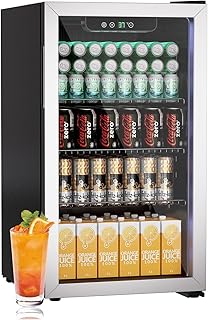
24 Inch Under-Counter Beverage Refrigerator Drawers
These stainless steel under-counter drawers are built for patio kitchens and home bars where noise and heat output matter as much as cooling performance. ETL and NSF approval confirms the unit meets commercial food-safety standards, making it a legitimate choice for outdoor entertaining spaces that see heavy summer use.
Frequently Asked Questions
What does “counter depth” actually mean on a refrigerator?
Counter depth refers to a refrigerator whose body depth closely matches standard kitchen cabinet depth—typically around 24 to 30 inches including doors. The goal is a flush, built-in look where the fridge doesn’t jut into the room, though exact measurements vary by manufacturer.
Do counter depth refrigerators hold less food than standard-depth models?
Generally yes, though the difference has narrowed considerably. A well-designed counter depth unit like the Samsung RF25C5551SR can reach 25 cubic feet, which rivals many standard-depth models. The real trade-off is usually freezer depth, not overall volume.
Are built-in ice makers reliable long-term?
Modern ice makers have improved significantly, but the water line connection remains the most common failure point. Using a braided stainless supply line instead of the included plastic tubing, and replacing the in-line filter on schedule, prevents the majority of ice maker issues over a five-to-ten-year ownership window.
Can I install a counter depth refrigerator in a non-kitchen space?
Absolutely. Compact models like the Sharp SJB1255GS and the under-counter beverage drawers are designed specifically for garages, home bars, and accessory dwelling units. Ensure the space has adequate ventilation and a grounded electrical outlet rated for the unit’s amperage draw.
Final Thoughts
For most kitchens, the Samsung RF25C5551SR strikes the best balance of capacity, smart features, and clean sightlines. If you need maximum storage in a four-door layout without a premium price tag, the KoolMore 4-Door 22.5 Cu.Ft is the value standout. And for secondary spaces, outdoor kitchens, or compact apartments, the Sharp SJB1255GS earns its spot as the most versatile small-footprint option on the market right now.