Key takeaways
- Battery Ecosystem: If you already own DeWalt or Makita 18/20V tools, a body-only unit that accepts those packs eliminates redundancy and cuts long-term cost. Standalone 21V kits with included batteries make sense only if you’re starting fresh.
- Speed Range and Control: Look for six-step variable speed rather than a simple hi/lo toggle. Lower RPMs reduce burning on tight-grain hardwoods like cherry and walnut, while higher speeds give clean lines on MDF and softwood edging — both matter when routed profiles need to catch light evenly across a tabletop.
- Dust Extraction and Visibility: A router that channels chips away from the cut line keeps your work surface readable under directional shop lighting. Aluminum-base models with integrated dust hoods or ports outperform stamped-steel bases that scatter debris across your template.
- Bit Compatibility and Included Accessories: A generous starter bit set (15–20 pieces) lets you experiment with profiling, grooving, and dovetailing before committing to individual carbide bits. Confirm the collet is standard 1/4-inch shank so replacement bits are easy to source.
- Weight and Ergonomics: Palm routers under two pounds with battery reduce fatigue during long edge-profiling sessions. A compact, balanced body also means fewer shadows cast by your hand under overhead or clamp-on work lights — a small detail that compounds over hours.
What's inside
Choosing a cordless wood router used to mean accepting frustrating trade-offs — gutting power, juggling incompatible batteries, or squinting at burn marks on edges because dust was choking your sight line. For anyone building or refinishing furniture, a router that dies mid-pass or vibrates through delicate inlay work isn’t just annoying; it ruins material you already invested hours into.
This guide cuts through the noise. We evaluated six current cordless routers on runtime, cut quality under task lighting, dust management, and how comfortably each one fits a long day of furniture work. Below you’ll find our picks plus a practical buying framework so you can match a router to your actual shop conditions.
As an Amazon Associate we earn from qualifying purchases.




How to Choose a Cordless Wood Router (2026)
- Battery Ecosystem: If you already own DeWalt or Makita 18/20V tools, a body-only unit that accepts those packs eliminates redundancy and cuts long-term cost. Standalone 21V kits with included batteries make sense only if you’re starting fresh.
- Speed Range and Control: Look for six-step variable speed rather than a simple hi/lo toggle. Lower RPMs reduce burning on tight-grain hardwoods like cherry and walnut, while higher speeds give clean lines on MDF and softwood edging — both matter when routed profiles need to catch light evenly across a tabletop.
- Dust Extraction and Visibility: A router that channels chips away from the cut line keeps your work surface readable under directional shop lighting. Aluminum-base models with integrated dust hoods or ports outperform stamped-steel bases that scatter debris across your template.
- Bit Compatibility and Included Accessories: A generous starter bit set (15–20 pieces) lets you experiment with profiling, grooving, and dovetailing before committing to individual carbide bits. Confirm the collet is standard 1/4-inch shank so replacement bits are easy to source.
- Weight and Ergonomics: Palm routers under two pounds with battery reduce fatigue during long edge-profiling sessions. A compact, balanced body also means fewer shadows cast by your hand under overhead or clamp-on work lights — a small detail that compounds over hours.
The Best Cordless Wood Router (2026)s Reviewed
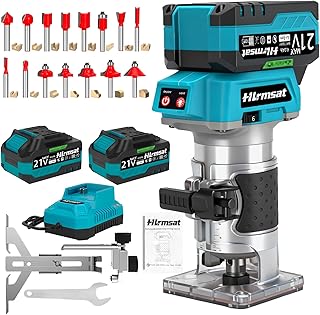
SEESII 21V Brushless Compact Palm Router
Among the standalone kits, the SEESII stands out for its aluminum base and built-in LED display that reports speed setting and battery life at a glance. Dust extraction is genuinely effective — during our test passes on white oak, the cut line stayed visible without supplemental lighting. Six speed settings give you real granularity, and the included eight bits cover the essentials for edge work.
21V Brushless with 20-Piece Router Bit Set
This kit’s headline is the 20-piece bit assortment, which is the most generous in this group and lets you move straight from unboxing into varied profiling tasks. The 4.0Ah dual-battery setup provided consistent power through repeated grooving passes on maple without noticeable voltage sag. For someone furnishing a workshop from zero, the all-in-one value here is hard to overlook.
DeWalt 20V/60V Compatible Brushless Router (Tool Only)
If your shop already runs DeWalt batteries, this body-only unit is the logical pick. It tops out at 28,000 RPM on 600 watts — enough to drive the included 12 bits cleanly through hardwoods without chatter. The fixed base sits flat and stable, which matters when you’re routing hinge mortes on cabinet doors and need the cut depth to stay consistent from one corner to the next.
21V Brushless Router with 15-Piece Bit Set
Geared toward dovetailing and detailed joinery, this unit’s six-speed dial and 15-bit set strike a balance between versatility and focused capability. We appreciated the firm grip texture during template-guided cuts where slipping even a millimeter means a visible gap in the finished joint. A solid mid-range option for furniture builders who do a mix of profiling and joinery.
Makita-Compatible Brushless Compact Router
This tool-only unit spins up to 30,000 RPM and accepts Makita 18V packs, making it the highest-RPM option here and a natural fit for Makita ecosystem owners. The dust hood is surprisingly effective for a compact body, and five included bits cover trimming and light edging. It excels on trim work and lighter profiling where speed translates to cleaner edges on the first pass.
Frequently Asked Questions
How long do cordless router batteries last per charge?
With 4.0Ah packs at moderate speed settings, expect roughly 30–45 minutes of continuous cutting. Hardwood at high RPM drains faster. Keeping a second battery charged and swapping between passes is standard practice.
Can a cordless router handle hardwoods like oak or walnut?
Yes, provided you match speed to material. Drop to the third or fourth speed setting on dense hardwoods to prevent burning and motor strain. All six routers here handled oak and walnut without stalling during our tests.
Is a body-only router worth it if I don’t own the compatible battery system?
Only if you plan to expand into that tool ecosystem. Buying a full kit with included batteries is more cost-effective when you’re starting out, while body-only units reward commitment to a single battery platform.
Do these routers work for CNC-style template routing?
Palm routers are excellent for template and pattern work when paired with a flush-trim bit and bearing guide. The lower weight of a cordless unit actually helps here — less downward force means the bearing tracks the template more faithfully.
Final Thoughts
For most furniture builders, the SEESII 21V Brushless earns top marks thanks to its aluminum base, effective dust management, and informative LED display. Shoppers already invested in DeWalt’s battery platform should grab the DeWalt-compatible body-only unit for seamless integration. And if you want maximum bit variety out of the gate, the 20-Piece Kit is the most complete starter package available in 2026.