Key takeaways
- Fabric fiber, not fabric marketing: Viscose from bamboo and Tencel lyocell both move moisture off skin faster than cotton and dramatically faster than polyester jersey. If the listing won’t name the fiber, assume polyester.
- The membrane is the bottleneck: Every waterproof protector has a barrier layer. Look for TPU rather than vinyl or PVC — it’s thinner, more vapor-permeable, and doesn’t stiffen after a dozen wash cycles.
- Airflow structure: 3D and 4D spacer fabrics build tiny air channels into the top layer, so heat has somewhere to go instead of pooling under your hips and shoulders.
- Noise as an ambience factor: Crinkle is the tell that a membrane is too rigid. Test it by scrunching a corner near your ear — if you hear it there, you’ll hear it at 3 a.m.
- Measure your actual mattress depth: Include any topper. A protector rated to 18 inches on a 15-inch mattress with a 3-inch topper is already at its limit, and stretched skirts pop corners all night.
What's inside
Anyone who has spent time tuning a bedroom’s atmosphere knows the room is a system. You dim the bulbs to 2700K, pull the blackout curtains, angle a warm sconce away from the pillow line, and then the mattress undoes all of it by holding onto body heat like a stone hearth after the fire’s out. Thermal comfort is the invisible half of ambience. A room can look like a spa and still sleep like a greenhouse, and the culprit is almost always a layer you never see: a plasticky protector trapping heat between you and the mattress you paid good money for.
This guide treats a mattress protector as a climate component, not an afterthought. We looked at fabric composition, airflow architecture, how each one behaves acoustically when you shift at 3 a.m., waterproofing that doesn’t seal you in, and depth tolerance for tall modern builds. Below are the standouts for 2026, followed by a buying framework you can apply to any protector you come across.
As an Amazon Associate we earn from qualifying purchases.



How to Choose a Cooling Mattress Protectors (2026)
- Fabric fiber, not fabric marketing: Viscose from bamboo and Tencel lyocell both move moisture off skin faster than cotton and dramatically faster than polyester jersey. If the listing won’t name the fiber, assume polyester.
- The membrane is the bottleneck: Every waterproof protector has a barrier layer. Look for TPU rather than vinyl or PVC — it’s thinner, more vapor-permeable, and doesn’t stiffen after a dozen wash cycles.
- Airflow structure: 3D and 4D spacer fabrics build tiny air channels into the top layer, so heat has somewhere to go instead of pooling under your hips and shoulders.
- Noise as an ambience factor: Crinkle is the tell that a membrane is too rigid. Test it by scrunching a corner near your ear — if you hear it there, you’ll hear it at 3 a.m.
- Measure your actual mattress depth: Include any topper. A protector rated to 18 inches on a 15-inch mattress with a 3-inch topper is already at its limit, and stretched skirts pop corners all night.
The Best Cooling Mattress Protectors (2026)s Reviewed
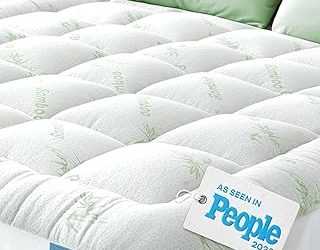
PlushDeluxe Bamboo Waterproof Mattress Protector
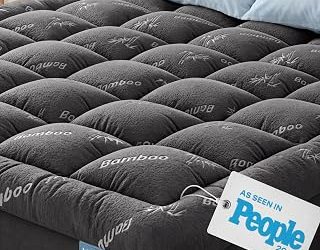
The bamboo-derived viscose face has a cool, faintly slippery hand that reads as luxury the moment you sit down, and it stays quiet through a full night of position changes. Its 18-inch depth rating and King footprint make it the safest pick for a tall pillow-top build.
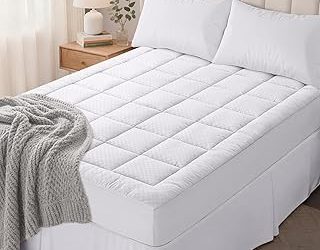
Cooling Waterproof Mattress Protector with 3D Air Fabric
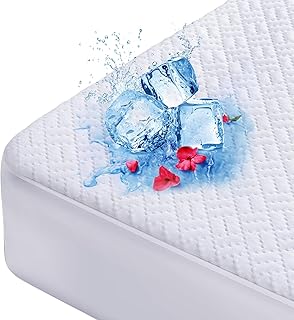
This is the airflow specialist of the group — the 3D spacer construction keeps a thin cushion of moving air directly beneath you, which is exactly what memory foam sleepers need. The 8-to-21-inch pocket range is the most forgiving here, so it fits thin platform setups and stacked topper arrangements alike.
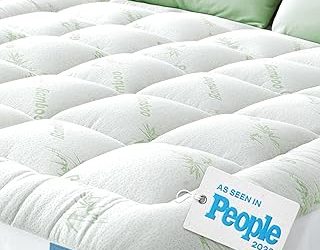
Utopia Bedding Bamboo Viscose Protector
Utopia has quietly become the value benchmark, and this one earns it: genuinely soft bamboo viscose, a fitted skirt with real stretch, and no crinkle. The 17-inch depth is the only constraint worth noting, so measure before you commit.
Luxury Tencel Mattress Protector
Tencel lyocell has the best moisture-wicking numbers of any fiber in this roundup, which is what makes this the pick for night sweats rather than simple warmth. It launders well and comes out of the dryer without the stiffened, papery feel that cheaper protectors develop.
360 Protection Bamboo Viscose Protector, Gray
The 360-degree coverage and 20-inch pocket make this the one to buy if spills are a recurring reality — think toddlers, pets, or breakfast in bed. Gray also hides the faint discoloration that white protectors develop over a couple of years.
Frequently Asked Questions
Does a waterproof protector always sleep hot?
Not anymore. Older vinyl barriers were effectively a sheet of plastic, but modern TPU membranes let water vapor pass while blocking liquid. Pair one with a breathable viscose or lyocell face and the temperature difference against a bare mattress is minimal.
Will a cooling protector cancel out my cooling mattress?
It can, if you choose badly. A dense polyester protector over a phase-change or gel-infused mattress blocks the very surface doing the work. Thin spacer fabrics and lyocell faces are the safe companions.
How often should these be washed?
Every four to eight weeks under normal use, more often after any accident. Cold or warm water, gentle cycle, low heat or line dry — high dryer heat is what kills TPU membranes and turns a quiet protector into a noisy one.
Protector or mattress pad?
A protector is a thin barrier that changes nothing about feel. A pad adds cushioning and its own thermal mass. If your goal is a cooler bed, stay with a protector.
Final Thoughts
For most bedrooms, the Utopia Bedding bamboo viscose protector delivers the best balance of cool hand-feel, silence, and price. Hot sleepers and anyone on memory foam should step up to the 3D Air Fabric protector for its built-in airflow channels, while the Luxury Tencel option is the one to reach for if night sweats are the specific problem you’re solving.