Key takeaways
- Spindle Power: A 400W spindle handles softwoods and thin acrylic comfortably, but if you plan to cut hardwoods, aluminum, or MDF thicker than half an inch regularly, step up to 710W. The jump in power means cleaner walls and fewer passes, which directly affects the finish quality of furniture components.
- Stepper Motor Type: Open-loop steppers are affordable and sufficient for light engraving. Closed-loop NEMA 23 motors, however, eliminate missed steps by feeding position data back to the controller. For long CNC jobs where a single error can ruin an entire workpiece, closed-loop is worth the premium.
- Rail and Drive System: Round rods flex under lateral load; linear rails and ball screws do not. If you need tight tolerances for joinery or inlay work, prioritize machines that use linear rails on all axes. The difference shows immediately in edge quality.
- Work Area Size: Measure the largest panel you expect to cut and add at least 50mm of margin on each side. A generous work area also lets you fixture oddly shaped blanks without creative clamping gymnastics. Desktop machines between 300 × 400mm and 600 × 400mm suit most home furniture projects.
- Software and Control: GRBL compatibility opens access to free and paid CAM packages that most woodworkers already use. Offline controllers and wireless app control add convenience, letting you run jobs without tying up a laptop in a dusty shop environment.
What's inside
Shopping for a CNC router that actually delivers clean cuts in wood can feel like navigating a maze of specs and jargon. Spindle wattage, stepper motor types, rail systems, and work area dimensions all blur together, and the wrong pick leaves you with burning bits, rough edges, or a machine that simply cannot handle the material you throw at it. If you are outfitting a home workshop or a small studio, the stakes are real: downtime and wasted stock add up fast.
This guide cuts through the noise. We evaluated six popular CNC routers on build quality, cutting precision, ease of setup, and how well each one fits into a modern creative workspace. Whether you are milling accent panels for custom shelving or routing intricate inlays for tabletop projects, the picks below represent the best CNC routers for wood in 2026 across every budget and skill level.
As an Amazon Associate we earn from qualifying purchases.



How to Choose a CNC Router Wood (2026)
- Spindle Power: A 400W spindle handles softwoods and thin acrylic comfortably, but if you plan to cut hardwoods, aluminum, or MDF thicker than half an inch regularly, step up to 710W. The jump in power means cleaner walls and fewer passes, which directly affects the finish quality of furniture components.
- Stepper Motor Type: Open-loop steppers are affordable and sufficient for light engraving. Closed-loop NEMA 23 motors, however, eliminate missed steps by feeding position data back to the controller. For long CNC jobs where a single error can ruin an entire workpiece, closed-loop is worth the premium.
- Rail and Drive System: Round rods flex under lateral load; linear rails and ball screws do not. If you need tight tolerances for joinery or inlay work, prioritize machines that use linear rails on all axes. The difference shows immediately in edge quality.
- Work Area Size: Measure the largest panel you expect to cut and add at least 50mm of margin on each side. A generous work area also lets you fixture oddly shaped blanks without creative clamping gymnastics. Desktop machines between 300 × 400mm and 600 × 400mm suit most home furniture projects.
- Software and Control: GRBL compatibility opens access to free and paid CAM packages that most woodworkers already use. Offline controllers and wireless app control add convenience, letting you run jobs without tying up a laptop in a dusty shop environment.
The Best CNC Router Wood (2026)s Reviewed
Genmitsu PROVerXL 4030S
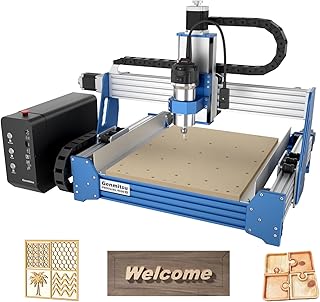
The PROVerXL 4030S represents the sweet spot for serious home woodworkers. Its 710W spindle powers through hardwoods with authority, while high-precision linear rails and a 130mm Z-height give you the clearance for thicker stock and multi-level carvings. Wireless app control keeps your laptop safely away from sawdust, and the rigid all-metal frame dampens vibration that would otherwise telegraph into your finish surface. For anyone building custom furniture at home, this is the machine to beat.
Genmitsu PROVerXL 4030 V2
The V2 distinguishes itself with closed-loop NEMA 23 motors that prevent the dreaded missed step on long engraving runs. Its 400W spindle is adequate for most wood types up to moderate thickness, and the 400 × 300 × 110mm work area fits typical panel dimensions for cabinetry accents and decorative pieces. If reliability over extended jobs matters more to you than raw power, this model earns its place on the bench.
NBS-6040
With a 610 × 410mm work area and a 710W spindle, the NBS-6040 is the largest machine in this roundup and the one most likely to handle full-scale furniture panels without repositioning. Linear rails on all three axes paired with ball screws deliver repeatable accuracy pass after pass. The 2.8-inch offline controller means you can load G-code via USB stick and walk away, freeing your workspace from cable clutter and screen glare.
Twotrees TTC450 Pro
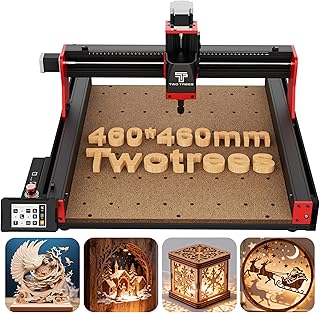
Twotrees built the TTC450 Pro around an all-metal chassis and a NEMA 57 stepper motor, pairing mechanical rigidity with a 3.5-inch touch screen that makes jogging and job setup feel intuitive rather than cryptic. It carves acrylic and softwood with impressive detail, and the compact footprint suits creators who need a capable machine without surrendering an entire workbench. For mixed-material prototyping in a design studio, this unit punches well above its price point.
FoxAlien Masuter Pro
The Masuter Pro is the welcoming front door into CNC woodworking. Its all-metal structure provides a stable platform that many similarly priced hobby machines lack, and the straightforward assembly gets you cutting within hours rather than weekends. It handles wood, acrylic, MDF, and nylon with consistent results, making it an ideal first machine for hobbyists who want room to grow without a steep learning curve or a financial gamble.
Frequently Asked Questions
Can a CNC router cut through hardwoods like oak and walnut?
Yes, provided the spindle is rated at 400W or higher and you use appropriate end mills at correct feed rates. Hardwoods require slower feed speeds and shallower depth of pass to prevent burning, but a well-tuned machine handles them reliably.
What is the difference between closed-loop and open-loop stepper motors?
Open-loop motors execute commands without verifying position, so a mechanical hiccup can cause missed steps and ruined workpieces. Closed-loop motors include encoders that report actual position back to the controller, automatically correcting for errors during the job.
How much space do I need for a desktop CNC router?
Plan for a surface at least 300mm wider and 300mm deeper than the machine footprint to accommodate clamping, material overhang, and dust collection clearance. Most desktop CNC routers need roughly one square meter of dedicated bench space.
What software runs these CNC routers?
All six models in this roundup support GRBL-based control software. Popular choices include Candle, Universal Gcode Sender, and ESTLCam. Several also offer proprietary mobile apps or offline controllers for laptop-free operation.
Final Thoughts
For home furniture makers who want the best combination of power, precision, and long-term usability, the Genmitsu PROVerXL 4030S leads the pack with its 710W spindle and wireless control. The NBS-6040 is the top pick if you need a larger work area for bigger panels. And for newcomers ready to invest in a capable first machine without overspending, the FoxAlien Masuter Pro delivers honest performance and a smooth entry into CNC woodworking.