Key takeaways
- Surface behavior under low light: PU leather returns a specular highlight — a bright hot spot wherever a bulb faces it — which reads sleek in a home theater and harsh under a single overhead fixture. Woven fabric and cashmere-style blends scatter light instead, softening the whole seating zone. Pick based on your existing fixtures, not the product photo.
- Shadow footprint: An extra-wide 26″ chair blocks considerably more floor-bounce than a standard-width frame. If your room relies on a single lamp, an oversized recliner placed between that lamp and the seating area will carve a dead zone behind it. Plan for a second low light source or shift the chair off the light path.
- Onboard light pollution: USB ports, Type-C outlets, wireless charging pads, and massage control panels frequently include indicator LEDs that stay lit around the clock. In a bedroom or a dark viewing room, one blue pinpoint is genuinely distracting. Check whether indicators can be covered or angled away before you commit.
- Recline geometry versus fixture height: Lay-flat and zero-gravity mechanisms push the headrest backward and the footrest forward, sometimes by a foot or more. A floor lamp positioned for an upright chair ends up shining directly into your eyes at full extension. Measure the reclined envelope, then place lighting.
- Color temperature compatibility: Beige and cashmere tones warm up dramatically under 2700K bulbs and can look yellowed. Cool greys and inks hold their character across the spectrum but can feel clinical under daylight-balanced LEDs. Match undertone to your bulbs, or plan on swapping bulbs.
What's inside
Most recliner shopping happens under showroom floodlights — flat, bright, unforgiving. Then the chair comes home to a room lit by one warm lamp and a television, and suddenly the finish reads differently, the seams throw shadows nobody noticed, and the leather that looked crisp now looks glossy in all the wrong places. As someone who spends their working life balancing lumens against surfaces, I can tell you the chair is rarely the problem. The mismatch is.
This guide approaches recliners the way I’d approach any large object entering a lit space: how the upholstery handles light, where the chair casts shadow, whether its built-in electronics add glow you didn’t ask for, and how its bulk interacts with the lamps you already own. Comfort and mechanics still matter, and they’re covered — but you’ll also learn which of these chairs disappear gracefully into a dim room and which ones demand to be the focal point.
As an Amazon Associate we earn from qualifying purchases.



How to Choose a/an Chair Recliner (2026)
- Surface behavior under low light: PU leather returns a specular highlight — a bright hot spot wherever a bulb faces it — which reads sleek in a home theater and harsh under a single overhead fixture. Woven fabric and cashmere-style blends scatter light instead, softening the whole seating zone. Pick based on your existing fixtures, not the product photo.
- Shadow footprint: An extra-wide 26″ chair blocks considerably more floor-bounce than a standard-width frame. If your room relies on a single lamp, an oversized recliner placed between that lamp and the seating area will carve a dead zone behind it. Plan for a second low light source or shift the chair off the light path.
- Onboard light pollution: USB ports, Type-C outlets, wireless charging pads, and massage control panels frequently include indicator LEDs that stay lit around the clock. In a bedroom or a dark viewing room, one blue pinpoint is genuinely distracting. Check whether indicators can be covered or angled away before you commit.
- Recline geometry versus fixture height: Lay-flat and zero-gravity mechanisms push the headrest backward and the footrest forward, sometimes by a foot or more. A floor lamp positioned for an upright chair ends up shining directly into your eyes at full extension. Measure the reclined envelope, then place lighting.
- Color temperature compatibility: Beige and cashmere tones warm up dramatically under 2700K bulbs and can look yellowed. Cool greys and inks hold their character across the spectrum but can feel clinical under daylight-balanced LEDs. Match undertone to your bulbs, or plan on swapping bulbs.
The Best Chair Recliner (2026)s Reviewed
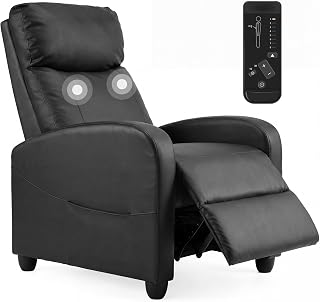
Homall PU Leather Recliner
A compact, honest home theater seat with genuine lumbar support and a small footprint that won’t shade your lamps. The black PU does throw a defined highlight under directional light, so it looks its best in a deliberately dim viewing room rather than a brightly lit living area.
Dual Motor Power Lift Recliner with Wireless Charger
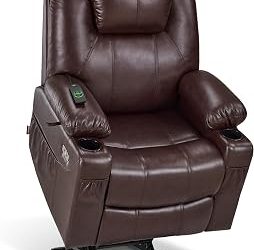
The infinite-position dual motor system is the standout here — you can hold a shallow recline indefinitely, which matters for reading under a fixed lamp. Beige leather warms noticeably under incandescent-temperature bulbs, and the wireless charging pad and USB cluster contribute a small amount of persistent ambient glow worth positioning away from your sightline.
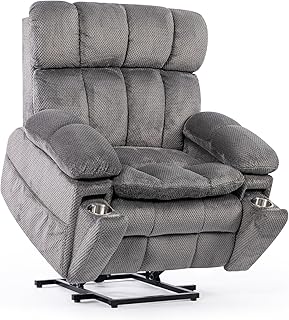
26″ Extra Wide Dual Motor Power Lift Chair
Generous width, flip-arm storage, and zero-gravity positioning make this the most accommodating option for extended sitting or mobility needs. Its bulk is the tradeoff: it casts a substantial shadow, so treat it as a chair that needs its own dedicated light source rather than borrowing from across the room.
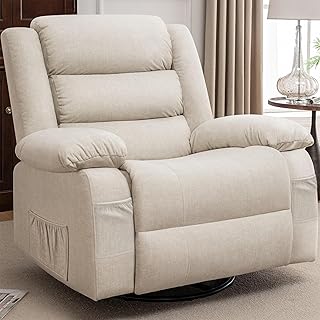
Korser Oversized Swivel Rocker Recliner
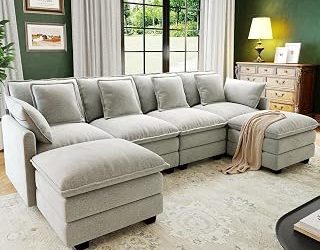
The cashmere-style upholstery is the most forgiving surface in this lineup, diffusing light softly and hiding seam shadows well — a real advantage in nursery or bedroom settings where lighting is intentionally low. Full 360° swivel also means you can rotate away from a window’s glare without moving the chair.
Massage Recliner Chair in Ink Fabric
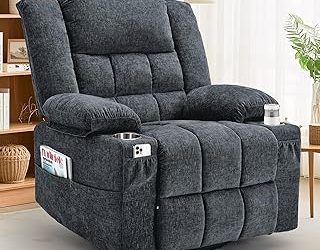
Ink fabric holds its tone across warm and cool bulbs better than any other finish here, making it the safest choice if your lighting changes through the day. Combined with real lumbar support and integrated massage, it’s a quietly capable theater seat that never fights the room’s ambience.
Frequently Asked Questions
Does upholstery material really change how a room feels?
Considerably. Large upholstered objects act as secondary reflectors, and a recliner occupies enough square footage to shift a room’s overall brightness. Matte fabric absorbs and diffuses; leather and PU bounce light back with visible hot spots. Swap one for the other and the same bulbs will read differently.
Where should I put a lamp relative to a recliner?
Slightly behind and to the side of the shoulder, angled so the reclined position doesn’t put the bulb in your field of view. For power lift chairs that extend far forward, test the lamp position at full recline before you drill anything or commit to placement.
Are the built-in LEDs on massage recliners a real problem?
In a bright room, no. In a dark bedroom or dedicated theater, a single always-on indicator can be surprisingly intrusive. Most are small enough to mask with a bit of gaffer tape if the manufacturer doesn’t offer a dimming option.
Do I need a bigger chair or better lighting?
Often the latter. Rooms that feel cramped frequently suffer from a single overhead source rather than insufficient space. Two or three lower light points will make even an oversized recliner feel like it belongs.
Final Thoughts
For most rooms, the Korser Oversized Swivel Rocker is the easiest chair to light well — its cashmere surface diffuses beautifully and the swivel lets you dodge glare without rearranging furniture. If you want a finish that stays consistent from morning daylight to evening lamplight, the Massage Recliner in ink fabric is the more reliable pick. And for anyone who needs lift assistance, the 26″ Extra Wide Dual Motor Chair earns its footprint, provided you give it a dedicated light source of its own.