Key takeaways
- Treat PSI claims skeptically: Anything advertised at 5000 PSI from a household outlet is quoting a theoretical peak, not sustained output. Real electric units land between 1500 and 2500 PSI, and that range is plenty for automotive paint — above roughly 2000 PSI at close range you risk lifting clearcoat edges and vinyl wrap seams.
- Prioritize GPM over pressure: Flow rate does the rinsing. Higher gallons per minute sheets water across a panel so it drags contaminants off in a single pass instead of leaving the streaky residue that reads as haze under directional light.
- Insist on a real foam cannon: Thick, clinging foam gives soap time to break down bonded film before anything touches the paint. Thin foam slides off in seconds and does almost nothing.
- Check hose length and stability: Thirty-plus feet means you circle the vehicle instead of repositioning the unit, and anti-tip designs stop the machine from toppling when you pull the line taut around a bumper.
- Look at the wand and nozzle set: Steel wands survive being dropped on concrete. A five-tip set lets you drop to a wide 40-degree fan for paint and step up for wheel wells and pavers without swapping tools.
What's inside
Most of my working life is spent judging how light behaves on a surface. In a dining room it’s the difference between a walnut tabletop that glows and one that looks flat and tired. Outside the front door, the same physics apply to a car’s clearcoat: paint is essentially a curved mirror with pigment underneath, and anything sitting on top of it — road film, pollen, dried mineral spotting — scatters incoming light instead of reflecting it cleanly. That’s why a car can be technically clean and still read dull under an afternoon sun or a porch sconce. The gloss isn’t gone. It’s buried.
A pressure washer is the fastest way to strip that scattering layer without dragging grit across the finish, which is exactly what a sponge and bucket do. But the machines are sold on numbers that don’t map neatly onto results, and the wrong choice will etch trim, blow apart badge adhesive, or simply stall out halfway through a driveway. Below are the models worth your money in 2026, plus the specs that actually predict how a surface will look when the water dries.
As an Amazon Associate we earn from qualifying purchases.




🛒 Best Price Today on Amazon
Prime members get fast, free shipping on everything above, plus member-only deals. New members get a 30-day free trial — cancel anytime.
How to Choose a Car Wash Pressure Washer (2026)
- Treat PSI claims skeptically: Anything advertised at 5000 PSI from a household outlet is quoting a theoretical peak, not sustained output. Real electric units land between 1500 and 2500 PSI, and that range is plenty for automotive paint — above roughly 2000 PSI at close range you risk lifting clearcoat edges and vinyl wrap seams.
- Prioritize GPM over pressure: Flow rate does the rinsing. Higher gallons per minute sheets water across a panel so it drags contaminants off in a single pass instead of leaving the streaky residue that reads as haze under directional light.
- Insist on a real foam cannon: Thick, clinging foam gives soap time to break down bonded film before anything touches the paint. Thin foam slides off in seconds and does almost nothing.
- Check hose length and stability: Thirty-plus feet means you circle the vehicle instead of repositioning the unit, and anti-tip designs stop the machine from toppling when you pull the line taut around a bumper.
- Look at the wand and nozzle set: Steel wands survive being dropped on concrete. A five-tip set lets you drop to a wide 40-degree fan for paint and step up for wheel wells and pavers without swapping tools.
The Best Car Wash Pressure Washer (2026)s Reviewed
Bright Green Power Washer with Foam Cannon
A sensible entry point with four quick-connect nozzles and a foam cannon included, so you aren’t buying accessories separately on day two. Its strength is versatility across fences, patios, and farm equipment; treat the quick-connect fittings gently and it will handle weekly car duty without complaint.
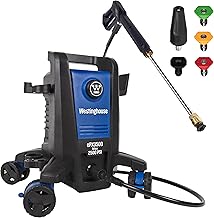
Westinghouse ePX3500
My pick overall. At 2500 max PSI and 1.76 GPM it hits the sweet spot where flow is generous enough to sheet water cleanly off a hood, and the pro-style steel wand plus onboard soap tank make the whole routine feel less improvised. Anti-tipping construction earns its keep on sloped driveways.
Adjustable 5000PSI Electric Pressure Washer
Ignore the headline figure and judge it on what it does well: a genuinely useful 33-foot flexible hose, adjustable pressure, four nozzles, and a foam cannon. The reach is the real selling point if you’re washing in a tight carport or working around planters.
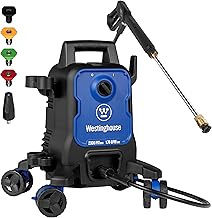
Westinghouse ePX3100
The ePX3500’s calmer sibling at 2300 max PSI, sharing the same 1.76 GPM flow, steel wand, and five-nozzle set. If your main job is cars and you’d rather not think about pressure at all, this is arguably the safer buy — and usually the cheaper one.
CRAFTSMAN CMEPW1700
At 1700 PSI and 1.2 GPM this is the gentlest option here, which makes it ideal for delicate finishes, matte wraps, and anyone nervous around older paint. Compact and light enough to carry one-handed into a garage corner, though large driveways will test your patience.
Frequently Asked Questions
What PSI is safe for car paint?
Stay between roughly 1200 and 1900 PSI at the nozzle for painted panels, using a 40-degree tip held at least a foot away. Higher pressure is fine for wheels, arches, and concrete.
Will pressure washing leave water spots?
Only if you let it dry on its own. Mineral deposits are what scatter light and kill gloss, so rinse with a wide fan pattern and dry with a plush microfiber or filtered blower immediately after.
Do I still need to touch the paint?
For a maintenance wash, often not. Foam, dwell, rinse, dry — that alone removes most loose film. Bonded contamination still needs a proper contact wash with two buckets and a grit guard.
Are electric models powerful enough?
For vehicles, yes, comfortably. Gas units matter when you’re stripping oil off a large slab, not when you’re cleaning a sedan on a Saturday morning.
Final Thoughts
If you want one machine that flatters your car under every kind of light, the Westinghouse ePX3500 is the balanced choice — enough flow to rinse cleanly, enough restraint to stay off your clearcoat. Step down to the ePX3100 to save money without giving up the steel wand or soap tank, or choose the CRAFTSMAN CMEPW1700 if gentleness on a delicate finish matters more to you than raw speed.