Key takeaways
- Finish reflectance: Polished gold and chrome return light in tight, directional highlights, so they need a soft source nearby or a dimmer to avoid harsh glare spots. Matte oak and rustic brown absorb more, reading calmer and deeper — better in rooms with strong overhead lighting.
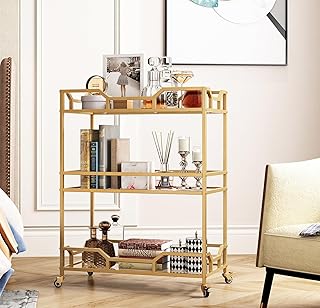
- Shelf material and light transmission: Glass shelves let light pass through to lower tiers, keeping the whole cart legible. Solid wood or marbled tops block it, leaving the bottom shelf in shadow unless something reflective sits underneath.
- Mirrored surfaces as secondary sources: A mirrored shelf effectively doubles the light hitting your bottles. It’s the cheapest way to brighten a dim corner, but it also doubles clutter, so it rewards restraint in what you display.
- Glass holders and stemware placement: Hanging stemware turns your cart into a small chandelier: the bowls catch and scatter light beautifully. Position that rail where a lamp or sconce can reach it, not tucked under a solid upper shelf.
- Mobility and sightlines: Wheels let you chase good light. Check whether casters lock, and measure shelf clearance against your tallest bottle so the top tier doesn’t cast a hard line across everything below it.
What's inside
Most bar carts get chosen in daylight and then live their entire lives after sunset. That mismatch is why a cart that looked crisp in a showroom photo can read flat and cheap at 8 p.m. under a single warm bulb. Finish, shelf material, and shelf spacing all behave differently once the room drops to 2700K and the only light sources are a table lamp and whatever spills in from the kitchen. Buyers rarely think about reflectance, and it’s the single biggest factor in whether a cart becomes the focal point of an evening or just another surface holding bottles.
This guide looks at bar carts the way a lighting designer looks at any object in a room: as a reflector, a shadow-maker, and a place where glass and metal can do useful work. Below you’ll find our current picks across finishes and footprints, followed by the specification details that actually change how a cart performs at low light levels, plus reviews of the five carts we’d put in a real room.
As an Amazon Associate we earn from qualifying purchases.




🛒 Best Price Today on Amazon
Prime members get fast, free shipping on everything above, plus member-only deals. New members get a 30-day free trial — cancel anytime.
How to Choose a Bar Cart (2026)
- Finish reflectance: Polished gold and chrome return light in tight, directional highlights, so they need a soft source nearby or a dimmer to avoid harsh glare spots. Matte oak and rustic brown absorb more, reading calmer and deeper — better in rooms with strong overhead lighting.
- Shelf material and light transmission: Glass shelves let light pass through to lower tiers, keeping the whole cart legible. Solid wood or marbled tops block it, leaving the bottom shelf in shadow unless something reflective sits underneath.
- Mirrored surfaces as secondary sources: A mirrored shelf effectively doubles the light hitting your bottles. It’s the cheapest way to brighten a dim corner, but it also doubles clutter, so it rewards restraint in what you display.
- Glass holders and stemware placement: Hanging stemware turns your cart into a small chandelier: the bowls catch and scatter light beautifully. Position that rail where a lamp or sconce can reach it, not tucked under a solid upper shelf.
- Mobility and sightlines: Wheels let you chase good light. Check whether casters lock, and measure shelf clearance against your tallest bottle so the top tier doesn’t cast a hard line across everything below it.
The Best Bar Cart (2026)s Reviewed
Rustic Oak 3-Tier Rolling Bar Cart with Wine Rack
The warm oak grain sits comfortably at 2700–3000K, holding its color where cooler finishes go grey. Three open tiers and a wine rack mean nothing is fully shadowed, making this the safest pick for rooms lit by lamps rather than ceiling fixtures.
3-Tier Gold Cart with Marbled Wooden Shelves
The gold frame catches light in thin vertical lines while the marbled shelves diffuse it across the surface — a genuinely flattering combination under warm light. Just be aware the solid shelves stop light from reaching the bottom tier, so reserve that level for bottles rather than anything you want to see clearly.
VASAGLE Gold Bar Cart with Mirrored Shelves
Two mirrored shelves make this the strongest performer in genuinely dim spaces, bouncing whatever light you give it back up through your glassware. It reads as more expensive than it is, though fingerprints and dust show quickly on mirror.
TUTOTAK Rustic Brown Bar Cart with 6 Hooks
At 24.8 inches wide with six hooks, this handles small rooms and doubles as kitchen storage without visual noise. The muted brown finish is forgiving under harsh overhead light, where glossier carts tend to throw distracting hot spots.
Chrome 3-Tier Home Bar Serving Cart
Chrome is the most specular finish here, which makes it excellent under directional or cooler light and less convincing under a single soft lamp. Pair it with glass and clear spirits and it looks appropriately crisp; pair it with a dim corner and it can go dull.
Frequently Asked Questions
Where should I place a bar cart for the best effect?
Roughly at the edge of an existing pool of light — near a floor lamp or within a few feet of a sconce. Direct overhead downlight flattens bottles and creates unattractive shadows under each shelf.
Do glass shelves make a room feel brighter?
Slightly, yes. They let light travel down through the cart instead of stopping at the first surface, which reduces the block of shadow a solid-shelf cart creates.
Is gold or chrome a better choice?
Gold suits warm, low-color-temperature rooms. Chrome holds up better under neutral or cool light and in spaces with more daylight.
How much weight can these carts hold?
Most three-tier carts in this category handle a full bottle load comfortably, though weight ratings vary by shelf. Keep heavier bottles on the bottom tier for stability when rolling.
Final Thoughts
For most homes, the Rustic Oak 3-Tier Rolling Bar Cart is the easiest to light well and the hardest to get wrong. If your corner is genuinely dark, the VASAGLE Gold Cart with Mirrored Shelves does more with less light than anything else here, and the TUTOTAK Rustic Brown remains our pick for tight footprints that still need to look considered after dark.