Key takeaways
- CFM at 90 PSI: HVLP spray guns typically demand 4–8 CFM. Match the compressor’s rated output at 90 PSI (not at zero) to your gun’s requirement so the flow stays steady during each pass.
- Noise Level: Oil-free units running above 80 dB become exhausting within minutes. Compressors at 70 dB or below let you concentrate on fan pattern and overlap rather than wincing at the racket.
- Tank Capacity: Larger tanks (13–18 gallons) reduce motor cycling, which prevents pressure dips that cause orange peel texture. Smaller portable tanks work for touch-ups but struggle on full furniture panels.
- Weight and Mobility: A unit under 60 pounds with wheels lets you reposition quickly as you move along a long tabletop or around cabinet carcasses without interrupting your spray rhythm.
- Duty Cycle and Overload Protection: Look for thermal overload resets or documented duty cycles. Continuous spraying on a multi-piece project generates heat; protection features keep the motor alive season after season.
What's inside
When I specify paint finishes for residential interiors, the compressor behind the spray gun matters as much as the paint itself. Buyers shopping for an air compressor to spray paint often fixate on tank size and price while ignoring noise level, CFM output, and how those specs translate to a smooth, evenly atomized coat. The result: stuttering spray patterns, compressor burnout mid-project, and a workspace that rattles the windows.
This guide breaks down the six air compressors worth considering for paint-spraying work in 2026, evaluated through the lens of consistent delivery, quiet operation, and portability — the three qualities that determine whether your finish looks intentional or patchy. Below you will find a curated shortlist followed by hands-on context for each model.
As an Amazon Associate we earn from qualifying purchases.



🛒 Best Price Today on Amazon
Prime members get fast, free shipping on everything above, plus member-only deals. New members get a 30-day free trial — cancel anytime.
How to Choose an Air Compressor For Spraying Paint (2026)
- CFM at 90 PSI: HVLP spray guns typically demand 4–8 CFM. Match the compressor’s rated output at 90 PSI (not at zero) to your gun’s requirement so the flow stays steady during each pass.
- Noise Level: Oil-free units running above 80 dB become exhausting within minutes. Compressors at 70 dB or below let you concentrate on fan pattern and overlap rather than wincing at the racket.
- Tank Capacity: Larger tanks (13–18 gallons) reduce motor cycling, which prevents pressure dips that cause orange peel texture. Smaller portable tanks work for touch-ups but struggle on full furniture panels.
- Weight and Mobility: A unit under 60 pounds with wheels lets you reposition quickly as you move along a long tabletop or around cabinet carcasses without interrupting your spray rhythm.
- Duty Cycle and Overload Protection: Look for thermal overload resets or documented duty cycles. Continuous spraying on a multi-piece project generates heat; protection features keep the motor alive season after season.
The Best Air Compressor For Spraying Paint (2026) Reviewed
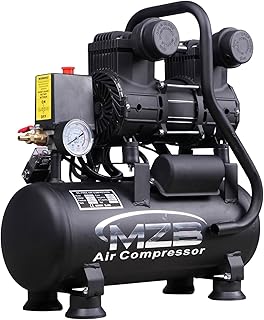
MZB 2.4-Gallon Ultra Quiet Air Compressor
At 70 dB and 5.65 CFM from a compact 1.2 HP motor, the MZB strikes a rare balance between neighborhood-friendly noise and enough airflow for most LVLP and smaller HVLP guns. Its twin steel tanks hold pressure well, and the oil-free design means zero maintenance between furniture refinishing sessions. Best suited for detail work on chairs, drawers, and smaller surfaces where you need clean lines without disturbing anyone.
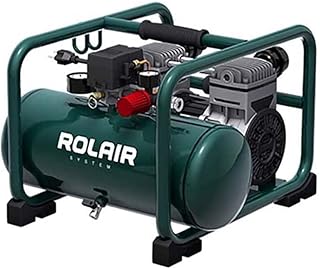
Rolair JC20 Super Quiet 2HP Hand Carry
The Rolair JC20 is the unit I reach for when a project demands quiet concentration. At 70 dB from a 2 HP motor in a hand-carry form factor, it delivers consistent air to HVLP guns while fitting through standard doorways. The build quality is noticeably industrial — thick-gauge steel and robust fittings — and it earns its reputation as the go-to portable compressor for finish carpenters and furniture refinishers who work on-site.
VEVOR 13-Gallon Air Compressor
If your projects lean toward full-size dining tables and bedroom sets, the VEVOR’s 13-gallon tank and 4.6 SCFM at 90 PSI provide the sustained delivery larger HVLP guns need. Running at 66 dB, it is the quietest high-capacity option here, and the wheeled steel body moves easily across a garage floor. The extra tank volume means the motor cycles less, translating to fewer pressure fluctuations mid-coat.
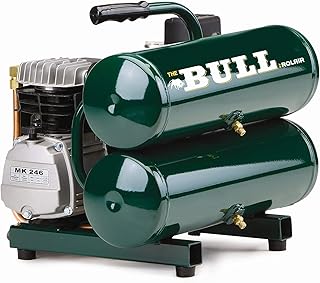
Rolair FC2002 2 HP Twin Stack Compressor
Rolair’s FC2002 pairs a 2 HP motor with a twin-stack tank configuration and built-in overload protection with manual reset — a feature that saves the motor during extended spraying sessions when ambient temperatures climb. The split-tank design keeps the unit shorter and more stable than upright alternatives, and the CFM output handles most HVLP guns without straining. A reliable workhorse for semi-professional furniture shops.
California Air Tools 8010 PK with LVLP Spray Kit
At 60 dBA, this is the quietest unit in the roundup — barely louder than a normal conversation. The included LVLP spray kit means you can unbox and start finishing the same afternoon. The 8-gallon steel tank and 1.0 HP motor suit medium-scale projects such as nightstands, bookshelves, and cabinet doors. Lightweight with wheels, it rolls from the garage to a backyard setup without hassle, making it ideal for weekend furniture painters.
Frequently Asked Questions
Can I use a pancake compressor for spraying paint?
Pancake compressors typically deliver only 2–3 CFM at 90 PSI, which falls short of what most HVLP guns require. You may get acceptable results with an LVLP gun at lower pressures, but expect frequent motor cycling and potential inconsistency on larger surfaces. A dedicated finishing compressor saves time and delivers a noticeably smoother coat.
How much CFM do I need for an HVLP spray gun?
Most HVLP spray guns specify 4–8 CFM at 40 PSI. Always size your compressor to the gun’s CFM requirement at 90 PSI to account for line losses and regulator pressure drops. A compressor rated at 6+ CFM at 90 PSI comfortably covers the majority of HVLP guns used in furniture refinishing.
Do oil-free compressors produce moisture in the spray line?
All compressors generate some moisture as ambient air is pressurized. Oil-free models do not add oil to the mix, but you still benefit from an inline water separator and regular tank draining. Keeping the tank drained before each session is the simplest habit that prevents moisture spots in your finish.
What noise level is comfortable for extended spray sessions?
Sustained exposure above 80 dB causes fatigue and makes it harder to listen for spray gun issues like spitting or uneven atomization. Units rated at 70 dB or below — like the MZB, Rolair JC20, and California Air Tools 8010 PK — let you focus on technique without reaching for ear protection every time.
Final Thoughts
For most furniture-focused painters, the Rolair JC20 offers the best blend of quiet output, portability, and HVLP-compatible airflow. If tank capacity and low noise are your top priorities on larger pieces, the VEVOR 13-Gallon is the stronger choice. And for anyone who wants to start spraying the same day with minimal setup, the California Air Tools 8010 PK with its included LVLP kit removes every barrier between unboxing and a clean, even finish.