Key takeaways
- CFM at 90 PSI: This is the single most important spec. HVLP spray guns typically demand 8–15 CFM at 90 PSI. A compressor rated below 8 CFM at that pressure will starve the gun during full-trigger passes, leaving inconsistent film buildup on panels.
- Tank Size: Larger tanks (13 gallons and above) act as a buffer, smoothing out pressure fluctuations so the motor isn’t cycling on and off while you’re mid-spray. Anything under 6 gallons will work only for touch-up work or small parts.
- Noise Level: A garage that doubles as a living space — or a shared driveway — demands a quieter unit. Compressors in the 66–72 dB range let you work without driving the neighborhood to distraction, and they cause far less fatigue during long painting sessions.
- Oil-Free vs. Oil-Lubricated: Oil-free compressors are lower-maintenance and less likely to introduce oil contamination into your paint line. For automotive finishing where even a trace of oil can cause fisheyes in the clear coat, oil-free is the safer choice.
- Portability and Footprint: Consider your workspace. A vertical 29-gallon unit occupies less floor space but is harder to relocate. Wheels and a manageable weight become critical if you need to reposition the compressor between the booth area and storage.
What's inside
Anyone who has ever watched a fresh coat of paint bloom unevenly across a car panel knows the frustration: orange peel texture, dust nibs trapped under the clear coat, or a spray gun that coughs and sputters mid-pass. The root cause is almost always the air supply. A compressor that can’t maintain steady pressure or deliver clean, moisture-free airflow will sabotage even the most skilled painter’s work, turning a weekend project into a sanding-and-repainting nightmare.
This guide cuts through the noise. We evaluated six compressors currently on the market for their suitability in automotive spray painting — weighing CFM output, tank capacity, noise level, and portability. Whether you’re rotating a car in a home garage under halogen work lights or working in a dedicated bay, the right compressor is the invisible backbone of a flawless finish.
As an Amazon Associate we earn from qualifying purchases.


🛒 Best Price Today on Amazon
Prime members get fast, free shipping on everything above, plus member-only deals. New members get a 30-day free trial — cancel anytime.
How to Choose an Air Compressor For Car Painting (2026)
- CFM at 90 PSI: This is the single most important spec. HVLP spray guns typically demand 8–15 CFM at 90 PSI. A compressor rated below 8 CFM at that pressure will starve the gun during full-trigger passes, leaving inconsistent film buildup on panels.
- Tank Size: Larger tanks (13 gallons and above) act as a buffer, smoothing out pressure fluctuations so the motor isn’t cycling on and off while you’re mid-spray. Anything under 6 gallons will work only for touch-up work or small parts.
- Noise Level: A garage that doubles as a living space — or a shared driveway — demands a quieter unit. Compressors in the 66–72 dB range let you work without driving the neighborhood to distraction, and they cause far less fatigue during long painting sessions.
- Oil-Free vs. Oil-Lubricated: Oil-free compressors are lower-maintenance and less likely to introduce oil contamination into your paint line. For automotive finishing where even a trace of oil can cause fisheyes in the clear coat, oil-free is the safer choice.
- Portability and Footprint: Consider your workspace. A vertical 29-gallon unit occupies less floor space but is harder to relocate. Wheels and a manageable weight become critical if you need to reposition the compressor between the booth area and storage.
The Best Air Compressor For Car Painting (2026) Reviewed
Klutch 29-Gallon Air Compressor
With a 2.5 HP motor pushing 5.1 CFM at 90 PSI and a generous 29-gallon tank, this is the closest thing to a shop-grade solution at a garage-friendly price. The vertical oil-free design recovers quickly between spray passes, and the large wheels make it surprisingly maneuverable for its size. Serious hobbyists painting entire vehicles will find the tank capacity keeps pressure steady even under sustained demand.
VEVOR 13-Gallon Air Compressor
At 4.6 SCFM and a 125 PSI max, the VEVOR splits the difference between portability and painting capability. Its 66 dB noise rating is genuinely quiet — noticeable when you’ve grown used to the industrial roar of cheaper units. The thickened steel body feels solid, and at 13 gallons it holds enough air for controlled passes on quarter panels without constant motor cycling. A strong mid-range pick for weekend painters.
California Air Tools CAT-4610AC
This twin-tank unit trades raw power for refinement. At just 4.6 gallons it won’t sustain long spray sessions, but the ultra-quiet operation and oil-free aluminum tanks make it ideal for smaller jobs — door jamb resprays, mirror housings, or trim pieces. Under the right garage lighting, its whisper-quiet hum fades into the background, letting you focus entirely on trigger control and overlap technique.
Baotree 8-Gallon Portable Air Compressor
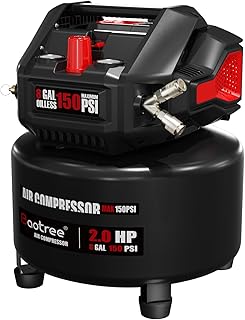
The Baotree delivers 2.8 SCFM at 90 PSI from a 2 HP motor paired with an 8-gallon tank. It handles HVLP guns at reduced trigger pressure and excels at nailing and light spray work. For painters tackling a single fender or a set of bumpers in a home garage, it strikes a practical balance between size, output, and price. Its oil-free design keeps the air line clean for base-coat application.
MZB 6.4-Gallon Ultra Quiet Air Compressor
At 70 dB, the MZB is engineered for noise-sensitive environments. The dual steel tanks and oil-free pump suit it to automotive touch-up and detail painting where clean airflow matters more than volume. It’s compact enough to store on a shelf and light enough to roll beside you — useful when you’re chasing consistent coverage around curved body lines under halogen or LED work lights.
Frequently Asked Questions
How many CFM do I need for car painting?
Most HVLP spray guns require 8–15 CFM at 90 PSI for full-panel coverage. A compressor delivering 5 CFM can manage spot repairs and smaller components, but painting an entire vehicle demands a unit that can sustain higher airflow without pressure drops. Always match your compressor’s output to your specific gun’s requirements.
Can I use a tire inflator compressor for painting?
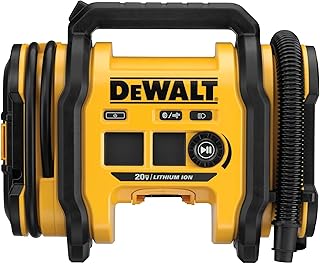
Compact units like the DEWALT DCC020IB are designed for inflation, not sustained spray applications. Their CFM output is far too low for HVLP guns, and their small internal volume means pressure plummets the moment you pull the trigger. Keep tire inflators for tires and pressure washers — choose a dedicated compressor for paintwork.
Does compressor noise affect paint quality?
Not directly, but a loud compressor causes fatigue and distraction, both of which lead to sloppy technique — uneven overlap, inconsistent distance, and rushed passes. Quieter units let you concentrate on the nuances of spraying, especially under focused work lighting where every surface imperfection becomes visible.
Is an oil-free compressor better for painting?
Yes, for automotive work oil-free is strongly preferred. Oil-lubricated compressors can introduce microscopic oil droplets into the air supply, which cause fisheyes and adhesion problems in paint. Oil-free models eliminate this risk and require less maintenance, which matters when you want to focus on the finish rather than equipment upkeep.
Final Thoughts
For full-vehicle painting in a home garage, the Klutch 29-Gallon offers the most headroom with its tank size and sustained CFM. If you need a quieter, more compact solution for periodic repaints, the VEVOR 13-Gallon hits a sweet spot of output and noise reduction. For smaller detail work, the California Air Tools CAT-4610AC keeps the air line clean and the workspace peaceful. Any of these three will help you achieve the kind of even, mirror-ready finish that makes a freshly painted car look like it rolled straight from the factory floor.