Key takeaways
- Coverage rating versus your actual footprint: Match the listed square footage to your pool with headroom to spare. A cleaner rated for 650 sq. ft. in a 900 sq. ft. pool leaves untouched zones, and those zones are where shadows collect.
- Waterline and wall climbing: The waterline band is the single most visible surface after dark, since grazing light from deck fixtures hits it directly. If your lighting plan includes any low side illumination, prioritize a model that climbs.
- Filtration fineness: Coarse baskets grab leaves but let fine silt recirculate, and fine silt is precisely what turns crisp caustics into murk. Dual-layer or multi-stage filtration matters more for clarity than raw suction wattage does.
- Runtime against a full cycle: Budget enough minutes to finish the whole floor in one pass. Interrupted cycles leave banded debris patterns that photograph badly and read worse under raking light.
- Self-parking and retrieval: A cleaner that returns to the wall edge saves you from wading in at dusk. Small thing, but it determines whether the routine actually gets followed.
What's inside
Water is the most underrated fixture in any outdoor lighting scheme. A pool holds light the way nothing else in a backyard can, bending a single warm LED into a moving pattern across a fence line, softening deck lamps into something that feels like candlelight. But that effect collapses the moment the water goes cloudy. Suspended silt scatters your beams into a flat gray haze, leaf litter on the liner reads as dark blotches under any downlight, and the sharp caustic ripples you were counting on for evening ambience simply stop happening. Above-ground pools are especially vulnerable here, since their shallower depth and flatter floors mean debris sits directly in the path of whatever light you have aimed at it.
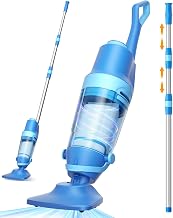
Manual vacuuming solves this, in theory, and almost never in practice on the schedule ambience demands. Nobody hauls out a hose and pole an hour before guests arrive. That is exactly the gap a cordless robotic cleaner fills: it runs unattended in the afternoon so the water is optically clean by the time your fixtures matter. Below, we look at six current models through a specific lens, which is how reliably each one delivers water clear enough to carry light well, plus what to watch for in runtime, wall coverage, and filtration before you buy.
As an Amazon Associate we earn from qualifying purchases.
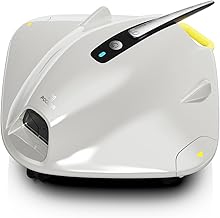


![[2026 Release] Automatic Robotic Pool Vacuum for Inground & Above Ground Pools, Wall Climbing Pool Vacuum Cleaner, Cleans Floor, Walls, Waterline, Drain & Skimmer up to 2150 Sq. Ft., 190 Min](https://m.media-amazon.com/images/I/71ho8U51LXL._AC_UY218_.jpg)

🛒 Best Price Today on Amazon
Prime members get fast, free shipping on everything above, plus member-only deals. New members get a 30-day free trial — cancel anytime.
How to Choose a/an Above-Ground Pool Robot Vacuum (2026)
- Coverage rating versus your actual footprint: Match the listed square footage to your pool with headroom to spare. A cleaner rated for 650 sq. ft. in a 900 sq. ft. pool leaves untouched zones, and those zones are where shadows collect.
- Waterline and wall climbing: The waterline band is the single most visible surface after dark, since grazing light from deck fixtures hits it directly. If your lighting plan includes any low side illumination, prioritize a model that climbs.
- Filtration fineness: Coarse baskets grab leaves but let fine silt recirculate, and fine silt is precisely what turns crisp caustics into murk. Dual-layer or multi-stage filtration matters more for clarity than raw suction wattage does.
- Runtime against a full cycle: Budget enough minutes to finish the whole floor in one pass. Interrupted cycles leave banded debris patterns that photograph badly and read worse under raking light.
- Self-parking and retrieval: A cleaner that returns to the wall edge saves you from wading in at dusk. Small thing, but it determines whether the routine actually gets followed.
The Best Above-Ground Pool Robot Vacuum (2026)s Reviewed
2026 Upgrade Robotic Pool Cleaner, 250-Min Runtime
The longest runtime in this group, and that generous 250-minute window is what makes it the safest pick for larger above-ground setups where a short cycle would otherwise leave the far arc untouched. Self-parking and a 2,200 sq. ft. rating round out a genuinely low-maintenance option.
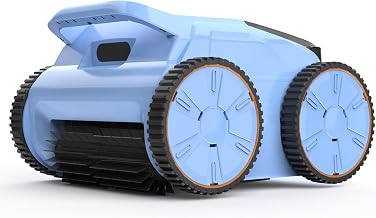
Cordless Robotic Pool Vacuum with Track Drive, Dual 180W Motors
The standout for anyone whose lighting design touches the waterline, thanks to real wall and waterline climbing paired with track drive for grip. Its 2,150 sq. ft. capacity and smarter navigation also mean fewer repeated passes over ground it already covered.
SAT20 Cordless Robotic Pool Cleaner
A dependable floor-and-wall workhorse with 180 minutes of runtime and IPX8 sealing, plus an LED indicator that tells you cycle status at a glance. Note the maker’s own caveat about sharp steps and raised drains, so check your pool’s fittings first.
Cordless Robotic Pool Cleaner, 40W Dual Cleaning System
Barrier crossing is the useful trick here, letting it handle liner seams and minor floor transitions that stall simpler units. The 120-minute runtime suits mid-size pools up to roughly 1,614 sq. ft.
Cordless Robotic Pool Vacuum for Flat Pools up to 960 Sq. Ft.
Purpose-built for flat-bottom above-ground pools, with dual motors delivering strong suction across a straightforward 100-minute cycle. A sensible, uncomplicated choice if your pool is small and your priority is clear water rather than feature count.
Frequently Asked Questions
Will a robot vacuum actually make my pool lighting look better?
Indirectly, yes. Clean water transmits light cleanly, so your fixtures produce defined ripple patterns instead of diffuse glow. Debris on a pale liner also creates dark spots that any downlight will exaggerate.
Can I run one of these while lights are on at night?
Most run fine in the dark, but it defeats the purpose. Run cycles mid-afternoon so the water has time to settle before your evening lighting comes up.
Do I still need to skim the surface?
Usually yes. Floor-focused robots handle sunk debris; floating leaves still catch grazing light and are best netted off before guests arrive.
How often should it run?
Two or three cycles a week keeps clarity consistent. Daily runs make sense during heavy pollen or leaf-drop periods.
Final Thoughts
For most above-ground pools, the 2026 Upgrade cleaner earns the top spot on runtime alone, since finishing the whole floor in one pass is what actually keeps water optically clear. If your lighting scheme leans on the waterline, the dual 180W track-drive model is the better investment, while the Winny cordless vacuum handles smaller pools capably without overspending.