Key takeaways
- Thickness: Two inches softens a mattress that is nearly right; three inches genuinely rebuilds the feel of one that is too firm. Go thicker only if your fitted sheets have the depth to cover it without popping corners at 3am.
- Firmness (ILD): Soft Talalay typically lands in the high teens to low 20s ILD, which suits side sleepers and anyone with shoulder or hip pressure. Back and stomach sleepers usually want medium, since too much give tilts the pelvis out of line.
- Latex type: Talalay is vacuum-sealed and flash-frozen during production, giving it a lighter, springier, more consistent feel than Dunlop, which settles denser at the bottom. If you want lift rather than sink, Talalay is the one.
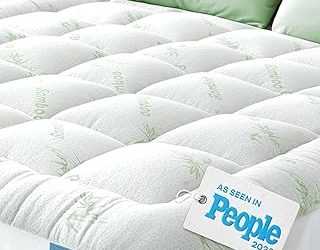
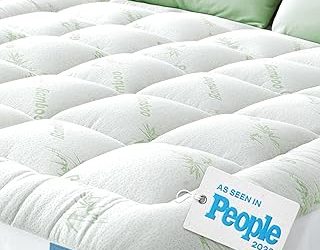
- Breathability: Look for pinholes running through the core and a stretch-knit or bamboo-blend cover. Latex sleeps cool naturally, but a thick quilted cover will undo that advantage entirely.
- Certifications and off-gassing: OEKO-TEX or GOLS certification for latex, CertiPUR-US for foam alternatives. Natural latex has a faint milky smell for a few days; synthetic blends and foams need longer airing in a well-ventilated room.
What's inside
I spend my working life on bedrooms as environments: where the 2700K fixtures sit, how a dimmer curve behaves at 11pm, whether a linen shade throws the right shadow across a headboard. And the thing clients rarely anticipate is that all of that atmosphere collapses the moment the bed itself is uncomfortable. You can warm a room to a perfect low glow and still lie awake on a mattress that pushes back in the wrong places. The surface you sleep on is the last layer of the design, and it is the one nobody can fake.
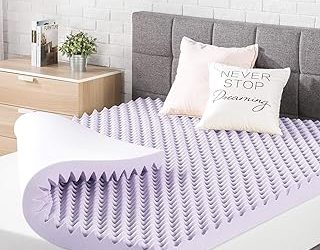
Talalay latex is the material I keep specifying for that final layer, because it does something lighting people intuitively understand: it diffuses. Where dense foam absorbs and holds, Talalay’s open, whipped cell structure spreads pressure outward and lets air move through it, so the surface stays cool and buoyant instead of trapping heat around your hips and shoulders. This guide covers what actually matters when you shop — thickness, ILD firmness, cover quality, and how latex compares to the memory foam alternatives worth considering — plus honest notes on the toppers I recommend most in 2026.
As an Amazon Associate we earn from qualifying purchases.


How to Choose a Talalay Latex Mattress Topper (2026)
- Thickness: Two inches softens a mattress that is nearly right; three inches genuinely rebuilds the feel of one that is too firm. Go thicker only if your fitted sheets have the depth to cover it without popping corners at 3am.
- Firmness (ILD): Soft Talalay typically lands in the high teens to low 20s ILD, which suits side sleepers and anyone with shoulder or hip pressure. Back and stomach sleepers usually want medium, since too much give tilts the pelvis out of line.
- Latex type: Talalay is vacuum-sealed and flash-frozen during production, giving it a lighter, springier, more consistent feel than Dunlop, which settles denser at the bottom. If you want lift rather than sink, Talalay is the one.
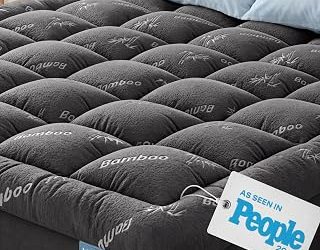
- Breathability: Look for pinholes running through the core and a stretch-knit or bamboo-blend cover. Latex sleeps cool naturally, but a thick quilted cover will undo that advantage entirely.
- Certifications and off-gassing: OEKO-TEX or GOLS certification for latex, CertiPUR-US for foam alternatives. Natural latex has a faint milky smell for a few days; synthetic blends and foams need longer airing in a well-ventilated room.
The Best Talalay Latex Mattress Toppers Reviewed (2026)
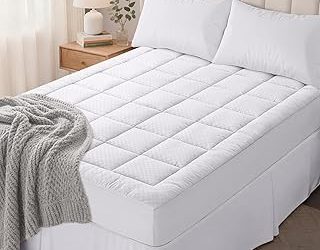
Talalay Latex Topper, Soft, 3″ Queen
This is my default recommendation for side sleepers on a mattress that feels like a plank. Three inches of soft Talalay lets shoulders settle without the slow-sinking sensation of memory foam, and it recovers instantly when you turn over — a real benefit if you share the bed and dislike being woken by movement.
Talalay Latex Topper, Soft, 2″ Queen
The subtler option, and often the smarter one. Two inches takes the edge off a firm mattress while preserving its support structure, which makes it a better fit for combination sleepers and for anyone whose sheets will not accommodate a deeper build.
Lucid 4″ Gel Memory Foam Topper, Queen
Not latex, but worth knowing about if you want maximum cushioning on a budget — student housing, guest rooms, an old mattress you are nursing along. Expect the contouring hug of memory foam rather than latex’s bounce, and give it a few days to fully expand.
LUCID 2″ Gel Memory Foam Topper, Queen
A zoned design that firms up under the midsection and softens at the shoulders, which helps if your discomfort is localized rather than general. Cooling gel infusion moderates heat retention, though it will not match latex for airflow.
TEMPUR-Adapt Supreme 3″ Topper, King
The premium memory foam benchmark, and the one that most convincingly changes how a mattress feels. It is a genuine investment, but the density and durability are a clear step above generic foam if you prefer a slow, cradling response to latex’s springiness.
Frequently Asked Questions
Is Talalay latex better than Dunlop?
Neither is objectively better. Talalay is softer, springier, and more uniform through its thickness; Dunlop is denser and firmer. For a topper, where the goal is added comfort rather than structural support, Talalay is usually the more pleasant choice.
Will a latex topper sleep hot?
Far less than memory foam. The pinholed, open-cell structure lets air circulate rather than pooling body heat, which is why latex remains the go-to for warm sleepers and warm climates.
How long should a Talalay topper last?
Eight to ten years with a natural or blended latex core, considerably longer than most foam toppers. Rotate it every few months and use a breathable protector to keep body oils out of the latex.
Do I need a special cover?
A cover is strongly recommended. Latex degrades with UV exposure and friction, so a stretch-knit encasement protects the core and stops the topper sliding under your sheets.
Final Thoughts
If your mattress is too firm and you sleep on your side, the 3″ Soft Talalay topper is the change you will notice on the first night. For a gentler correction, the 2″ Soft Talalay is the more measured pick, and the TEMPUR-Adapt Supreme remains the one to choose if you genuinely prefer memory foam’s slow, enveloping response. Get that final layer right and the rest of the room — the light, the textiles, the quiet — finally has something to work with.