Key takeaways
- Firmness first, always: An infant mattress should feel almost unyieldingly firm — press down and it should barely dimple. Softness is a hazard for babies under one, not a comfort feature. Dual-sided models solve this by giving you a firm infant face and a cushioned toddler face on the same slab.
- Certifications worth checking: GREENGUARD Gold and OEKO-TEX Standard 100 test for chemical emissions and fabric safety respectively; CertiPUR-US covers the foam core. Any two of these signal a manufacturer that submitted to outside testing rather than writing its own copy.
- Fit before feel: A standard crib takes roughly 52 x 27.5 inches. If you can slide two fingers between the mattress edge and the crib rail, the gap is too wide. Measure your frame before you order.
- Cover mechanics: Waterproofing keeps the core dry; a removable, machine-washable cover keeps the room from smelling like a bad night. You want both, and you want the zipper to be full-perimeter so the cover actually comes off at 3 a.m. without a struggle.
- Weight and handling: You’ll lift this thing more than you expect — sheet changes, spot cleaning, mattress-height adjustments. Lighter foam cores are genuinely easier to manage in a dim room than heavy innerspring builds.
What's inside
A nursery gets designed twice: once in daylight, when you’re choosing paint and picking out a mobile, and again at 2 a.m. under a single amber bulb, when the only thing that matters is whether the room lets everyone go back to sleep. Most parents obsess over the first version and get ambushed by the second. The mattress sits at the center of that late-night equation more than any other object in the room, and it’s the one purchase where a wrong call shows up as squeaky foam, a soaked cover at 4 a.m., or a firmness that feels wrong the moment you press your palm into it.
This guide treats the crib mattress the way a lighting designer treats a fixture: not as a standalone object, but as part of a system that either supports the mood of the room or fights it. Below you’ll find the models that hold up across the full arc of a nursery’s life, from newborn nights to a toddler bed under a dimmed sconce, along with the specs that actually matter and the ones that are just marketing gloss.
As an Amazon Associate we earn from qualifying purchases.




How to Choose a Cribs Mattress (2026)
- Firmness first, always: An infant mattress should feel almost unyieldingly firm — press down and it should barely dimple. Softness is a hazard for babies under one, not a comfort feature. Dual-sided models solve this by giving you a firm infant face and a cushioned toddler face on the same slab.
- Certifications worth checking: GREENGUARD Gold and OEKO-TEX Standard 100 test for chemical emissions and fabric safety respectively; CertiPUR-US covers the foam core. Any two of these signal a manufacturer that submitted to outside testing rather than writing its own copy.
- Fit before feel: A standard crib takes roughly 52 x 27.5 inches. If you can slide two fingers between the mattress edge and the crib rail, the gap is too wide. Measure your frame before you order.
- Cover mechanics: Waterproofing keeps the core dry; a removable, machine-washable cover keeps the room from smelling like a bad night. You want both, and you want the zipper to be full-perimeter so the cover actually comes off at 3 a.m. without a struggle.
- Weight and handling: You’ll lift this thing more than you expect — sheet changes, spot cleaning, mattress-height adjustments. Lighter foam cores are genuinely easier to manage in a dim room than heavy innerspring builds.
The Best Cribs Mattress (2026)s Reviewed
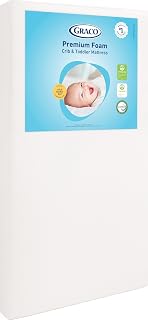
Graco Premium Foam Crib & Toddler Mattress
This is the reliable workhorse of the category: GREENGUARD Gold certified, waterproof, with a washable OEKO-TEX cover and genuinely firm support that doesn’t soften after a few months of use. Lightweight enough that a one-handed sheet change under low light is realistic, which is a bigger quality-of-life win than it sounds.
Newton Baby Crib Mattress & Toddler Bed
Newton’s fully breathable, washable core is the most distinctive engineering in this roundup — the entire mattress can go in the wash, not just the cover. It’s the pick for parents prioritizing airflow above all, and it stays cool in rooms that run warm from lamps and afternoon sun.
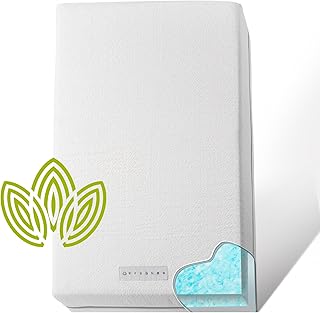
Dourxi Dual-Sided Gel Memory Foam Mattress
A triple-layer support core with a firm infant side and a gel memory foam toddler side, wrapped in a breathable removable cover. The transition happens by flipping it rather than buying again, and the gel layer keeps surface temperature steady through the night.
Organic Cotton 2-Sided Crib Mattress
Organic cotton cover over hypoallergenic CertiPUR foam, with a firm infant face and a softer toddler face at a slim 4-inch profile. The lighter build is noticeably easier to maneuver, and the natural-fiber surface pairs well with warm, low-color-temperature nursery lighting.
Letmxiu Premium Crib & Toddler Mattress
At 5 inches with a knitted fabric shell and fleece surface, this one leans toward plush comfort while keeping the firm core intact underneath. The soft top layer gives the crib a more finished, textile-forward look in a styled nursery.
Frequently Asked Questions
How firm should an infant crib mattress be?
Firm enough that it doesn’t conform to your hand when you press it. If the surface holds an impression, it’s too soft for a baby under twelve months.
Do I need a separate toddler mattress later?
Not with a dual-sided model. The Dourxi and Organic Cotton options both flip from a firm infant face to a cushioned toddler face, covering roughly ages zero to four.
Is a waterproof cover enough, or do I need a pad too?
A properly sealed waterproof cover handles most incidents. A thin pad adds a second washable layer, which mostly saves you time rather than protecting the mattress further.
What thickness works best?
Four to six inches is the practical range. Thinner mattresses are lighter and easier to handle; thicker ones feel more substantial for toddlers. Both are safe when the fit is correct.
Final Thoughts
For most nurseries, the Graco Premium Foam mattress is the sensible default — certified, firm, waterproof, and easy to live with. Choose the Newton if breathability and full-mattress washability are your priorities, or the Dourxi dual-sided gel model if you want one purchase to carry you from newborn through toddler bed without a second shopping trip.