Key takeaways
- Load Rating & Duty Classification: Type IA (300 lb) suits most homeowners with tools; Type IAA (375 lb) or 500 lb-rated platforms give professionals carrying heavy fixtures a serious margin of safety.
- Material: Fiberglass rails won’t conduct electricity — a non-negotiable when you’re working near live circuits during a fixture swap. Aluminum shaves weight but demands absolute certainty that power is off.
- Step or Platform Design: Flat platforms and wide anti-slip steps let you stand comfortably for the extended periods that lighting installs demand, reducing foot fatigue and sway compared to narrow round rungs.
- Portability vs. Sturdiness: Ultralight aluminum models under 15 lbs are a dream to carry room to room, while heavier fiberglass builds absorb wobble — decide whether mobility or planted confidence matters more in your workflow.
- Specialty Configurations: Twin-front designs let two people work simultaneously; folding platform ladders offer a capacious standing surface with a lower folded profile for tight storage closets.
What's inside
Whether you’re swapping out a chandelier above the dining table or installing recessed cans in a vaulted ceiling, the wrong six-foot ladder turns a routine lighting project into a wobbly, nerve-fraying ordeal. Buyers flood online stores comparing weight ratings, step widths, and fiberglass-versus-aluminum debates, then walk away uncertain which spec actually matters once they’re twelve feet up with a $400 pendant in one hand.
This guide cuts through that noise. We evaluated six top-rated six-foot ladders from the perspective of someone who spends real time aloft — checking stability underfoot, hand positioning around fixtures, and how each model behaves on hardwood, tile, and subfloor. Below you’ll find a curated shortlist plus a straightforward buying framework so you can match the right ladder to your next project.
As an Amazon Associate we earn from qualifying purchases.


How to Choose a 6-Foot Ladder (2026)
- Load Rating & Duty Classification: Type IA (300 lb) suits most homeowners with tools; Type IAA (375 lb) or 500 lb-rated platforms give professionals carrying heavy fixtures a serious margin of safety.
- Material: Fiberglass rails won’t conduct electricity — a non-negotiable when you’re working near live circuits during a fixture swap. Aluminum shaves weight but demands absolute certainty that power is off.
- Step or Platform Design: Flat platforms and wide anti-slip steps let you stand comfortably for the extended periods that lighting installs demand, reducing foot fatigue and sway compared to narrow round rungs.
- Portability vs. Sturdiness: Ultralight aluminum models under 15 lbs are a dream to carry room to room, while heavier fiberglass builds absorb wobble — decide whether mobility or planted confidence matters more in your workflow.
- Specialty Configurations: Twin-front designs let two people work simultaneously; folding platform ladders offer a capacious standing surface with a lower folded profile for tight storage closets.
The Best 6-Foot Ladder (2026)s Reviewed
Little Giant Flip-N-Lite 6 ft
At well under 15 pounds, the Flip-N-Lite is the ladder you grab when you’re moving between rooms all day repositioning sconces. The wide anti-slip steps and easy-release handle make setup a one-hand operation, and the 300 lb Type IA rating handles most residential lighting loads without complaint. If portability is king in your workflow, this is the one to beat.
Louisville FS1406HD 6 ft Fiberglass
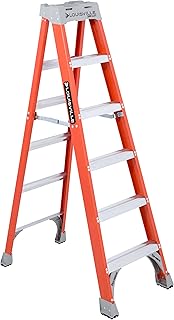
Stepping up to the FS1406HD buys you a 375 lb Type IAA rating and noticeably stiffer rails that barely flex under a full tool belt. For designers who install heavy pendants or chandeliers and need a rock-solid base while making fine positional adjustments overhead, the extra confidence this ladder provides is worth the modest weight penalty over its lighter sibling.
Louisville FS1506 6 ft Fiberglass
The FS1506 hits a sweet spot: fiberglass construction, 300 lb Type IA capacity, and a price that undercuts the heavier-duty Louisville models. It’s the dependable everyday workhorse — not flashy, but planted and predictable on every surface from polished marble to bare joists, which is exactly what you want when you’re focused on the fixture, not your footing.
500 lb Fiberglass Platform Step Ladder
Rated to a massive 500 lb under Type IA standards, this platform ladder gives you a generous standing surface and rock-solid rails. The folding platform design stows flat against a wall, and the sheer load headroom means you can haul a bucket of junction boxes, wire nuts, and a cordless drill up without doing mental math. A serious pick for contractors tackling commercial-residential crossover jobs.
Louisville FM1406HD Twin Front 6 ft
The twin-front configuration is a game-changer on collaborative installs — two people can face each other at working height to pass fixtures, align bracketing, or steady a long linear pendant during final placement. The 375 lb per-side Type IAA rating keeps things safe even with two adults loaded up, making this the specialist choice for crew-based lighting projects.
Frequently Asked Questions
Can I use a six-foot ladder to reach a standard 8-foot ceiling?
Absolutely. Standing on the second or third step of a six-foot ladder puts your shoulders at roughly 9 to 10 feet, which is exactly the working zone for 8-foot ceilings. You’ll have comfortable reach for mounting fixtures, adjusting aim on directional downlights, or wiring junction boxes without standing on the top cap.
Fiberglass or aluminum for lighting work?
Fiberglass is the safer default because it’s non-conductive. Unless you’ve verified and locked out every circuit you’re working near, fiberglass eliminates the risk that a nicked rail turns your ladder into a path to ground. Aluminum earns its place only when weight savings are critical and electrical isolation is guaranteed.
What does “Type IA” vs. “Type IAA” actually mean?
These are ANSI duty ratings. Type IA ladders are rated for 300 pounds (ladder plus person plus tools); Type IAA bumps that to 375 pounds. Some specialty ladders carry a 500 lb platform rating. Always add your body weight to the heaviest load you’ll carry aloft and verify the ladder exceeds that total.
Is a six-foot ladder tall enough for 9-foot or 10-foot ceilings?
It can work for 9-foot ceilings, though you’ll be stretching on upper steps. For 10-foot ceilings, consider stepping up to an eight-footer. A six-foot model remains ideal for the vast majority of 8-foot residential spaces where most pendant and recessed work happens.
Final Thoughts
For most home lighting projects, the Little Giant Flip-N-Lite delivers the best blend of light weight and comfort, while the Louisville FS1406HD is the pick when you need maximum stability for heavier fixtures. If your work involves crew installs or oversized linear pendants, the Louisville Twin Front FM1406HD earns its place on the truck. Any of these three will keep you safe, steady, and focused on getting the light right.