Key takeaways
- Tooth count: Choose 40 teeth for faster framing cuts, 60 teeth for versatile crosscutting, and 80 to 120 teeth when a refined furniture-grade edge matters most.
- Cutting purpose: A blade designed for crosscuts and fine finish work is usually better for trim, panels, and visible joinery than a general-purpose ripping blade.
- Material: Verify whether the blade is intended for hardwood, softwood, plywood, laminates, or composite materials. A blade that suits the stock produces cleaner grain transitions and fewer splinters.
- Kerf and stability: A thin-kerf blade can reduce waste and demand less power, while a sturdier plate may stay calmer during demanding cuts. Look for a design that matches your saw and cutting style.
- Finish quality: Inspect the tooth geometry and carbide tips, not just the tooth count. The best blade leaves an edge that looks even when grazing light reveals every scratch and imperfection.
What's inside
The wrong 10-inch miter saw blade can turn a promising furniture project into a cycle of chipped veneer, fuzzy crosscuts, and edges that look harsh under bright room lighting. Tooth count matters, but so do kerf, carbide quality, material compatibility, and how the cut surface catches daylight or warm ambient light.
This guide compares five worthwhile options for furniture makers, DIY renovators, and finish carpenters. The emphasis is on clean visual results: crisp joinery, smooth exposed edges, controlled tear-out, and surfaces that need less sanding before stain, paint, or clear finish. Always confirm your saw’s arbor size, maximum blade diameter, and manufacturer recommendations before buying.
As an Amazon Associate we earn from qualifying purchases.




How to Choose a Miter Saw Blade 10 Inch (2026)
- Tooth count: Choose 40 teeth for faster framing cuts, 60 teeth for versatile crosscutting, and 80 to 120 teeth when a refined furniture-grade edge matters most.
- Cutting purpose: A blade designed for crosscuts and fine finish work is usually better for trim, panels, and visible joinery than a general-purpose ripping blade.
- Material: Verify whether the blade is intended for hardwood, softwood, plywood, laminates, or composite materials. A blade that suits the stock produces cleaner grain transitions and fewer splinters.
- Kerf and stability: A thin-kerf blade can reduce waste and demand less power, while a sturdier plate may stay calmer during demanding cuts. Look for a design that matches your saw and cutting style.
- Finish quality: Inspect the tooth geometry and carbide tips, not just the tooth count. The best blade leaves an edge that looks even when grazing light reveals every scratch and imperfection.
The Best Miter Saw Blade 10 Inch (2026)s Reviewed
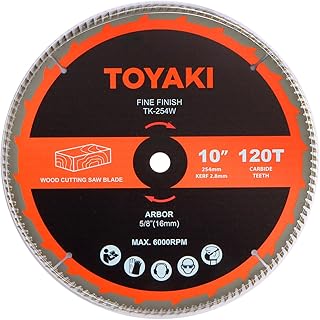
10-Inch 120-Tooth Fine-Finish Blade
This 120-tooth professional woodworking blade is aimed at exceptionally clean cuts in trim, molding, plywood, and furniture components. Its fine tooth spacing is especially appealing when the finished edge will sit beneath directional lighting, where tiny chips can cast distracting shadows.
WEN BL1080 80-Tooth Ultra-Fine Finish Blade
The WEN BL1080 offers a strong balance between polished results and practical cutting speed. Its carbide-tipped 80-tooth layout is a sensible choice for painted parts, hardwood edging, and crosscuts where you want a smooth surface without moving all the way to a slower 120-tooth blade.
WEN BL1060 60-Tooth Fine-Finish Blade
For a workshop that needs one adaptable blade, the WEN BL1060 is easy to justify. Its 60 teeth provide a useful middle ground for furniture panels, dimensional lumber, and trim, producing a clean enough edge for most projects while retaining more speed than ultra-fine options.
Makita B-66977 80T Max Efficiency Blade
The Makita B-66977 combines an 80-tooth carbide-tipped design with a focus on efficient miter-saw performance. It suits installers and furniture builders who want smooth, presentable crosscuts with controlled vibration—important when a cut line must remain visually quiet across a broad tabletop or cabinet face.
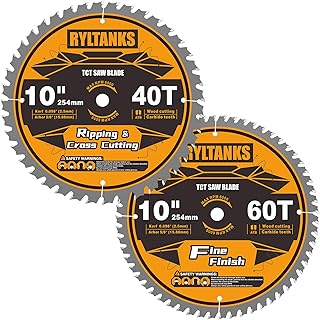
10-Inch 40T/60T Two-Pack
This two-pack pairs a 40-tooth blade for faster ripping and general work with a 60-tooth blade for finer wood cuts. The pairing is practical for home workshops: use the faster blade when the edge will be hidden, then switch to the finer blade when the cut will remain visible beneath stain, oil, or clear coat.
Frequently Asked Questions
Is a higher tooth count always better?
No. Higher tooth counts generally improve crosscut smoothness, but they cut more slowly and are not ideal for every task. A 60-tooth blade is often the most versatile choice, while 80 to 120 teeth make more sense for delicate, visible finish cuts.
Which blade is best for hardwood furniture?
For hardwood furniture, an 80-tooth or 120-tooth carbide-tipped blade is usually a strong starting point. Choose the blade according to the stock thickness and cut direction, and support the workpiece well to reduce vibration and edge breakout.
Can a miter saw blade be used on a table saw?
Some blades are labeled for both miter and table saws, but compatibility should never be assumed. Confirm the arbor, blade rating, kerf, and saw manufacturer’s guidance; also remember that miter saws excel at crosscuts, while table saws often handle ripping more naturally.
How can I reduce tear-out?
Use a sharp blade suited to the material, cut with the finished face oriented correctly for your saw, and clamp or support delicate stock. A zero-clearance insert or sacrificial backing board can also help, particularly with plywood, veneer, and brittle trim.
Final Thoughts
For the smoothest furniture-ready appearance, the 10-Inch 120-Tooth Fine-Finish Blade is the precision pick, while the WEN BL1080 offers an excellent balance of refinement and speed. If versatility matters most, the WEN BL1060 is a dependable everyday choice, and the 40T/60T two-pack gives budget-conscious makers useful flexibility from one workshop purchase.